Noah Hiles: HBO's Kordell Stewart documentary should be an uncomfortable watch for Steelers fans
Published in Football
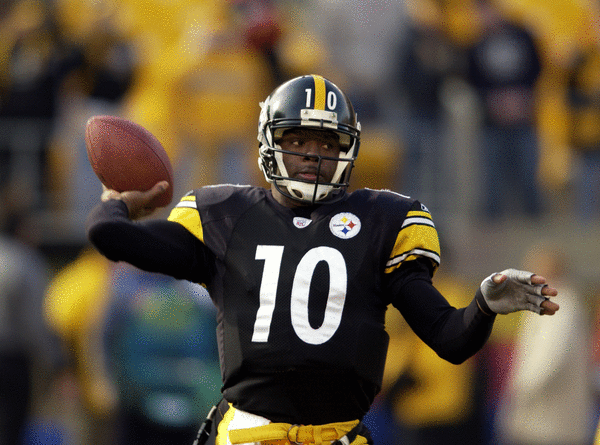
PITTSBURGH — The opening scene of “Kordell Stewart: Slash & Burn,” HBO’s newest sports documentary, wastes no time getting right to the point.
Thirty seconds in, the viewer is taken to Schenley Park. Stewart, now 54 years old, is behind the wheel of a Range Rover, sunglasses over his face. His vehicle parks in a specific area, one he claims to be visiting for the first time.
It’s also where an alleged rumor was formed, one that forever changed his life and football career.
“I have an opportunity to storytell,” the former Steelers quarterback narrates. “I hope I’m doing the best I can to convey what it wasn’t but most importantly what it was.”
Many remember Stewart as “Slash,” the dynamic athlete who made plays all over the field in the back half of the 1990s. But this documentary includes more than the flashy highlights that occasionally resurface on social media.
It tells a story that includes a lot of pain. It can be heard in his voice and seen on his face, even after all these years.
It tells a story that should make Steelers fans uncomfortable, seeing how wrong things were during Stewart’s playing days — and perhaps how wrong they are now, albeit in some different ways.
Today, dual-threat quarterbacks like Stewart get drafted first overall.
Back then, it was different. Quarterbacks had to be pro-style pocket passers.
“They saw my abilities, and conventional wisdom said I wasn’t a quarterback,” Stewart said in the documentary. “That was ‘an athlete.’”
As a rookie, he agreed to line up at wide receiver, earning him the nickname “Slash” due to being listed at multiple positions. This originally made Stewart a fan favorite but also hurt him in the long run.
“Me playing slash, the fanbase never forgot that,” Stewart said. “So any struggles that I had at the quarterback position, it multiplies. Now the type-casting kicks in. This ain’t no quarterback.”
Stewart should have been praised in Pittsburgh for his selflessness. Instead, his willingness to help the team was ultimately held against him.
It perhaps prevented the Steelers from building around him, as well.
Stewart flashed potential in his first year as a starter, throwing for more than 3,000 yards in Chan Gailey’s offense and leading the Steelers to the 1997 AFC championship game.
When Gailey left for Dallas the following season, they hired Ray Sherman, who ran a pro-style offense, instead of continuing to run a system built around Stewart’s skill set
Stewart wasn’t the same player again until 2001, when Mike Mularkey took over as offensive coordinator. Back in a system that catered to his athleticism, Stewart threw for a career-best 3,109 yards, was selected to the Pro Bowl and again led the Steelers to the AFC championship game.
It was frustrating to see how the Steelers mismanaged such an elite athlete. Stewart was far from a perfect passer, evidenced by his 84 career interceptions compared to 77 touchdown passes. But perhaps those Steelers teams could have won a Super Bowl with a little more offensive innovation.
Could Stewart have been developed into the 1990s version of Michael Vick, Lamar Jackson or Jalen Hurts? Unfortunately, we’ll never know.
Race also played a massive factor in how Stewart was treated in Pittsburgh.
He was just the second Black man to start at quarterback for the Steelers. Joe Gilliam was the first, starting six games in 1974. Stewart’s run came more than 20 years later.
“At that time, the city of Pittsburgh, I don’t think, was super comfortable having a Black quarterback,” Jerome Bettis said in the documentary.
The documentary highlighted an incident on Nov. 1, 1998 at Three Rivers Stadium. As Stewart left the field after a loss to the Tennessee Oilers, one Steelers fan poured beer on him and called him a racial slur.
“I was right behind him,” Bettis recalled. “I was just shocked.”
He later added: “Those were some of the things Kordell had to endure that the other players didn’t really have to deal with.”
A few days after that game, a rumor began to spread that Stewart had been arrested for having “lewd acts” being performed on him by a transgender person in Schenley Park. Within 48 hours, it was everywhere.
Stewart was forced to address it in front of the team later that week. Players from other teams contacted Steelers teammates to see if it was true.
Stewart noted that people began to treat him differently afterward. Some still do.
There was never a shred of evidence to suggest as much. Stewart’s name was never on a police report. He said he had never visited Schenley Park until 2025, when the documentary was filmed. Nonetheless, this is something he’s had to live through.
“This didn’t stem from an act,” Stewart said. “This stemmed from me not playing wide receiver and standing 10 toes down on being a quarterback in that city. Period.”
It was disgusting to see the way some treated Stewart here. I’m not suggesting every Steelers fan was a bigot, nor am I ignoring the progress we’ve made as a society in the last 30 years. But it was unsettling to see such things tolerated not too long ago — all because he wasn’t playing well enough.
That, perhaps above all, was my biggest takeaway from Stewart’s story — not just the wasted potential on the field.
While passionate fans are what make sports great, there are times where some go too far. If a player or coach isn’t performing to a certain level, it’s not uncommon for fans to attack their personal lives, either by creating rumors or focusing on private matters that have nothing to do with the game.
Hopefully this documentary will help those fans remember that athletes and coaches are humans, too. And that while their failures might be frustrating, they deserve respect and decency — something Stewart was deprived of while playing in Pittsburgh.
____
© 2026 the Pittsburgh Post-Gazette. Visit www.post-gazette.com. Distributed by Tribune Content Agency, LLC.




Comments