50 years later, Amory Lovins’ soft energy path meets electrification
Published in Science & Technology News

Hurricane Belle was barreling toward New England in August 1976 when an editor from Foreign Affairs called. Physicist Amory Lovins took the call on a payphone in a shack in the Maine woods, where he spent summers as a camp guide.
“If it happened to hit that area, the wires would be down with trees on them for weeks, so we’d miss the press date,” Lovins told me in a 2025 interview. The lines held up as he and the editor worked through final edits on a 14-hour phone call.
Published in October 1976 in the wake of the 1973 oil crisis, “Energy Strategy: The Road Not Taken?” drew more reprint requests than any Foreign Affairs article in decades.
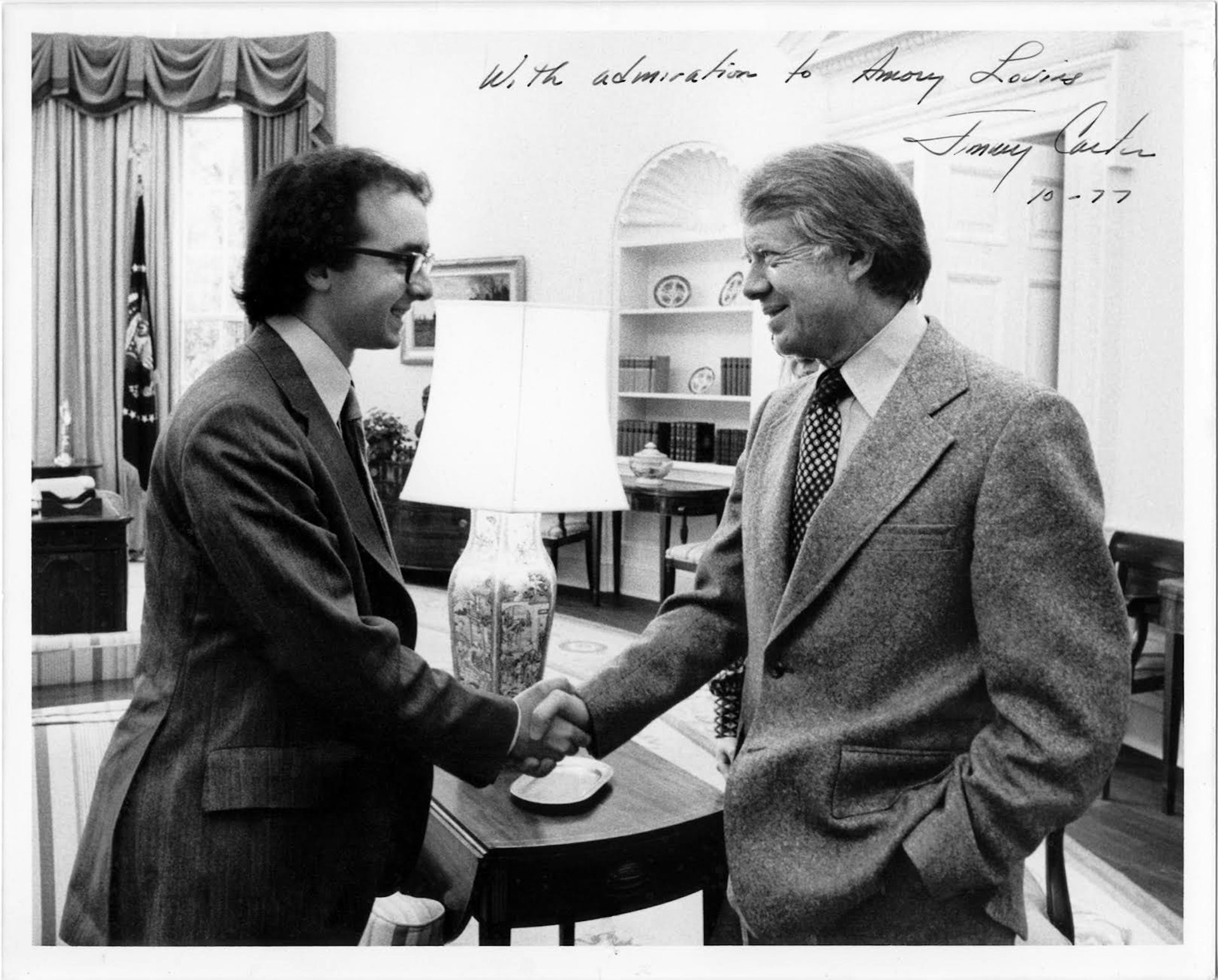
Two U.S. Senate committees called on the 29-year-old Lovins to testify about his ideas that December. The following year, Lovins met with President Jimmy Carter and his top energy advisers in the Oval Office and expanded his article into a book, “Soft Energy Paths: Toward a Durable Peace.” The New York Times chronicled the “raging debate” sparked by Lovins, noting that “even his critics concede that he is something of a genius.”
The article charted two paths for the future of energy. One, which Lovins called the “hard” path, required ever more energy supply to meet inexorably rising demand. With U.S. oil production in decline since 1970, coal and uranium would supply most growth by generating electricity at large, remote facilities.
Lovins instead championed a “soft” path that put people’s wants ahead of supplies. “People do not want electricity or oil … but rather comfortable rooms, light, vehicular motion … and other real things,” he wrote.
The soft path would meet those wants with a diverse array of renewable energy resources, sourced locally where possible. Heating would come from solar collectors and waste heat. Vehicles would be made more efficient and run on biofuels. Wind power would be used to compress air to drive machinery. Oil and gas would be reserved for making chemicals. Lovins hoped that matching form with function could enable U.S. energy use to plateau and then decline so that it could be supplied renewably by 2025.
When Lovins wrote his article, most electricity was generated inefficiently from fossil fuels or uranium, while wind and solar power remained prohibitively expensive. “Photovoltaics were out of bounds intellectually; that gets you laughed out of the room, and I didn’t actually think they would get cheap enough,” Lovins told me in 2025.
Burning or fissioning a fuel to generate electricity inefficiently, transmitting it far away, and turning it back into low-grade heat for homes was “like cutting butter with a chainsaw,” Lovins wrote. Thus, his soft path included only a narrowing lane for electricity, steering it toward essential purposes such as electronics, subways, lighting and smelting. Lovins posited that “an affluent industrial economy could advantageously operate with no central power stations at all,” though he did not advocate going that far.
They were paths, not predictions, and neither path foretold the road actually taken in the 50 years since. Unlike most forecasts from the era, which projected ever-rising demand, the soft path foresaw that total U.S. energy use could plateau, and it almost exactly matched the actual level in 2000. However, Lovins and his contemporaries failed to foresee the drilling advances that have kept oil and gas dominant.
As an environmental engineer completing a book about the visions that are shaping energy realities and opportunities around the world, I think Lovins got it half right about how to secure sustainable energy. Efficiency and renewable energy are indeed essential, but clean electricity and electrification are proving far more important than Lovins expected.
Critics argued that Lovins underestimated the costs of clean technologies and overstated what they could achieve. In fact, opportunities for clean energy have been transformed by unanticipated plunges in the costs of wind and solar electricity, battery storage and LED lighting.
For example, the price per watt of solar panels tumbled from around US$100 in current dollars in 1976 to around 10 cents in global markets today and a President Donald Trump-set minimum price of 38 cents for panels imported to the United States.
Modern technologies turn the chainsaw analogy on its head by making electrification the soft path to reducing energy use. Heat pumps supply several times as much heat as the electricity they consume. Induction stoves cook food far more efficiently than gas flames. And electric vehicles are a few times more efficient than gasoline ones.
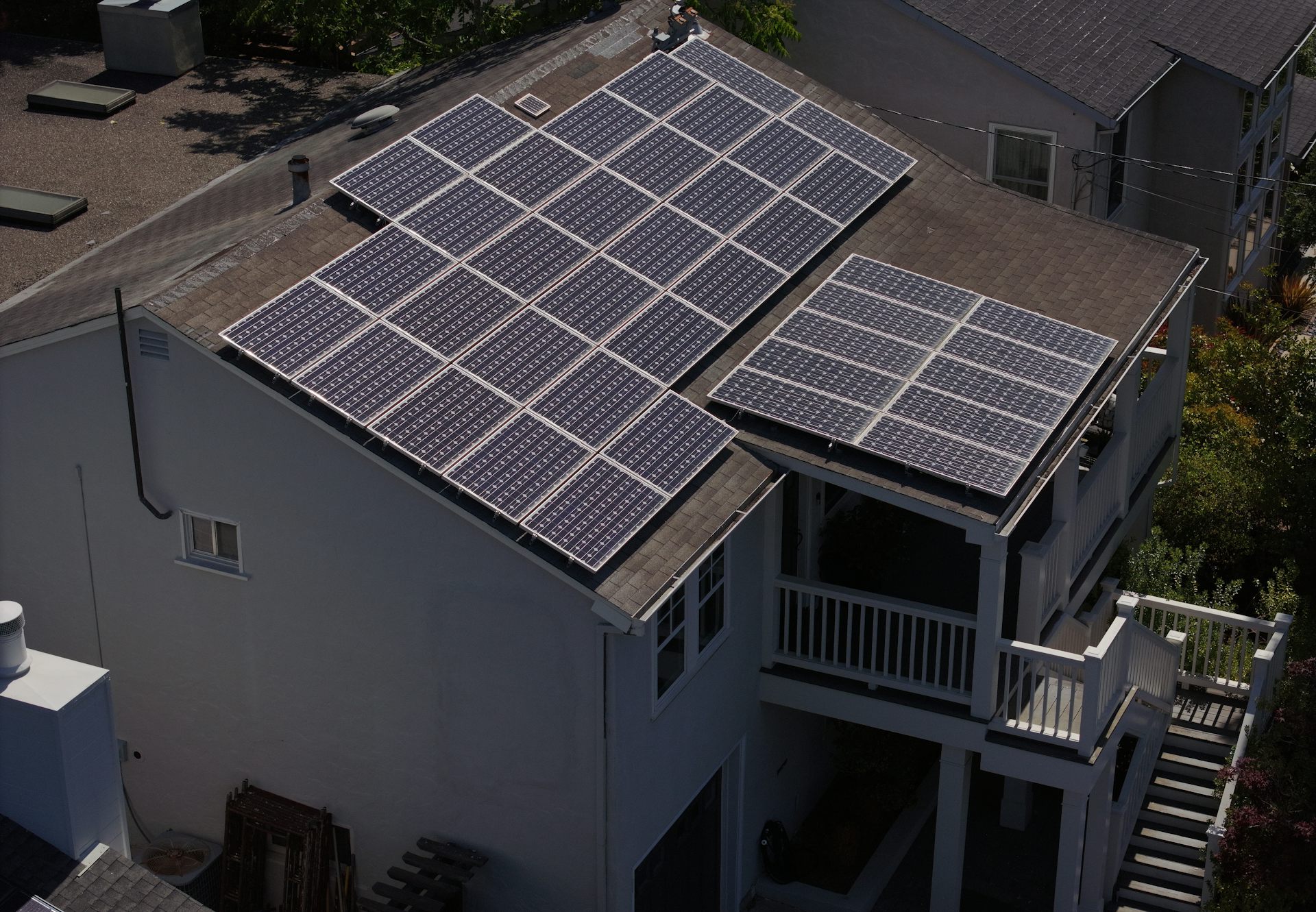
Powered by renewable electricity, from local resources like the solar panels on Lovins’ roof and mine, or from larger solar, wind and geothermal facilities, these technologies can slash fossil fuel use. A diversity of resources blended with high-voltage transmission and storage can make clean electricity available around the clock.
When I visited Lovins’ ultra-efficient, solar-powered Colorado home in 2025, electrification took center stage. It was the induction stove that he showed off first, boiling water at lightning speed, then the batteries in the utility room. Two electric cars were charging outside. The wood stoves had been retired.
Former colleagues of Lovins now advocate an “electrotech revolution” centered on renewable electricity and increased electrification. Lovins told me he embraces their work but is pushing them to add integrative design — optimizing efficiency by redesigning whole systems — a subject he teaches at Stanford.
I believe Lovins was right to focus on matching resources with people’s actual needs. Renewable electrification and efficiency provide the softest path to doing so for the next 50 years.
This article is republished from The Conversation, a nonprofit, independent news organization bringing you facts and trustworthy analysis to help you make sense of our complex world. It was written by: Daniel Cohan, Rice University
Read more:
Americans want electric cars – they just can’t find them
How candidates are (quietly) talking about climate change – 3 election strategies you’ll see across the US
Why and how US and Canadian energy markets are so deeply intertwined
Daniel Cohan interviewed Amory Lovins three times while writing two books.







Comments