River otter spotted on San Mateo Coast is believed to be first since 1800s
Published in Science & Technology News
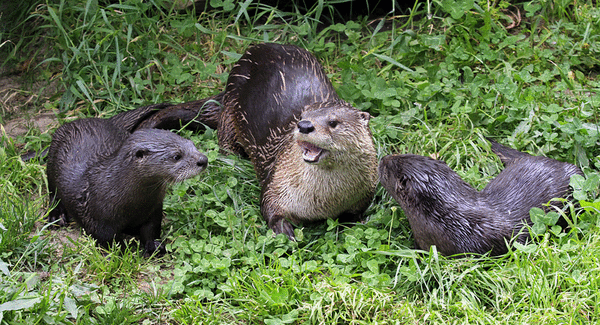
SAN JOSE, Calif. — In a promising sign of wildlife recovery in the Bay Area, researchers have observed a river otter living along the San Mateo coast, the first documented sighting of the nimble, furry-coated swimmers there since the 1800s.
The animal was photographed by a motion-activated wildlife camera three times in recent months on the Cloverdale Ranch Preserve, a 5,100-acre property near Pescadero that is owned by the Midpeninsula Regional Open Space District.
Once numerous across the United States, river otters — a more slender cousin of sea otters who spend their time mostly in inland streams, creeks and bays — were hunted for their dense fur in the 1800s and also experienced population declines due to development and toxic chemicals.
In recent years, river otters have made a comeback across Northern California, with sightings increasingly common along the shores of San Francisco Bay, the Sacramento-San Joaquin Delta and Marin and Sonoma counties.
But they have been slow to expand their range down the coast south of the Golden Gate Bridge.
“To see them showing up on their own where they haven’t been for many, many years is really exciting,” said Matt Sharp Chaney, a wildlife ecologist with the Midpeninsula Regional Open Space District. “It showcases that these animals are resilient enough to reoccupy lands they haven’t been on in many years.”
Researchers say the recovery of creeks and wildlife habitat across the Bay Area in recent decades has made it possible for river otters and other species to make a comeback.
In 2012, a river otter that was seen in San Francisco gained public popularity and was eventually named “Sutro Sam.” One challenge is that biologists can’t tell from the photos, which were taken at night, if the animal is male or female. So it could be Pescadero Pete. But also Cloverdale Chloe.
River otters are not endangered. But they aren’t spread out evenly across California’s landscape.
“They are actually doing really well right now,” said Megan Isadore, executive director of the River Otter Ecology Project, a non-profit group in Marin County.
“All of the environmental laws since the 1970s that supported clean air and clean water — many of which are under attack now — helped them come back,” she said. “River otters are smart. They are adaptable. In areas where they were historically, they are coming back because there are more species on the water that they eat, and more habitat on the land for them to bring up their young.”
River otters can live eight to 15 years in the wild and 20 years or more in captivity.
They eat fish, frogs, salamanders, turtles and even small birds and mice. They often live in burrows near streams, and females can have up to six pups in a litter.
One big mystery is how the animal got to Cloverdale Ranch, a former farm near Pigeon Point Lighthouse that was purchased in the late 1990s by the Peninsula Open Space Trust to block luxury home development.
River otters have been spotted in the marshes and wetlands near Redwood City, Newark, Alameda and other parts of San Francisco Bay, along with Coyote Creek south of San Jose.
It might have swum in the ocean from somewhere farther north, Isadore said, or found a way to swim up creeks from the bay, across the ridge of the Santa Cruz Mountains and then back down a creek to Cloverdale Ranch. There are multiple creeks in the area, including Pescadero Creek, Butano Creek and Gazos Creek.
Ken Hickman captured the photos. Hickman, an amateur naturalist in San Carlos who works with the open space district and other agencies, set up 10 trail cameras in the Cloverdale Ranch Preserve several years ago. He checks the Bushnell cameras, which are mounted on trees, about once a month, he said.
He is working on a project to photograph spotted skunks on the property, which was purchased by the Midpeninsula Regional Open Space District in 2023 and most of which is not yet open to the public.
When he checked his camera, he found the river otter images from July 15, Aug. 31 and Sept. 2. All were taken at night.
“It was a classic surprise,” Hickman said. “I did not expect to see a river otter in that location.”
He showed the images to biologists at the open space district, who checked with other experts and verified that it was indeed a river otter.
Hickman’s cameras have photographed beavers, mountain lions, striped skunks, spotted skunks, coyotes, gray foxes, bobcats, opossums, raccoons, deer and other wildlife on the property, which is east of Highway 1 in a rural area south of Pescadero.
“That property has a real mosaic of wildlife,” he said.
Isadore said she would like to raise funding to do surveys along the San Mateo County coast to look for footprints, scat and other clues to see if there are more river otters moving into the area. Researchers also could use eDNA tests in creeks — a scientific method that identifies animals by collecting genetic material they shed, from hair to feces to skin flakes.
Across California and the United States, many other species that were once in decline, from bison on the Great Plains to gray whales, elephant seals, and brown pelicans in the Pacific Ocean to bald eagles, American alligators and peregrine falcons, have rebounded in number once environmental protections were put in place.
Isadore said she hopes that river otters will continue to spread back into their historic range.
She urged people who see river otters in the wild to take a photo and upload it to her group’s website, https://riverotterecology.org by clicking “report an otter sighting.” Since 2012, the group has documented more than 6,500 river otter sightings in California.
“River otters are coming back to the Bay Area from the North Bay where they were never gone and from the Delta where they were never gone,” she said. “They are coming back and spreading out, and have been for many years. For a long time no one was looking for them. But it is a natural expansion, and it’s really exciting.”
©2026 MediaNews Group, Inc. Visit at mercurynews.com. Distributed by Tribune Content Agency, LLC.






Comments