
Rick Steves’ Europe: Foodie Florence



Sampling Italian cuisine is sightseeing for your palate. The recipe for a successful tour: Start with fresh ingredients, add some talented cooks, mix in a city’s personality marbled with a rich heritage, and sprinkle a happy dining crowd on top. Experiencing Italy's cuisine is a joy, and in the heart of Tuscany, Florence offers a particularly satisfying spread.
Tuscan cuisine is hearty and simple farmer’s food: grilled meats, high-quality seasonal vegetables, fresh herbs, prized olive oil, and rustic bread. Tuscan ribollita combines these ingredients into a savory bean-and-bread soup. If a dish's name ends with“alla toscana” or“alla fiorentina,” it’s cooked in the Tuscan or Florentine style – usually a preparation highlighting local products.
Restaurant competition in Florence is fierce, so it’s easy to find delicious Tuscan specialties at fair prices – even in the tourist zone. But for the most authentic ambience and better-quality meals, I like to hike across the Arno River to the quiet Oltrarno neighborhood. This is where I find the best bistecca alla Fiorentina– a thick T-bone steak, generally grilled very rare and lightly seasoned. The best (and most expensive) is from the white Chianina breed of cattle you’ll see grazing throughout Tuscany.
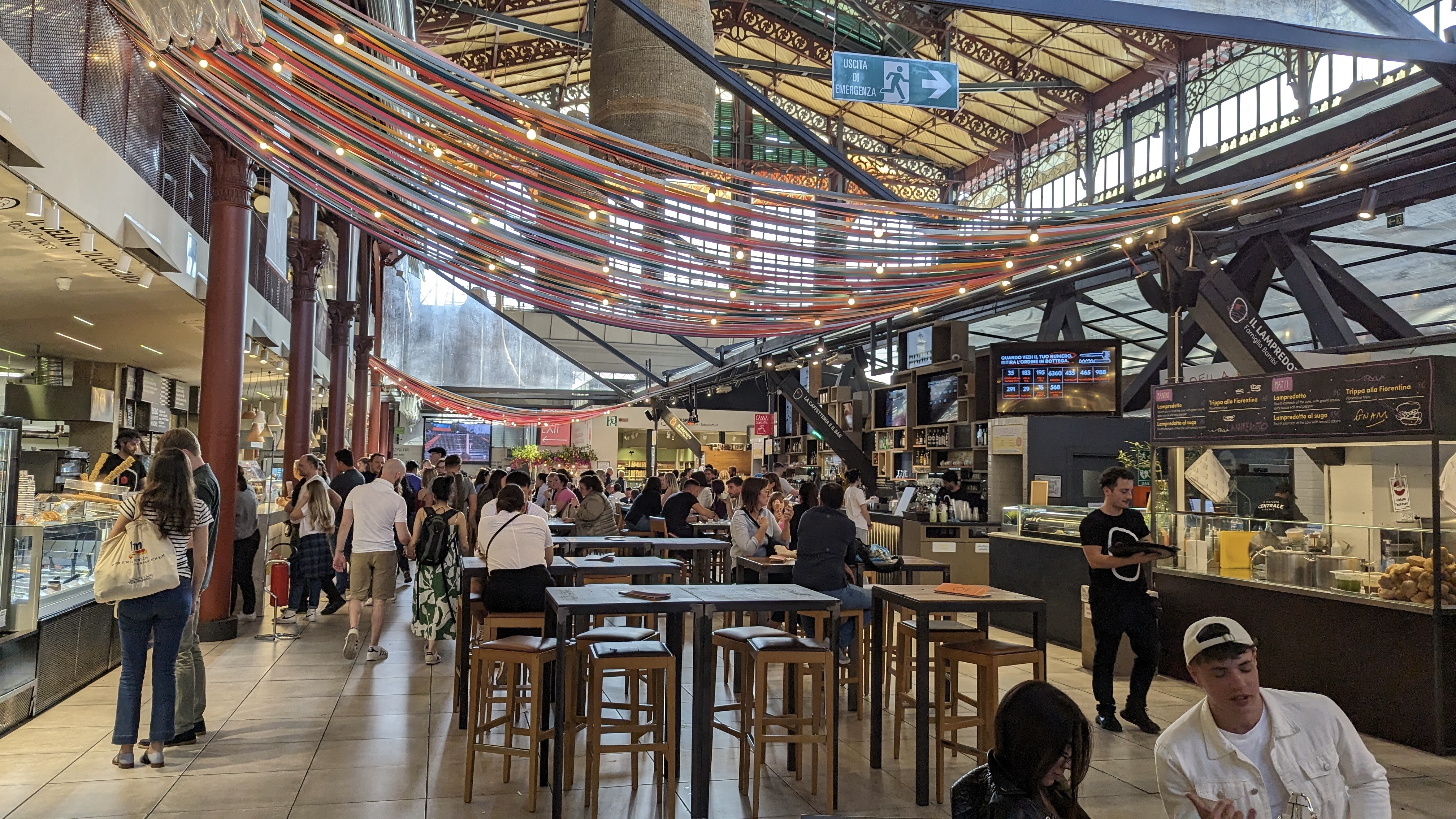
But dining out is only one option for foodies. The heart of the food scene in Florence is the trendy, Industrial Age, steel-and-glass Mercato Centrale (Central Market). Along with all the must-see museums, this market is one of the great sights in Florence. The ground floor is a thriving edible wonderland of vendors selling meat, fish, produce, and other staples to a mostly local clientele. And the upstairs is a bustling food court open late into the evening.
I come here to gather a picnic of fresh mozzarella cheese, olives, fruit, and crunchy bread. But these days, picnickers like me need to be discreet – Florence recently imposed a ban on eating on public sidewalks and doorsteps in its historic center (and violators risk a hefty fine).
At the market’s tripe stand, it’s easy to see that locals eat just about every bit of the cow…and some bits unique to the bull, as well. Tourists may find it hard to stomach, but Florentines’ favorite quick lunch is a panino (sandwich) of trippa or lampredotto– the lining from the second and fourth stomach of a cow, respectively – slow-boiled to tender perfection.
Offal sandwiches originated as an affordable source of protein for working-class Florentines. While on a lunch break from chipping trapped statues out of blocks of marble, Michelangelo would swing by a Florentine market and dig into a bun stuffed with stewed organs. This longstanding tradition nearly faded away a few years back, but the recent worldwide trend for “nose-to-tail” eating has kicked off a renaissance of food carts selling this local delicacy.
While offal's worth trying (be brave), many carts also offer easier-to-stomach bollito (stewed beef) and the always delicious porchetta (roast pork with herbs). No matter what you order, watch closely as the food-cart owner pulls the lid off of a gently simmering pot, forks out some tender meat, and – if you’re lucky – dips the bun in the broth before topping it with spicy and tangy sauces. If you have the guts...give trippa a try. It’s offal.
Cooking classes are an ideal way to learn a thing or two about this region’s prodigious culinary tradition. Classes in Florence range from multiday or multiweek courses for more serious chefs, to two- or three-hour crash courses for tourists. These are some of my favorite activities in Tuscany, combining a unique Italian experience (learning to make, say, pasta from scratch) with a satisfying meal, all in just a few hours.
In my experience, the best casual cooking classes are taught in a real kitchen environment (rather than a stuffy classroom or “show” kitchen) and have a spirit of fun and collaboration. After a couple of hours cooking, everyone sits down to a hard-earned (if not always flawlessly executed) meal. They’ll usually send you on your way with the recipes you prepared that day.
I finish nearly every Italian meal with a gelato-fueled stroll. For many, Italy’s best and most flavorful ice cream is in Florence. I stay away from places with heaping mounds of brightly (artificially) colored gelato and instead look for covered metal tins with muted-hued gelato that’s more likely to be homemade. Pistachio is a good test flavor. If a stand sells bright green pistachio gelato, I move on – green is the color of the shell. You want a beige-brown pistachio...the color of the nut. Seasonal flavors – like fico (late summer fig) or castagna (autumn chestnut) – are also a good sign.
Florence offers a wide array of foodie activities and Tuscan delicacies beyond the usual Italian pizza and pasta fare. Consider these edible experiences part of your sightseeing duty. Buon appetito!
(Rick Steves (www.ricksteves.com) writes European guidebooks, hosts travel shows on public TV and radio, and organizes European tours. This column highlights some of Rick's favorite places and travel insights over a lifetime of exploring Europe and sharing his discoveries. You can email Rick at rick@ricksteves.com and follow his blog on Facebook.)
©2026 Rick Steves. Distributed by Tribune Content Agency, LLC.
(c)2026 RICK STEVES DISTRIBUTED BY TRIBUNE MEDIA SERVICES, INC.









Comments