Beef prices are high. This butcher has suggestions
Published in Variety Menu


PITTSBURGH — The price of ground beef has gone up 51% since February 2020. In the past year, the U.S. has seen record low cattle numbers because of drought over the past few years. Tariffs on imports, rising input costs and cattle disease have also put pressure on beef prices.
The escalation will continue into this year, according to the U.S. Department of Agriculture, with beef and veal prices predicted to rise 9.4%.
Steve Dawson feels your pain.
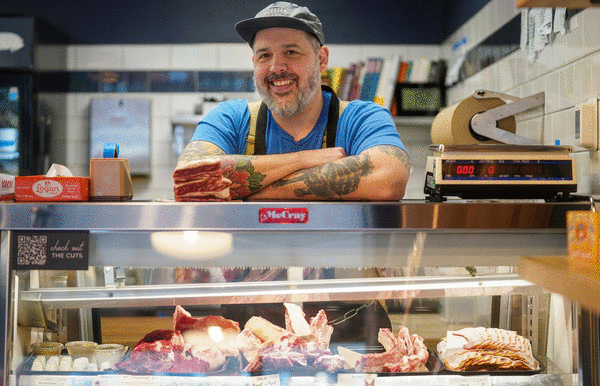
He is the proprietor of Fat Butcher, a whole-animal butcher shop in Lawrenceville, Pennsylvania. Fresh from a recent consult with his accountant, Dawson says that his beef expenses had risen 26% in the past year, forcing him to raise his prices.
Dawson relies on local small farmers for his meat; they are experiencing the same headwinds as everyone else.
"Everything from feed costs to global beef prices" are driving up their expenditures and prices, he says.
Despite these challenges, Fat Butcher has been growing steadily since opening in 2022. For beef alone, Dawson has quintupled the amount of meat he is processing since his debut. He attributes this to not relying on advertising to drive sales but by allowing them to grow organically by word of mouth and through social media posts.
Another reason could be that some customers have seen the value of being able to consult a neighborhood butcher.
'Roast beef' alternatives
Dawson's shop offers pork, lamb and poultry, but that won't cut it for customers who are dyed-in-the-wool beef eaters.
They come in asking for more expensive beef cuts such as rib roasts and tenderloin. He can offer less pricey alternatives, but they may require some compromises, he says.
"It may take you a little bit more time or may be a little less versatile in terms of how you have to cook it," he says.
Still, some lower-priced cuts are ones he personally likes to prepare.
Rather than a rib-eye, consider tougher cuts, which are best for braising. Beef chuck or shank and top and bottom round are good choices.
Brisket is another favorite, but prices can be higher for specialty cuts or smaller quantities. Whole brisket is generally cheaper. Otherwise, a smaller-size chuck roast can substitute.
If you want a more festive-style roast that you can cook to rare or medium, Dawson recommends a New York strip loin roast instead of tenderloin.
"Most people think of a New York strip as a steak," he says. "But if it's uncut and it's trimmed, it will be roughly the same if not a little bit larger than a tenderloin."
And 40% less expensive. Local grocers were recently selling tenderloin for about $30 per pound while a strip roast was around $18 per pound. The cooking technique for both is the same, he says.
"If someone likes a fattier cut, I'll usually recommend tri-tips or a chuck eye roast" instead of a rib roast.
While a local grocery chain was recently charging up to $28 per pound for a rib roast, tri-tips or a chuck eye roast cost about half that.
At his shop, Dawson is able offer a wider selection because he practices whole-animal butchery,
"I think in general, if you look at the factory farm approach, the New York strips, the rib-eyes and the tenderloins get taken off and the rest of the beef will get cut up and sent to a grinder to go to McDonald's," he says.
"What we do is we utilize a lot of those unknown cuts because they have value."
Foreign cuts
Dawson sometimes looks to other parts of the world for inspiration for lesser-known cuts. One of them is matambre, often seen in Argentinian and Brazilian steakhouses.
"One of the ways they do it in Argentina is they'll cook the matambre and then add pizza toppings to it and they'll cut it in the little triangles," Dawson says.
Matambre — which translates as "hunger killer" — must be tenderized so it isn't too tough. It can be pounded with a mallet and cooked quickly over a high flame, left in an acidic marinade for several hours or — especially in preparations where it is stuffed or rolled — cooked low and slow to ensure connective tissue breaks down.
Another method Dawson recommends for tender beef is to reverse-sear it. That means cooking it at 200-275 degrees in the oven until just below your desired temperature, then searing it quickly in a hot skillet for a few seconds to get a nice crust. Some people do the same thing on a grill.
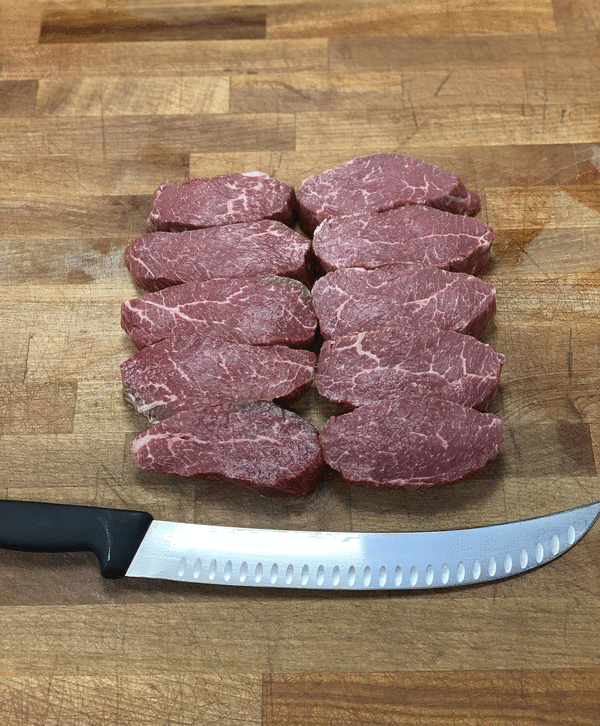
He suggests this method for another of his favorite cuts, the ranch steak. He says it's a good "weeknight steak" to satisfy hungry teenagers.
"It's half the price of a rib-eye," he says. "It's fairly lean and has a slightly smaller window that you have to cook it to make it tender."
He suggests cooking ranch steaks to medium.
"At medium it's a great steak," he says. "At rare, it's not."
Talk to your butcher
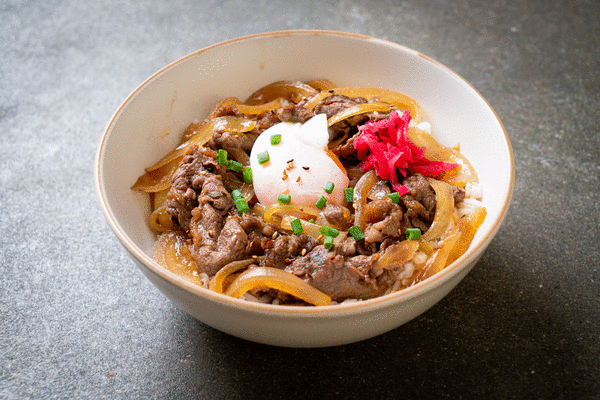
Another road to take for cost savings is the Asian route, where meat is more of a condiment than the main course in dishes such as hotpots, donburi, bulgogi. Here you can emphasize quality over quantity.
Meat is frozen and sliced razor-thin, then quickly cooked in a soup or sauce. Frozen cuts are available at Asian markets such as Many More Marketplace in the Strip District. You can also prepare thin slices at home with partially frozen meat and a chef's knife.
Dawson says he can offer this style of meat, though he needs advance notice. "It takes time to freeze it and slice it."
Other cost-saving moves include buying organ meat, like liver or tongue.
Above all, Dawson recommends talking to your butcher about your needs and tastes. And in a small shop like his, order ahead.
"We always have our beef come in on Thursdays and there's certain cuts that we take off the beef right away and get them ready," he says.
"Then there's certain custom cuts ... that we need to know before we do our breakdown. We always suggest people put in orders early in the week so that we can custom cut those things."
Apple Cider Pot Roast
PG tested
This pot roast has a sweet but complex sauce. The recipe calls for it to be made in a slow cooker but it could also be slow-cooked on the stove or in a low (300-degree) oven.
4 teaspoons kosher salt
2 teaspoons freshly ground black pepper
1/4 teaspoon cayenne pepper
4 pounds beef chuck roast
1 tablespoon avocado oil, or other high heat vegetable oil
3 tablespoons butter
1 yellow onion, diced
4 cloves garlic, minced
2 tablespoons all-purpose flour
1/3 cup cider vinegar
4 cups apple cider
1 tablespoon Worcestershire sauce
2 tablespoons Dijon mustard
1 1/2 teaspoons poultry seasoning
2 cups chicken broth
3 ribs celery, cut into 1/2 -inch pieces
3 large carrots, peeled, cut into 1 1/2 -inch pieces
Cornstarch slurry (optional)
1 rounded tablespoon cornstarch
2 tablespoons water
Mix salt, pepper and cayenne together in a small bowl. Season all sides of the beef with spice mixture.
Add oil to a large, heavy-bottomed skillet and place over high heat. When oil starts to shimmer, transfer in the beef and brown very thoroughly on both sides. Once it's browned, turn off heat and remove to a plate. If using a Dutch oven instead of a slow cooker, the browning step can be done directly in the Dutch oven.
Add butter to the pan and raise heat to medium. Add onions and a big pinch of salt, and cook, stirring, for a few minutes until the onions turn translucent. Add garlic and cook about 30 seconds more, then stir in flour. Cook, stirring, until flour starts to stick onto the bottom of the pan, 1-2 minutes.
Add vinegar and apple cider and whisk to combine, scraping the bottom of the pan to deglaze. Raise heat to high and bring the liquids to a boil. Add any juices from the plate of beef back in; whisk in Worcestershire sauce, Dijon, and poultry seasoning. Boil on high heat until the liquids have reduced by about half and mixture has thickened slightly.
Once reduced, add chicken broth and boil again on high heat, reducing by about half again. Turn off heat and set aside.
Place beef in a slow cooker, and add celery and carrots on top. Pour in cooking liquids from the pan. Lock on lid and cook on low until the meat is fork tender, but not yet falling apart, about 8 hours.
Remove meat and vegetables to a platter. Taste the sauce for seasoning and adjust as needed; strain sauce through a sieve if desired. Ladle some sauce over pot roast and vegetables, and serve with remaining sauce on the side.
For an optional step, the sauce can be thickened further after meat and veggies are removed. Whisk cornstarch and water together in a small bowl to make a slurry. Turn heat up to high, bring the sauce to a simmer and whisk in cornstarch slurry. Simmer until thickened, strain, if desired, and serve.
Serves 6.
— John Mitzewich at allrecipes.com
Pan-fried Marinated Beef
PG tested
This is one of the quickest and tastiest meals I've made in a while. The thin cut of meat cooks in a flash. It could easily be made with thin-cut lamb or pork, which are also often sold in Asian markets.
1/2 pound thinly sliced beef
1/4 onion, sliced thinly
1 tablespoon oil
For marinade:
2 tablespoons soy sauce
1 tablespoon mirin (Japanese sweet cooking rice wine)
1 tablespoon sugar
1 tablespoon grated ginger
1 teaspoon corn or potato starch
2 teaspoons water
1 tablespoon sesame oil
For garnish:
1 scallion, chopped
1 teaspoon roasted sesame seeds
In a bowl, whisk together soy sauce, mirin, sugar and grated ginger; set aside.
Put the thinly sliced beef into a medium zip-top bag and pour the marinade over the beef; gently squeeze the bag to mix the sauce well with the beef.
Seal and place the bag in the refrigerator for at least 30 minutes.
Heat oil in a pan over low heat until shimmering; add in onion and saute about 5 minutes or until soft and lightly browned.
While the onion is being cooked, transfer the beef to a large mixing bowl.
Mix potato starch with water and pour starch water and sesame oil over the beef; gently agitate to make sure the beef is well coated.
Add marinated beef into the pan on top of the sautéed onion, then spread it out evenly in the pan with a pair of chopsticks and let cook for 4-5 minutes until cooked though, stirring occasionally.
Sprinkle with sesame seeds and chopped scallion; continue to cook for 30 seconds.
Serve over rice in a bowl, with steamed greens or a cooked egg, if desired.
Serves 2.
— adapted from Spice the Plate
© 2026 the Pittsburgh Post-Gazette. Visit www.post-gazette.com. Distributed by Tribune Content Agency, LLC. ©2026 PG Publishing Co. Visit at post-gazette.com. Distributed by Tribune Content Agency, LLC.








Comments