A practical guide to staying alert in an unpredictable world
Published in Mom's Advice
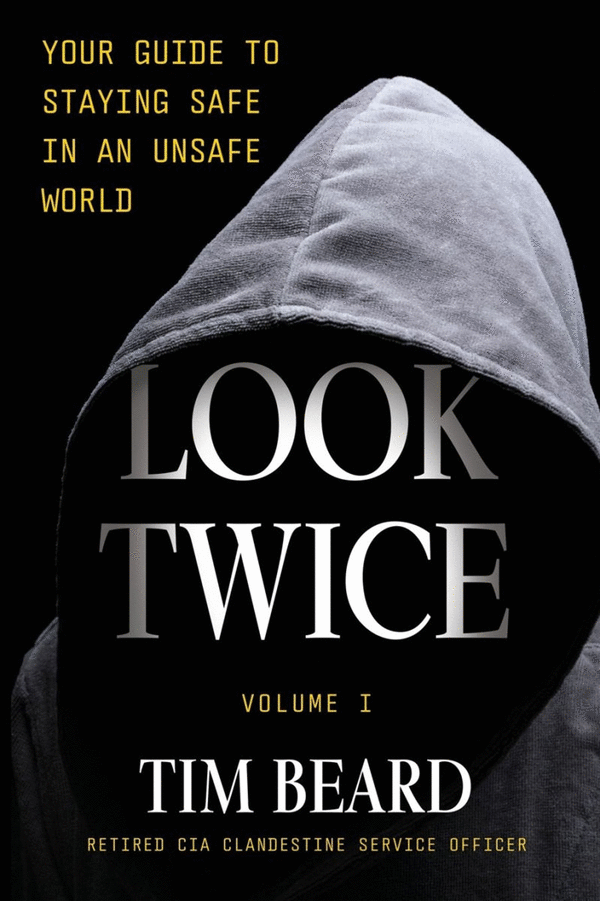
"Look Twice: Your Guide to Staying Safe in an Unsafe World, Volume I" lands in a steady, practical place. Tim Beard writes like someone who has spent years thinking about risk and then came home to translate that mindset for ordinary life. The result feels less like a lecture and more like a field manual you can carry into Monday morning.
This first volume lays the foundation for a larger series. Beard’s premise is simple: you control more than you think, and small choices add up. He does not sell heroics. He sells preparation, awareness and judgment. That grounded tone keeps the advice usable for people who don’t want to live in a constant state of alarm.
The phrase “look twice” becomes more than a slogan. Beard argues that most people glance without truly seeing, then realize they cannot describe what was right in front of them. Closing that gap—between looking and registering—can change the outcome of a tense moment. It is a subtle shift with practical consequences.
Volume I revolves around what Beard calls the “Look Twice mindset”: plan early, stay aware and avoid trouble before it starts. The book remains practical, but it also acknowledges nerves, distraction, and how stress affects the body. Beard explains why people freeze, why attention narrows and why “do something” often beats “do nothing,” even if the action is simply stepping away to reassess.
Importantly, the book does not promote fear. Beard draws a clear line between paranoia and preparedness. You cannot eliminate risk, he argues, but you can shape it. That distinction keeps the tone calm rather than catastrophic.
One of the most useful early lessons is focusing on what is probable, not merely possible. “Possible” thinking can spiral into constant reaction. “Probable” thinking directs energy toward realistic threats.
Beard introduces a red–yellow–green system for everyday situations. Green means normal behavior. Yellow signals increased awareness. Red means disengage, leave or change plans.
The strength of this tool lies in its simplicity. Most daily decisions—where to park, how much to share with a stranger, whether to take the elevator—happen quickly. The traffic light model gives structure to instinct, turning “gut feelings” into actionable choices.
A recurring strength of the book is its tone. Beard does not shame readers for past blind spots. He writes as if attention is a skill dulled by distraction but fully recoverable.
Another thread is the idea of staying “under the radar.” Beard references the familiar “gray man” concept but uses it less as a call to invisibility and more as a strategy to reduce friction. Blend into your environment. Avoid drawing unnecessary attention. Limit predictable routines that advertise your habits.
He does not argue for a bland life. Instead, he asks readers to weigh the cost of standing out in certain contexts. Time of day, visibility and predictability all matter. Context, Beard reminds us repeatedly, is everything.
"Look Twice" focuses on four arenas: home, workplace, daily errands and transportation. Beard relies on scenarios and checklists, mirroring how safety habits are built—picture the situation, rehearse the response and refine the plan.
At home, he encourages treating the house as a private space, not a public stage. He discusses routine vulnerabilities—unfamiliar workers, visible valuables and predictable habits—without sensationalism.
At work, Beard urges readers to notice access points, visitor policies and what “normal” looks like in their building. Observation remains the starting point.
Out in town, he focuses on transitional spaces: parking lots, ATMs and entrances. His advice centers on positioning, timing and attention. Leave early rather than late. Choose visibility when it serves you. Avoid turning a tense moment into a confrontation you didn’t need.
Transportation receives significant attention. Beard examines distraction, road rage and the temptation to “win” encounters that should never be contests. Planning routes and safe destinations, he argues, beats relying on perfect improvisation under stress.
No book can guarantee safety, and Beard does not promise that. What he offers instead is a set of habits: notice more, plan earlier and disengage sooner. Volume I lays the groundwork, providing vocabulary and decision tools readers can apply immediately—and build on over time.








Comments