Early Fashion Trends for 2027 Point to Practical Romance
Published in Fashion Daily News
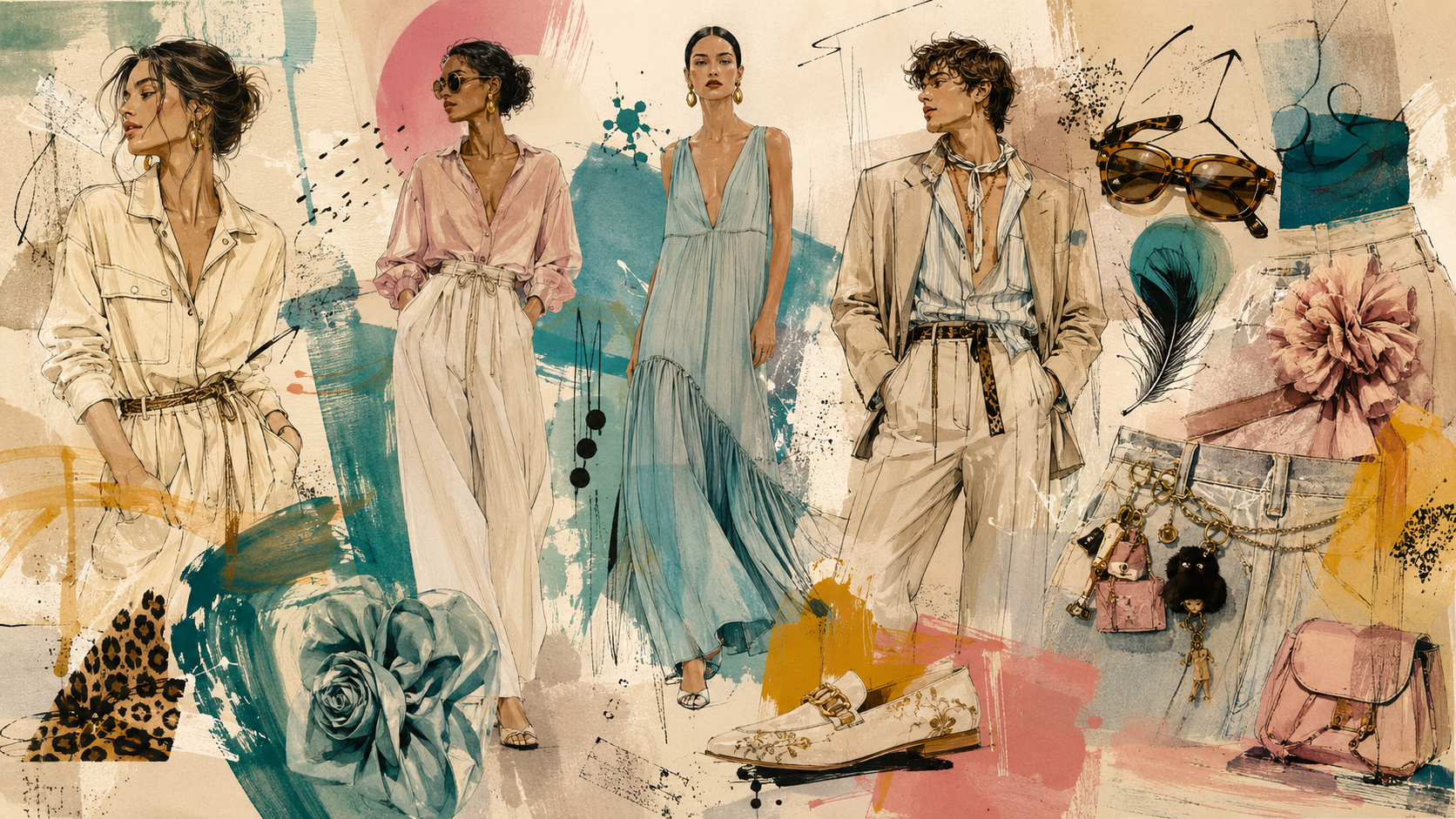
The fashion calendar moves far ahead of the seasons shoppers see in stores. Although the major spring 2027 womenswear shows have not yet supplied the industry’s final verdict, resort 2027 collections and spring 2027 menswear presentations are already providing a useful preview.
The emerging message is not one of complete reinvention. Designers are combining dependable clothing with expressive details, emphasizing pieces that can survive ordinary life while still creating excitement. Vogue described resort 2027’s prevailing mood as a “practical and romantic approach to everyday clothes,” an assessment that neatly captures many of the season’s earliest signals. ([Vogue][1])
Utility Clothing Gets a Romantic Upgrade
Carpenter pants, button-down shirts and protective outerwear are moving beyond their workwear origins. Reinforced knees, tool loops and roomy pockets appeared alongside silk flowers, jeweled details and softly gathered dresses in resort collections.
This creates an appealing tension. A practical pair of trousers might be worn with a delicate blouse, while a crisp shirt can balance an ornate skirt. The trend is less about dressing like a construction worker and more about recognizing that useful clothing can also be thoughtfully designed.
Expect utility details to reach dresses, skirts and jackets during 2027. Pockets will remain important, but they may be placed asymmetrically or incorporated into otherwise polished garments. The strongest versions will feel functional rather than costume-like. ([Vogue][1])
The Waistline Is Dropping
After several seasons of cropped shirts and high-rise pants, designers are beginning to experiment with longer-looking torsos. Drop-waist dresses, low yokes and skirts that flare below the natural waist appeared repeatedly in resort 2027 collections.
The silhouette has roots in the 1920s, but the modern interpretation does not require a complete flapper revival. A knit dress may skim the torso before widening at the hips, or a blouse may extend into a deep waistband before meeting a fuller skirt.
The look will not flatter or appeal to everyone, which means retailers are likely to offer softer variations. A long tunic, untucked shirt or lower-slung belt can suggest the trend without forcing the body into an extreme proportion. ([Vogue][1])
Texture May Matter More Than Prints
One of the clearest early developments is an increased emphasis on how clothing feels and moves. Designers applied animal patterns to fuzzy, flocked and pony-hair-like materials, turning familiar leopard, zebra and tiger motifs into tactile statements.
Trench coats were reworked in moiré, satin and other dressier fabrics. Rosettes appeared in silk and chiffon, while feathers and plumage surfaced in contemporary resort collections. WWD identified pastels and plumage among the key commercial trends for resort 2027. ([Vogue][1])
This does not necessarily mean everyday wardrobes will become theatrical. More likely, shoppers will see texture concentrated in smaller areas: a feather-trimmed cuff, a dimensional flower on a shoulder, a fuzzy bag or a polished coat worn over simple basics.
Colors Will Be Mixed Rather Than Matched
Early 2027 collections do not point to one dominant color. Instead, designers are pairing shades that might previously have been kept apart. Pastels are appearing beside saturated brights, while sweet pinks and pale blues are being interrupted by acidic yellow, green or orange.
Vogue’s resort report noted combinations that moved between “sour and sweet” and “pastel and saturated.” WWD also highlighted bright color as a major resort 2027 direction. ([Vogue][1])
For consumers, this may be one of the easiest trends to adopt. A brightly colored shoe, scarf or bag can update neutral clothing without requiring a new wardrobe. Color blocking may also become less rigid, with mismatched accessories and unexpected layering replacing perfectly coordinated outfits.
Menswear Is Becoming Softer and More Decorative
Spring 2027 menswear collections offered oversized shorts, fluid tailoring, three-button jackets, decorated denim and a quiet return of skinny jeans. Designers also used scarves, brooches, cummerbund-like waist treatments and delicate shoes traditionally associated with women’s wardrobes.
The result was not a single new male uniform. It was a broader collection of choices, ranging from beach-inspired casual clothing to relaxed suits made from fabrics that moved easily around the body. ([Vogue][2])
Some of these ideas will cross into womenswear and gender-neutral clothing. Expect longer shorts, loose jackets, lightweight trousers and ornamental accessories to appear throughout the market. The broader lesson is that tailoring no longer has to feel stiff, while casual clothing does not have to look unfinished.
Hotter Weather Is Changing the Clothes
Climate is becoming a practical design consideration rather than a seasonal footnote. Coverage of the spring 2027 menswear shows noted an increased reliance on lightweight linen, silk blends and breathable tailoring as designers responded to extreme summer heat. ([Vogue][3])
That shift may encourage looser sleeves, wider pants, open collars and garments that create movement around the body. Layering will remain important, but the layers themselves are likely to become lighter.
Consumers may also become less interested in clothing that looks good only in an air-conditioned room. Washability, airflow and the ability to move comfortably between indoor and outdoor environments will increasingly influence which trends survive beyond the runway.
Accessories Are Moving to the Body
Bag charms helped revive highly personalized accessories, but decoration is now migrating to belts, belt loops and waistbands. Recent fashion-week street style featured miniature pouches, playful figures, keys and other objects hanging from the waist. ([Vogue][4])
Brooches, scarves, layered jewelry and jeweled garments offer another version of the same idea. Accessories are no longer treated merely as finishing touches. They are becoming part of the structure and personality of an outfit.
This trend rewards creativity because it does not depend on buying an entirely new look. Vintage pins, handmade charms, necklaces and small keepsakes can personalize an ordinary jacket, pair of jeans or work shirt.
Fashion’s Definition of Its Audience Is Expanding — Slowly
Australian Fashion Week’s resort 2027 presentations included notable age diversity, with models in their 50s, 60s and beyond appearing across multiple shows. Vogue reported that mature casting was one of the week’s most consistent developments. ([Vogue][5])
Progress remains uneven. Vogue Business found that plus-size representation accounted for only 0.2% of looks in the spring and summer 2027 menswear shows it analyzed, while mid-size representation reached 2.3%. ([Vogue][6])
The contrast reflects fashion’s larger challenge. Designers increasingly speak to consumers of different ages and lifestyles, but runway bodies still represent a limited portion of the people who buy clothing. In 2027, the most meaningful trend may not be a particular skirt or jacket. It may be the continued demand to show fashionable clothing on a wider range of people.
Early evidence suggests 2027 will favor useful garments with unusual details: practical trousers with romantic tops, fluid tailoring with decorative accessories and familiar clothes transformed through color and texture. The smartest approach is not to chase every forecast. It is to identify the ideas that make an existing wardrobe more comfortable, expressive and personal.
========
Maribel Rowan is a freelance fashion and culture writer who studies the relationship between runway experimentation and everyday clothing. She writes about personal style, design history and the social forces that shape what people wear. This article was written, in part, utilizing AI tools.





Comments