No shoes indoors: whose rules are best?
Published in Home and Consumer News
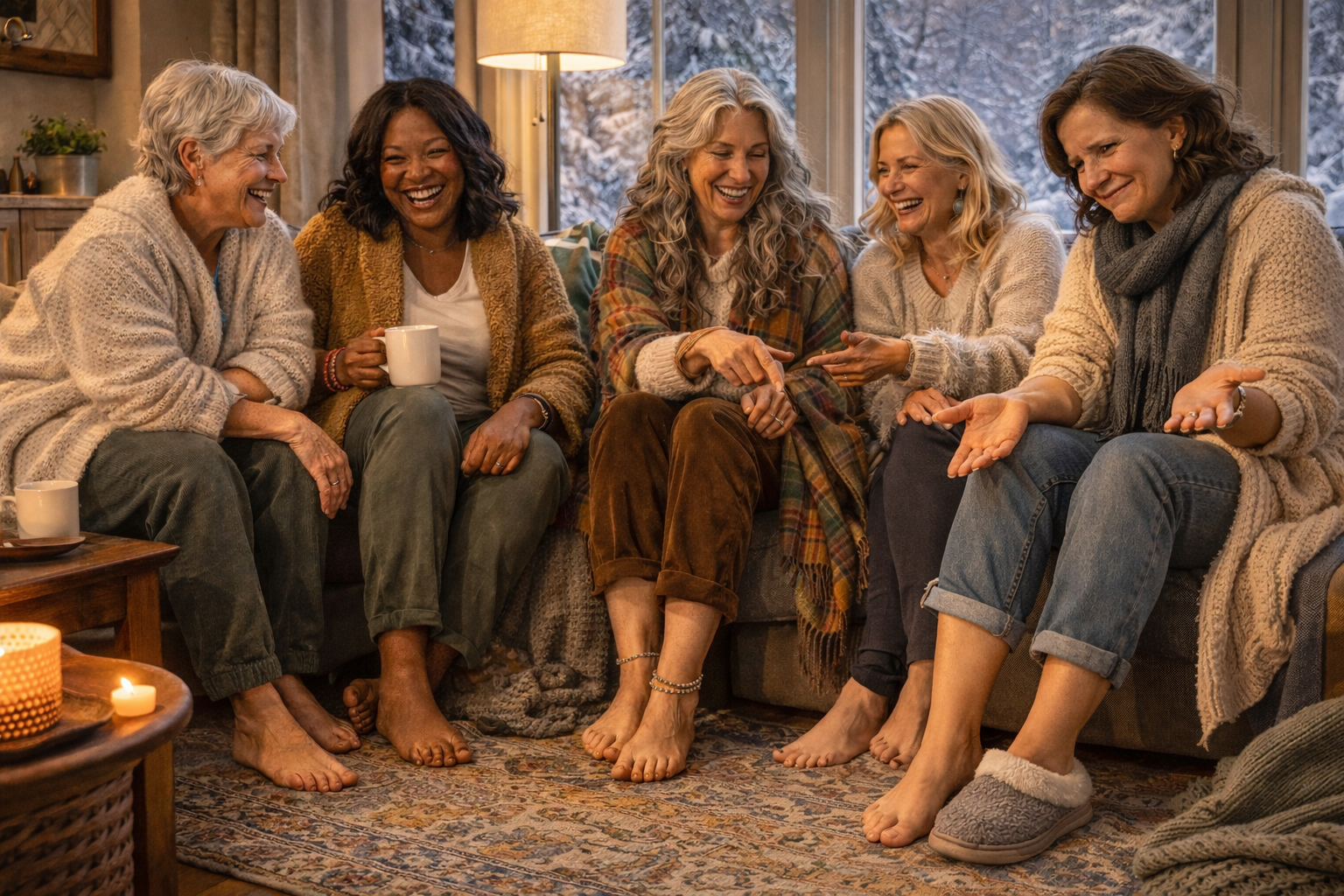
The rule at our front door is simple: shoes off.
It’s not posted on a sign or printed on a welcome mat, but everyone who crosses the threshold understands it within seconds. There’s a pause, a glance downward, and then the small choreography begins—laces loosened, heels slipped free, a quiet negotiation between habit and hospitality.
What comes next, though, is where things get interesting.
Because once the shoes are off, the question becomes: what now?
The Case for Bare Feet
For many households, the answer is immediate. Bare feet. No substitutions, no compromises.
There’s a practical logic to it. Outdoor shoes track in everything—dirt, pollen, the invisible residue of sidewalks, parking lots, and public restrooms. Removing them at the door is the first line of defense. Going barefoot inside is the cleanest extension of that instinct.
But the appeal runs deeper than cleanliness.
Bare feet change how people move through a space. There’s a softness to it, a quieter presence. Floors are felt, not just crossed. Wood has a temperature. Tile has a mood. Even carpet becomes something more than background.
In homes where barefoot living is the norm, there is often a subtle shift in atmosphere. People sit more easily. They tuck their legs beneath them. They settle.
There’s also a sense, difficult to quantify but easy to recognize, of being “off duty.” Shoes are associated with leaving, with errands, with the outside world’s demands. Removing them signals a transition. Bare feet complete it.
The Argument for House Shoes
Not everyone is ready to go fully barefoot.
House shoes—slippers, slides, soft-soled indoor footwear—offer a middle ground. They preserve the cleanliness of a shoe-free home while providing a layer of comfort and, for some, a sense of structure.
For older adults or those with foot concerns, house shoes can be less a preference and more a necessity. Arch support, cushioning, and protection from hard floors can make a significant difference over the course of a day.
There is also the matter of temperature. In colder months, even in milder climates, floors can hold a chill. Tile and hardwood, especially, can feel uninviting first thing in the morning. House shoes provide insulation without reintroducing the grime of the outdoors.
And then there is habit.
For people who have spent decades wearing shoes from morning until night, going barefoot indoors can feel oddly exposed. House shoes offer continuity—a familiar presence that bridges the gap between outside and in.
The Cultural Divide at the Door
Across the United States, norms around indoor footwear vary widely. In some regions and households, removing shoes is expected. In others, it’s optional, even unusual.
These differences often surface most clearly during visits.
Guests hesitate. Hosts wave it off or insist. A small pile of shoes gathers near the entryway, or doesn’t. The moment can be awkward, but it’s also revealing.
At its core, the question of shoes indoors is about boundaries—what is considered clean, what is considered comfortable, and how much of the outside world is allowed to follow us in.
In recent years, there has been a noticeable shift toward shoe-free homes, driven in part by increased awareness of hygiene and in part by changing design sensibilities. Open floor plans, light-colored rugs, and multipurpose living spaces all encourage a more mindful approach to what touches the floor.
Comfort, Redefined
What counts as “comfortable” turns out to be highly adaptable.
People who grow up in barefoot households often find shoes indoors restrictive, even unnecessary. Those accustomed to wearing shoes all day may initially feel the opposite—that something is missing.
But over time, preferences can change.
Some who adopt a no-shoes policy find themselves gradually abandoning house shoes as well, drawn to the simplicity of bare feet. Others experiment with different types of indoor footwear, searching for the right balance of support and ease.
There is no single endpoint. Instead, there is a spectrum of choices, shaped by lifestyle, climate, health, and personal history.
The Quiet Ritual
Regardless of where a household lands—barefoot or house shoes—the act of removing outdoor footwear has taken on a quiet significance.
It is a threshold moment.
Shoes come off, and with them, a layer of the day. The rush of errands, the tension of traffic, the low-level vigilance of public spaces—all of it is, if not left behind entirely, at least acknowledged and set aside.
In its place comes something slower.
Bare feet on the floor. Soft steps. A different kind of attention.
Even for those who slip into house shoes immediately, the ritual holds. The outside is exchanged for the inside, the public for the private, the structured for the lived-in.
No Single Right Answer
The debate between bare feet and house shoes is, in the end, less a conflict than a reflection of how people choose to inhabit their homes.
For some, the answer will always be bare feet—simple, direct, and connected. For others, house shoes provide comfort, support, and a sense of continuity that feels just as essential.
Both approaches share a common foundation: the decision to leave outdoor shoes at the door.
What happens after that is personal.
In a world that often feels crowded with rules and expectations, this is one choice that remains firmly within the domain of the individual household. It is shaped by preference, refined by experience, and quietly reinforced each time someone steps inside and pauses to decide what comes next.
At the threshold, shoes in hand, the question is simple.
Not whether to take them off.
But how, exactly, you want to feel once you’re home.
========
Marianne Holloway writes about domestic life, everyday rituals, and the subtle decisions that shape how we live. She focuses on the intersection of comfort, habit, and home design. This article was written, in part, utilizing AI tools.





Comments