Ineos is moving auto production to the US. Here's why
Published in Automotive News
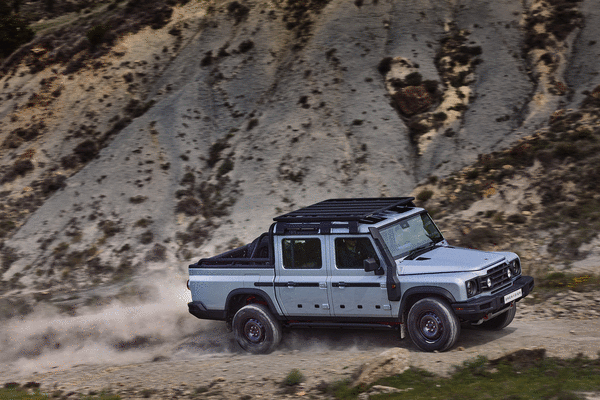
British auto startup Ineos Automotive is getting an American accent.
The maker of the rugged, luxury Grenadier SUV and Quartermaster pickup announced Tuesday, Nov. 24 that it will move manufacturing to the United States from France. Ineos opened one of its first U.S. dealerships with the Feldman Automotive Group in Waterford Township in late 2024. It said it will make an assembly site announcement in the next few months with production beginning in 2028.
“This is arguably the biggest moment in the history of Ineos Automotive,” said London-based CEO Lynn Calder. “Americans have already taken the Grenadier to their hearts, and U.S. policies have created an incredibly attractive, pro-growth business environment. Setting up production there makes so much sense. It will empower us to invest, expand, and reach even more customers around the world.”
If plans are consummated, Ineos would be the latest in a wave of new assembly in the U.S. Ineos follows announcements by Audi (new plant in Alabama), Honda (new Ohio plant, reshored Civic production from Mexico to Indiana), Jeep (reshored to Illinois from Canada), Toyota (Texas expansion to reshore Tacoma from Mexico), General Motors (Equinox SUV to move from Mexico to Kansas and Buick Envision from China to Kansas), and more.
Automakers cite stepped-up Trump administration tariffs, auto market deregulation, and proximity to U.S. customers for the moves. With 70% of its sales in the U.S., Ineos has experienced double-digit sales growth this year riding Americans' lust for off-road vehicles.
The Trump administration has increased tariffs on European Union imports in the last two years from 2.5% to 15% on passenger vehicles like the $73,745 Grenadier. In addition to that, the $86,390 Quartermaster faced a daunting 25% tariff on non-North American-produced pickup trucks. The so-called 25% “chicken tax” has protected domestic truck production since the 1960s. Production of nearly all of Quartermaster’s competitors, including Toyota, Honda, Nissan, and Detroit Three midsize pickups, is done in the United States.
“This is a pattern we are seeing,” said Karl Brauer, senior auto analyst for iSeeCars.com. “Ineos is the latest example of an automaker moving production to the U.S. due to U.S. tariff policy.”
Ineos follows startups Slate (Indiana) and Rivian Automotive Inc. (Illinois) with domestic production, but it has deified the ealy-20th-c electric startup trend. Powered by inline-6 cylinder internal-combustion-engines, Ineos is targeting the premium adventure market — specifically Land Rover customers after the fellow British maker stopped assembling ladder-frame vehicles.
Consumer reaction has been favorable, with 4,700 units sold in the U.S. through the third quarter of 2026 (second year in market) up 42% from 2025’s third quarter and 20% year-to-date. The Grenadier also has been embraced by auto media, winning the coveted best Off-Road SUV award from the Texas Auto Writers Association as well as 2026 Adventure Car of the Year at the News UK Motor Awards. Grenadier also has pursued production for military vehicle fleets as well as African safaris. Ineos founder and chairman Sir Jim Radcliffe hatched the Ineos idea after Land Rover abandoned its safari-friendly, ladder-frame Defender construction.
The brand’s gas-powered strategy, however, runs headlong into the European Union’s ban on ICE vehicles by 2035.
By contrast, Washington has coupled its tariff policies with a deregulation of the U.S. market from EU-like federal and California emissions policies aimed at banning the sale of ICE models. Congressional legislation last year, for example, nixed the Golden State’s ability to regulate greenhouse gases.
California has previously mandated that 35% of sales be electric vehicles by the 2026 model year — a regulation that would have severely punished small ICE automakers like Ineos.
“Larger, gas-powered vehicles like Ineos makes were really feeling the government regulations,” said Brauer. “Locating in the U.S. is now the best possible existence for Ineos. They avoid tariffs, produce vehicles Americans want, and operate in a regulatory environment that is favorable to their products.”
In an interview with The Detroit News at Ineos’ U.S. launch in March 2025, CEO Calder addressed the looming complications of the new Trump administration’s tariffs.
“(Tariffs are) a huge worry particularly the levels (Trump) is talking about. We could absorb (a small) tariff giving the size of this market,” she said of the 25% tariff-on-EU-imports in play at the time. That number was reduced to 15% and, in the case of Audi — which recently announced its own $4 billion Alabama investment — to a reported 10% on its remaining imports.
In addition to the entrenched 25% pickup tax, the U.S. imposed similar protectionist measure on foreign automakers in the 1980s under the Reagan administration and a Democratic Congress led on the issue by Michigan’s Rep. John Dingell. The result was a wave of foreign transplant factories from the late 20th century onward by Honda, Toyota, Nissan, Mazda, Hyundai, BMW, Mercedes, Volvo and Volkswagen that now make up about 50% of U.S. auto production.
Calder was more concerned about the EU’s regulatory direction.
“It’s insane. It’s important for the industry to be regulated, (but) there is something about this particular industry that has gone a bit mad,” the CEO said of the EU ICE ban, with Ineos’ home country of Great Britain banning non-hybrid ICE sales like Ineos models by 2030.
“The policy is all wrong,” she continued. “In Europe and the UK right now they want it to be one-size-fits-all, and it’s breaking the industry.”
Ineos said it is in negotiations with Chinese automaker BYD to sell its Hambach, France assembly facility. Ineos bought Hambach from Mercedes where it once built Smart brand cars.
____
©2026 www.detroitnews.com. Visit at detroitnews.com. Distributed by Tribune Content Agency, LLC.







Comments