Thanksgiving gas prices are up, but Americans keep buying trucks, SUVs
Published in Automotive News
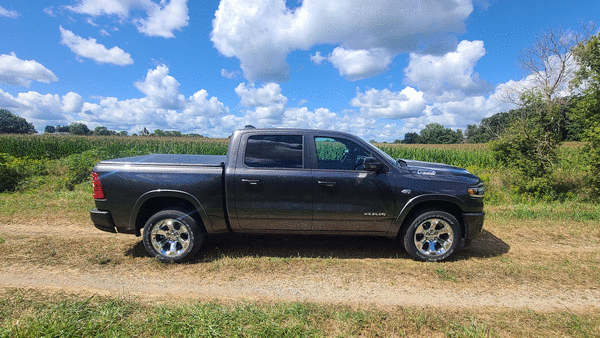
Gas prices are on the decline, but Americans remain at risk of paying record-high Thanksgiving fuel costs for their travels this year — in part because buyers' appetite for gas-guzzling trucks and SUVs remains strong.
The national average for a gallon of regular gasoline dropped almost 20 cents since last week to $3.69, according to the American Automobile Association, as the price of crude oil declines following heightened conflicts in the Middle East and Strait of Hormuz earlier this year. That's still up from $3.10 a year ago. Although customers have sought more fuel-efficient options like hybrids, Detroit's automakers continue to express optimism about their truck and SUV-heavy lineups.
"Higher fuel prices are impacting our freight and energy costs," Ford Motor Co. Chief Financial Officer Sherry House said on an earnings call last month. "But notably, we are not seeing it impact customer demand for trucks and fleet vehicles at this point."
AAA suggests it's possible more declines in gas prices are to come, and the U.S. average gas price could fall below the 2022 Thanksgiving Day high of $3.58. The organization projects a slight decrease, with 81.5 million Americans traveling this year after three consecutive years of record-breaking numbers, including nearly 73 million road trippers.
Alongside some easing of the foreign conflicts, gas prices are benefiting from the post-summer travel season amid the transition to cheaper winter fuel blends, which can cause price increases as supply becomes constrained during the multi-week changeover, AAA spokesperson Adrienne Woodland said. Thanksgiving travel, however, also represents an increase in demand.
"Drivers should probably expect the decline to maybe stall or reverse course as we head into Thanksgiving," Woodland said. "Millions will still be traveling. There's a leveling off after several years of record numbers. Affordability pressures are contributing to that decline, and gas prices remain higher than a year ago."
Airline tickets are also higher year-over-year. Nationally, flight travel is seeing a small decline, though more Michigan residents are expected to fly this year. Delta Air Lines Inc. CEO Ed Bastian this week at the Fortune 400 Innovation Forum in Detroit said tickets are up 15% to 20% year-over-year.
"Fuel prices were the trigger that enabled it," he said, "but we would not be able to generate that type of pricing if we didn't have a consumer that was willing to pay."
Customers are showing continued desire to buy new vehicles, too. Gas prices peaked around $4.48 in May with lower peaks of $4.36 in September and $4.31 in October. Alongside historically high vehicle prices, elevated interest rates and increased tariffs, forecasters have predicted a decrease year-over-year in new-vehicle sales. Through October, they were down 1.8%, according to the National Automobile Dealers Association.
"Consumers are still willing to buy right now," said Stephanie Brinley, associate director of Mobility Global's analytics platform AutoIntelligence. "It probably comes back to the people who have the funds and availability are just not stopping. It's probably more at the lower end of vehicles where you see people who have to step back a little bit."
Sales tell a story
Ford's F-Series pickups, on track for their 50th year as the country's top-selling truck, were down 7.8% through October, though that's in line with the automaker's overall 7.9% decrease in U.S. sales and production, which had been disrupted earlier this year by an aluminum shortage and other supply-chain snags. Expedition sales were down 4.5%. The automaker has also emphasized its demand for off-road trims.
Meanwhile, there was appeal in a smaller truck: Maverick and its hybrid model are so far setting all-time sales records, according to Ford. Overall, Maverick was up 2.4%.
Village Ford in Dearborn, Michigan, lately is selling Mavericks before they arrive to the showroom, though the dealership only gets around five each month and the lease price is similar to the F-150's.
"I did 54 (F-Series) trucks last month," owner Jim Seavitt said. "That's a third of my inventory. Unless you really want something small, you’re getting the (full-size) truck."
General Motors Co. and Chrysler, Dodge, Jeep and Ram parent Stellantis NV report U.S. sales quarterly. GM's Chevrolet Silverado sales were down 2.2% through September compared to a 6.4% drop overall for GM in the first nine months of 2026. GMC Sierra trucks were down less than 1%, but are on track for their second-best calendar year. Meanwhile, the GMC Yukon dropped 3.1% and Chevrolet Suburban and Tahoe decreased 15.6% and 7.1%, respectively. Cadillac Escalade was down 17%.
Buick's small SUVs — the Envista and Encore GX — are on pace to have their second-best calendar year.
"The industry backdrop remains healthy," GM Chief Financial Officer Paul Jacobson said last month on an earnings call, "with a total industry (seasonally adjusted annual rate) in the upper 16 million-unit range in the third quarter, with resilient demand across trucks, SUVs and fleet."
Meanwhile, Stellantis' Ram pickup sales were up about 24% through September under new leadership and as the company prioritizes aligning production with consumer demand.
GM's stock closed on Friday almost 8.5% down at $78.71 over the previous five days after its first week on the Nasdaq. Ford's had fallen 6.2% to $11.18. Stellantis's shares in New York had fallen 12% to $3.35.
Gas prices dent incomes
Affordability is a challenge across the economy, and the increased vehicle prices in general probably have more to do with declining sales than fuel prices, though specific decisions can be hard to track, Brinley said.
"Gas prices are affecting the disposable income that people have," she said. "It’s hitting some choices in that way."
This year has seen a spike in hybrid sales, which are some of the fastest-turning models on dealership lots. Gas prices likely have contributed to greater interest in more fuel-efficient vehicles, but the hikes also have coincided with greater availability of hybrids, Brinley said.
Incentives this year also have been fairly constrained as automakers prioritize production changes rather than discount product. Consumers are taking out longer loan terms, and there has been an increase in owners who are underwater on vehicles they've financed.
"People in general decided what they need for their lifestyle," Brinley said. "If they think they need a truck or an SUV for their goods and their stuff, that's their baseline. You figure out how to make it work."
©2026 www.detroitnews.com. Visit at detroitnews.com. Distributed by Tribune Content Agency, LLC.






Comments