Auto review: Slinky Crown Signia is the cure for the common Toyota SUV
Published in Automotive News
OAKLAND COUNTY, Mich. — The station wagon is back. And from an unlikely source.
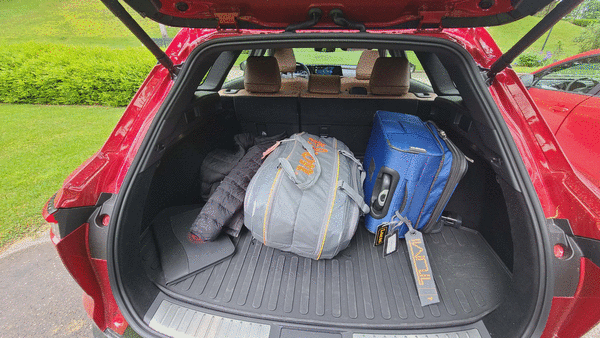
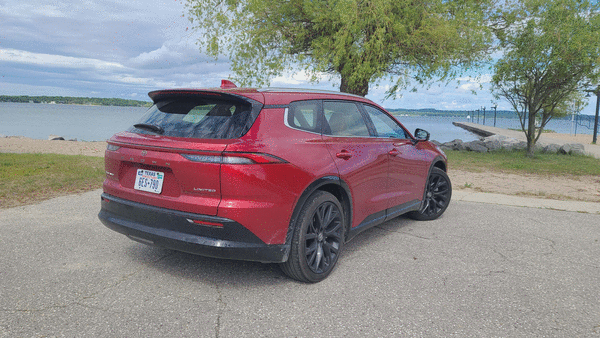
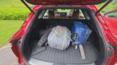
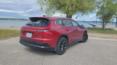
My Toyota Crown Signia is long, sleek and roomy. Remove the badge and you might mistake the profile for the Volvo V90 Cross Country or Audi A6 Allroad, European stalwarts in the midsize wagon business. While wagons are common across the Atlantic pond, we Yanks prefer boxy, lifted SUVs — thus the limited offerings from the likes of Volvo and Audi.
Now comes Signia, the midsize cure for the common Toyota SUV.
Crown Signia makes a striking contrast to other SUVs in the midsize, two-row segment like the VW Atlas Cross Sport, Honda Passport and Chevy Blazer. Its looks beg to be compared with premium models like the Buick Envision and the Acura RDX. Signia is also a striking departure from Toyota’s more typical Japanese-market bias toward full-size sedans. The Crown Signia is the SUV/wagon doppelganger to the Crown sedan.
Mark me down with a preference for Signia.
It’s not just the added utility of the wagon’s palatial cargo bay; the Signia is better looking than the awkward-looking Crown sedan. Toyota has pulled off European wagon proportions with the Signia SUV. The Crown sedan? Not so much.
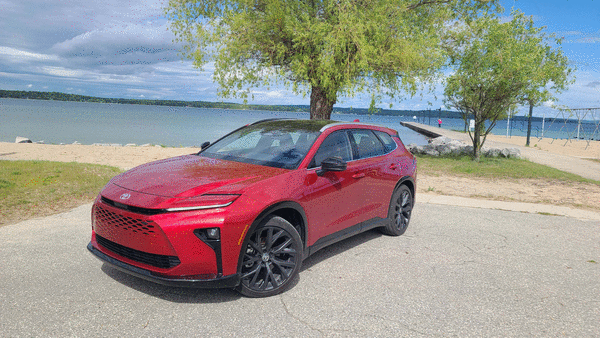
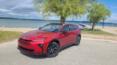
Taking cues from Toyota's new design halo, the Prius hatchback (never thought I’d say that 20 years ago), the Signia's hood tapers to a simple fascia with narrow headlight graphics. Its flanks are clean, sweeping back to an equally simple rear with thin, horizontal taillight graphics. Toyota, take a walk down the Milan fashion runway.
It’s a very different design language than luxury cousin Lexus, with the latter’s Darth Vader grilles and L-shaped design cues everywhere. Like the simple lines of Volvo, Porsche and others, the Toyota will last the test of time. An exception to this design discipline is a front cheese-grater grille. It’s unnecessarily busy, and its blizzard of holes will be a nightmare to clean after you’ve picked up a cloud-full of gnats on a long road trip up north.
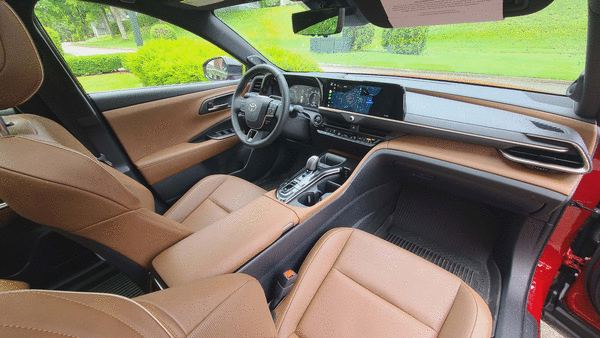
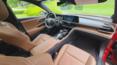
That aside, the design elegance continues inside with a broad, hoodless screen that houses both digital instrument and infotainment displays. General Motors, a master of ergonomics, does these screens best with. For example, the Buick Envision which conveniently locates secondary controls like automatic lights and head-up display (once obscured in the dark quarter panel above your left knee) in-screen.
The Toyota’s screens are slow relative to rivals like Buick and Hyundai, which were early innovators in electronics and integrated Android Auto and Apple CarPlay phone app technology. The Toyota even maintains a native navigation system where rivals have moved on to either prioritizing Google Maps through phone apps (Hyundai, Honda) or Google Built-in (Chevrolet).
“Navigate to Uncle Joe’s Chicken, Southfield, Michigan,” I barked and the system ... had no idea what I was saying.
Thank goodness for the Android Auto alternative, which navigated me to my destination while playing my favorite news/music stations off my Sirius XM app phone subscription.
Needless to say, Signia only comes with an automatic transmission. Only the GR Corolla and GR86 sports cars have manuals in the Toyota fleet. One of my favorite trends in the age of electronic, automatic transmissions is the move to minimalist monostable shifters. Think Porsche, VW and BMW “chicklet” shifters.
The Signia adopts the Prius’s (there’s that halo car again) monostable shifter, which is not only a cinch to use — a flick of the wrist gets you between PARK, DRIVE and REVERSE — but opens up console space for cupholders and a deep wireless charging box for your phone (important for keeping it juiced while, ahem, navigating on Android Auto).
Indeed, Signia is a Prius in a midsize wagon body.
HRRRRRRR! went the gas-electric powertrain with CVT transmission as I put my foot into it down Telegraph Road. HRRRRR! went the Pirus when I put my foot into it this summer. Once the industry Nerdmobile, Prius is the model for an all-hybrid lineup.
The difference between the Crown Signia and Prius is the bigger wagon gains 54 horsepower over the 2.0-liter Prius thanks to the wagon’s bigger displacement, 2.5-liter four-cylinder.
Crown Signia has similar driving dynamics to its compact cousin — tidy but hardly European. Hatchback fans won’t mistake a Prius for a Golf GTI, and neither does Signia rival Audi A6 Allroad. But it is more than an inch lower to the ground than Toyota’s midsize Highlander SUV, and drives with more poise as a result.
Alas, Crown Signia’s engine droned like a senator in the middle of a 24-hour filibuster. More exciting was the Toyota’s 37 mpg and 551 miles of driving range — the latter figure more than double the 222-mile range of its electric bZ sibling.
No wonder Toyota has been lukewarm on EVs.
Though gas-powered, Toyota hybrids still come with some inconveniences — most notably the lack of a spare tire in back. Battery components rob the rear hatch of the necessary space for a spare. Stranded? Signia provides only a tire repair kit. A Honda Passport, on the other hand, is more off-road focused and therefore prioritizes a spare tire. If you plan on off-roading, keep that in mind.
True to its sleek proportions and impressive fuel economy, the Signia carves out a niche as a trip-friendly cruiser for families with an eye on design. And with just 10,263 units sold last year in SUV Nation, you’re likely to have a unique car in the neighborhood.
Kind of like the Volvo X90 wagon owner down the street.
2026 Toyota Crown Signia
Vehicle type: All-wheel-drive, five-passenger wagon
Price: $45,985, including $1,450 destination fee ($53,249 Limited model as tested)
Powerplant: Hybrid 2.5-liter inline-4 cylinder with three electric motors
Power: 240 horsepower
Transmission: Continuously variable automatic
Performance: 0-60 mph, 7.1 seconds (mfr.); towing, 2,700 pounds
Weight: 4,210 pounds
Fuel economy: EPA est. mpg 39 city/37 highway/38 combined; gas range, 551 miles
Report card
Highs: A looker; long trip range
Lows: Grille holes complicate cleaning; lags competitors in screen ergonomics
Overall: 4 stars
_____
©2026 The Detroit News. Visit detroitnews.com. Distributed by Tribune Content Agency, LLC.







Comments