Trapped Tesla driver's 911 call: 'It's on fire. Help please'
Published in Automotive News
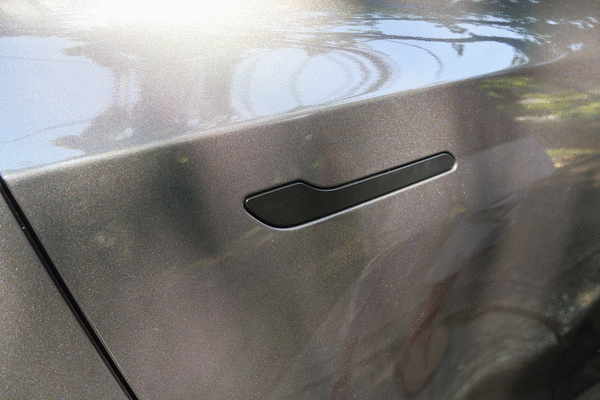
Samuel Tremblett pleaded with a 911 operator to be rescued from his burning Tesla Inc. Model Y SUV after a crash in October: “I can’t get out, please help me.”
The transcript of the 20-year-old’s emergency call was included in a lawsuit filed Wednesday, the latest to allege that a driver or passenger died after they were unable to open the electrically powered doors on their Tesla vehicle after a crash.
“It’s on fire. Help please,” Tremblett said, according to the lawsuit. “I am going to die.”
Details of the crash were previously reported by Bloomberg News as part of a wide-ranging investigation into the hazards of electric door systems, which can fail and trap occupants inside vehicles, particularly after a crash. The reporting uncovered at least 15 deaths in a dozen incidents over the past decade in which occupants or rescuers were unable to open the doors of a Tesla that had crashed and caught fire.
After Tremblett survived the initial impact of the collision, which occurred in a town about 30 miles outside of Boston, his remains were found in the back seat, according to a police report of the incident.
“Unable to open the doors, Mr. Tremblett was trapped in the Tesla vehicle and died from thermal injuries and smoke inhalation before he was able to be rescued,” according to the complaint filed Wednesday in Massachusetts federal court.
Tesla didn’t immediately respond to a request for comment.
A top Tesla executive said in September that the company was working on a redesign of its door handles. In December, Tesla updated its website to say that after a serious collision is detected, hazard lights will turn on to increase visibility and “doors will automatically unlock for emergency access.”
Tesla is facing multiple lawsuits over crashes that allegedly involved door-related entrapment, including cases filed last year in Washington state and Wisconsin.
The company was sued in October over claims that defects in the doors of a crashed Cybertruck in Piedmont, California, made it a “death trap” by preventing three college students from escaping before they died of smoke inhalation.
Tesla vehicles have two batteries: a low-voltage battery that operates interior functions like windows, doors and the touchscreen, and the high-voltage pack that propels the car. If the low-voltage battery dies or is disabled, the doors may not unlock and must be operated manually from the inside. While there are mechanical releases inside Teslas, many owners and passengers are unfamiliar with where they’re located or how to operate them.
Global scrutiny
Electric handles — which were popularized by Tesla and are now found in dozens of models from many automakers — have attracted global scrutiny in recent months. China issued new safety rules banning concealed exterior handles and requiring mechanical releases, while European regulators have said they intend to accelerate rulemaking on the matter.
In September, days after Bloomberg’s initial investigation into Tesla’s handles, the National Highway Traffic Safety Administration disclosed that it was probing possible defects in certain Model Y SUVs, citing incidents in which exterior handles stopped working and trapped children and other occupants inside. In December, NHTSA said it would evaluate a request for a defect probe that was filed by a Georgia man who had to kick his way out of his burning Model 3 sedan.
A U.S. lawmaker in January proposed legislation that would require manual door releases in new cars as well as means for first responders to gain access to vehicles when power is lost.
The case is Tremblett v. Tesla, 1:26-cv-10567, U.S. District Court, District of Massachusetts (Boston).
(Updates with detail from 911 call from first paragraph.)
©2026 Bloomberg L.P. Visit bloomberg.com. Distributed by Tribune Content Agency, LLC.






Comments