Religion
/Health
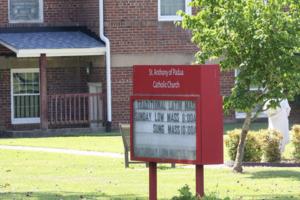
Charlotte diocese releases letter addressing SSPX Catholics after excommunication
The Diocese of Charlotte wants Catholics attending SSPX chapels to know two things: You’re welcome back, and you shouldn’t keep going.
Nearly three weeks after the Vatican declared the Society of Saint Pius X in schism following its unauthorized consecration of four bishops in Switzerland, Charlotte Bishop Michael Martin issued his first ...Read more
Baltimore archdiocese offers up to $300 per gun in buyback event
BALTIMORE — The Archdiocese of Baltimore is preparing to host its fourth gun buyback event next month in Southwest Baltimore.
Gun owners can bring firearms to the Westside Shopping Center, near the Carrollton Ridge and Millhill neighborhoods, on Aug. 8 and receive between $100 and $300 if the firearm is in working order, according to a news ...Read more
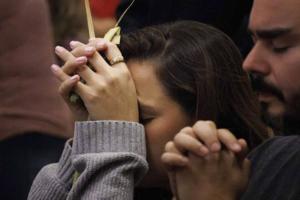
Florida wants more religion in schools. But here's where most people draw the line
MIAMI — As Florida education leaders signal openness to expanding religious expression in public schools, a recent survey finds broad support for school prayer in public schools — but only if it is optional.
The survey, released by the Pew Research Center in April 2026, sheds light on how Americans feel about different aspects of religious ...Read more
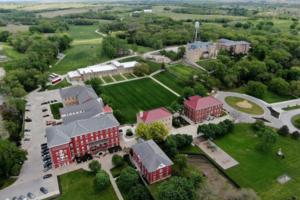
Vatican excommunicates bishops of breakaway group, casting spotlight on Kansas town
A small northeast Kansas town is in the spotlight after the Vatican declared last week that it was excommunicating six Society of St. Pius X bishops, a day after four were consecrated without the pope’s approval.
St. Marys, a town of about 2,800, roughly 90 miles west of Kansas City, is home to a large population of followers of the SSPX, a ...Read more
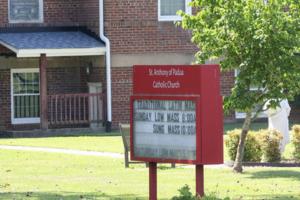
Charlotte-area Catholic church among targets of Vatican's excommunication
CHARLOTTE, N.C. -- As thousands of worshippers prayed in an open field in Écône, Switzerland on Wednesday, the ceremony came to an abrupt halt.
At the moment the priest elevated the host during the consecration — the most sacred moment of the Catholic Mass, when Catholics believe bread becomes the body of Christ — thunder cracked loudly ...Read more
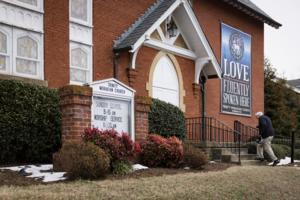
These church members disagree on politics. Together they're wiping out medical debt
WINSTON-SALEM, N.C. — Some issues, like immigration or student loans, are too divisive to unite Trinity Moravian Church.
"We've got quite a spread of political beliefs," said the Rev. John Jackman, who leads this 114-year-old red-brick church near Winston-Salem's old textile mills. Conservative Republicans sit with liberal Democrats. ...Read more
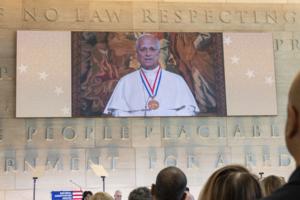
Pope Leo XIV celebrates immigrants in speech to Philadelphia crowd amid clash with Trump ahead of 250th anniversary
PHILADELPHIA — Addressing a Philadelphia crowd live from the Vatican, Pope Leo XIV called for a “recommitment” to American ideals.
The first U.S.-born pope delivered remarks virtually at an interfaith ceremony inside Philadelphia’s National Constitution Center on the eve of the United States’ 250th birthday to accept the center’s ...Read more
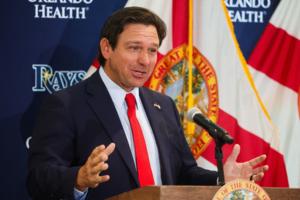
Miami Catholic schools wanted tighter security. DeSantis cut the funding
MIAMI — Gov. Ron DeSantis delivered the ax to a portion of the state budget dedicated to funding security measures in Miami-Dade County Catholic schools — and local Catholic leaders aren’t happy about it.
On Monday, DeSantis vetoed $15 million allocated for security grants for Catholic schools in the Archdiocese of Miami, the total amount...Read more
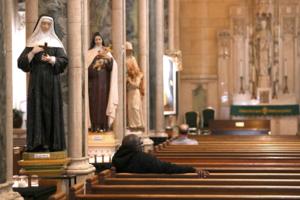
San Francisco Archdiocese to pay $395 million to sexual abuse victims
The San Francisco Archdiocese will pay out nearly $400 million to survivors of clergy sexual abuse, encompassing 70 years of children falling prey to priests, lawyers announced Monday.
The settlement sets up a trust to compensate 530 survivors of childhood sexual abuse — all of whom are now adults — and establishes extensive child ...Read more
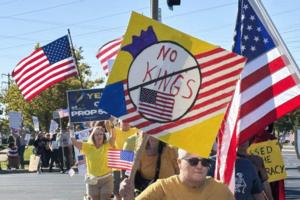
Commentary: Celebrating 250 years of no religious kings
On July 4, we will celebrate American independence from kings who ruled over both church and state. Two hundred and fifty years ago, the founders of this country put forward a bold and radical idea: that religious freedom is safest when the government neither controls religion nor is controlled by it.
The founders were not perfect; at the ...Read more
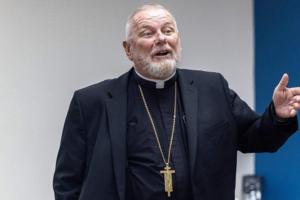
Miami archbishop urges prayers -- and pressure -- after Supreme Court's TPS ruling
MIAMI — Miami Archbishop Thomas Wenski, local leaders and Haitian immigrants condemned a Supreme Court decision on Thursday allowing the Trump administration to end deportation protections under Temporary Protected Status for over 350,000 Haitians and Syrians.
“These are people that are very nervous. They’re nervous about having to go ...Read more
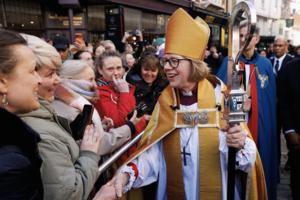
Commentary: The pulpit is just one front in the US war against women
This month in Orlando, the Southern Baptist Convention — the largest Protestant denomination in America — took its first formal step toward barring women from preaching. Almost three-quarters of the voting delegates backed it. The millions of women who fill the pews every Sunday watched their own denomination move, by supermajority, to ...Read more
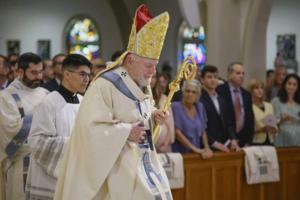
Catholic leaders urge DeSantis to halt record-setting Florida execution
MIAMI — Florida’s record-setting pace of executions has drawn renewed opposition from the Catholic Church, which is urging Gov. Ron DeSantis to halt the scheduled execution Thursday of a 74-year-old veteran.
The appeal comes as Florida continues an unprecedented run of executions under DeSantis, who oversaw a record 19 executions last year ...Read more
Minnesota faith leaders weigh AI's place in church life
The rise of artificial intelligence has Minnesota faith leaders wrestling with questions that feel both ancient and newly urgent: How should they respond to a force rapidly reshaping daily life?
And where is the line between using technology to, say, streamline church work and allowing it into relationships and spiritual practices long defined ...Read more
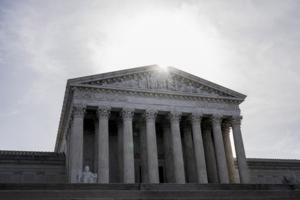
Inmates may not sue prison officials who violate their religious rights, Supreme Court rules
WASHINGTON — Prison inmates whose religious rights are clearly violated by guards and wardens may not sue them for damages, a divided Supreme Court ruled Tuesday.
In a 6-3 decision, the justices said federal law protecting religious liberty allows for suits against state prison systems, but not employees of the prison.
The decision came in ...Read more
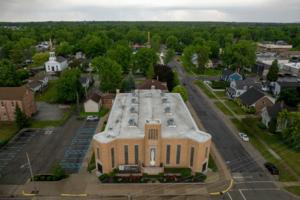
What's next for the Archdiocese of Detroit's Mass stoppage proposals
Now that the Archdiocese of Detroit has targeted as many as 90 parishes for the possible stoppage of weekend Masses, church officials are seeking to get feedback from parishioners before making final decisions on where the Masses will be halted.
The Rev. Mario Amore, executive director of parish renewal for the Archdiocese of Detroit, has ...Read more
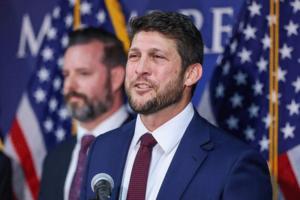
Public schools must excuse students for religious instruction, Florida AG says
Florida Attorney General James Uthmeier last week issued a legal opinion affirming that all school districts must accommodate parents who want their children to leave or be absent from school for the purpose of receiving religious instruction.
Release time for religious instruction, also known as RTRI, allows students to be excused from school ...Read more
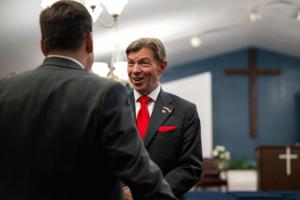
Maryland's campaign trail still leads through churches
BALTIMORE — Despite declining religious affiliation, Maryland’s campaign trail increasingly runs through church sanctuaries, fellowship halls and post-service meet-and-greets, where candidates see an opportunity to connect with voters in a setting that remains influential.
Reflecting the enduring political influence of faith communities, ...Read more
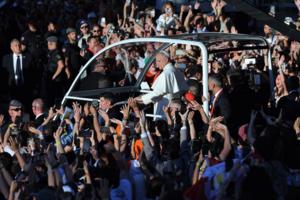
The pope appears to Spain's Pedro Sánchez in his moment of need
Pedro Sánchez is having a come-to-Jesus moment.
After eight years in office, Sánchez attended his first Roman Catholic mass as prime minister on Wednesday when Pope Leo XIV blessed the Sagrada Familia cathedral in Barcelona. Sánchez’s Socialists have traditionally had a difficult relationship with the church — but this week, with this ...Read more
Maryland church fined $1,000 a day by city over homeless shelter
BALTIMORE — An Ocean City church is now facing daily $1,000 fines for operating an indoor homeless shelter that town officials say violates local zoning regulations, escalating a months-long dispute over how the resort should address homelessness.
Church officials said the first daily citation was delivered by Ocean City’s planning director...Read more
Popular Stories
- Charlotte diocese releases letter addressing SSPX Catholics after excommunication
- Florida wants more religion in schools. But here's where most people draw the line
- Baltimore archdiocese offers up to $300 per gun in buyback event
- San Diego attackers' hate manifesto targeted many groups, sought 'destruction of political system,' sources say
- Vatican excommunicates bishops of breakaway group, casting spotlight on Kansas town
Comics