Religion
/Health
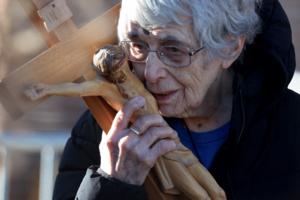
Judge orders Trump administration to allow clergy access at Illinois' Broadview immigration facility for Easter holy days
CHICAGO — A federal judge on Tuesday allowed clergy members from the Chicago area to minister to migrants at the U.S. Immigration and Customs Enforcement facility in Broadview during Easter and Holy Week, issuing the order amid calls for broader access that have even been echoed by Pope Leo XIV.
Following a hearing at the Dirksen U.S. ...Read more
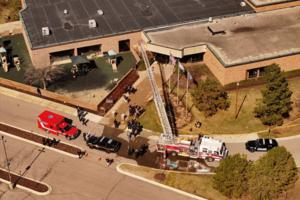
Temple Israel attack in Michigan was Hezbollah-inspired act of terror, FBI says
DETROIT — The attack on the Temple Israel synagogue in West Bloomfield Township earlier this month was a Hezbollah-inspired act of terrorism in which the assailant "was motivated and inspired by Hezbollah's militant ideology," FBI Special Agent in Charge Jennifer Runyan said in a Monday briefing.
In the days leading up to the March 12 attack,...Read more
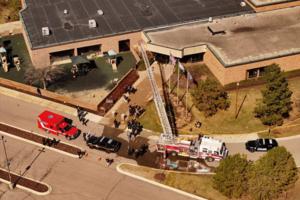
Temple Israel attack in Michigan was Hezbollah-inspired terror act, FBI says
DETROIT — The attack on Temple Israel synagogue in West Bloomfield was a Hezbollah-inspired act of terrorism in which the assailant "was motivated and inspired by Hezbollah's militant ideology," FBI Special Agent in Charge Jennifer Runyan said in a Monday briefing.
In the days leading up to the March 12 attack, Ayman Ghazali of Dearborn ...Read more
NYPD to increase security around synagogues amid increased terrorist threat
NEW YORK — Synagogues across the city will benefit from increased NYPD patrols as the city braces for a Passover holiday season shadowed by what Police Commissioner Jessica Tisch on Thursday described as the most turbulent and threatening terrorist climate of her career.
“In my 18 years of government, which started in counter terrorism, I ...Read more
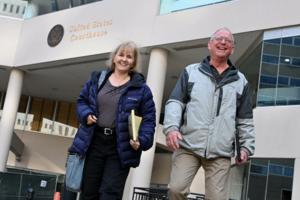
Baltimore Catholic abuse survivors break from national group, form new coalition
BALTIMORE — Dozens of survivors of child sexual abuse in the Catholic Church, including several who grew up in the Archdiocese of Baltimore, are splitting from a national support network to form a coalition that prioritizes access to mental health resources.
“The bottom line is that we want to heal the wounded and protect the vulnerable,”...Read more
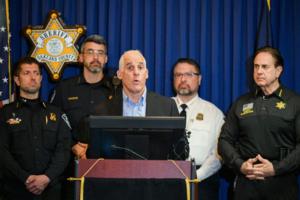
Temple Israel shows inside of synagogue in aftermath of attack
WEST BLOOMFIELD, Mich. — Pictures taken shortly after a gunman attacked a West Bloomfield synagogue last week with guns, fireworks and gasoline show black walls with debris on the floor and child-size tables with plates of food quickly left behind.
The pictures were released Thursday by Temple Israel on the synagogue's Facebook page, one week...Read more
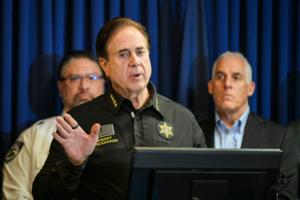
Michigan sheriff decries antisemitism after Temple Israel attack. Guard back home
PONTIAC, Mich. — Oakland County Sheriff Mike Bouchard on Thursday decried antisemitism in the aftermath of the March 12 attack on the Temple Israel synagogue in West Bloomfield and called on community members to speak out against it when it's witnessed.
Bouchard's came as Temple Israel Rabbi Josh Bennett said security guard Danny Phillips, ...Read more
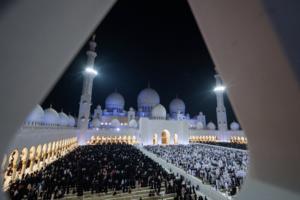
Commentary: Sacred restraint in a restless world
Across the globe, Muslims, Christians, and Jews enter seasons of fasting, repentance, and remembrance. Together, the Abrahamic traditions represent over half of the world’s religious population. In their distinct ways, each tradition calls its followers to humility and a deep concern for others, whether through fasting, repentance or ...Read more
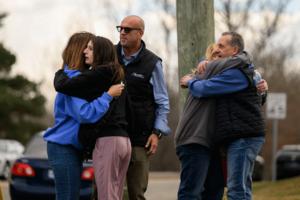
Temple Israel first responders detail what happened inside synagogue
DETROIT — When first responders arrived Thursday at Temple Israel in West Bloomfield Township on a report of an active shooter emergency, smoke could be seen pouring through a vent on top of the synagogue, but arriving law enforcement had little idea what they would encounter inside.
More than 100 children and staff members were inside the ...Read more
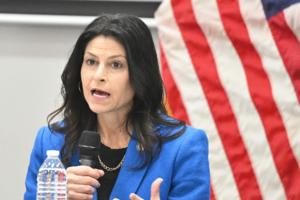
Michigan AG Dana Nessel, lawmakers push for action against antisemitism after synagogue attack
DETROIT — Michigan Attorney General Dana Nessel and several state lawmakers Monday pushed for action against terrorism and antisemitism in the wake of an attack on a West Bloomfield Township synagogue last week, including updating the state's anti-terrorism law and funding security measures for Jewish congregations.
A gunman rammed through ...Read more
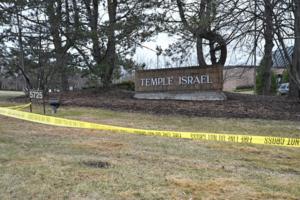
Michigan's Temple Israel to remain closed for immediate future, move school to temporary spot
WEST BLOOMFIELD, Mich. — Temple Israel will remain closed for the immediate future after a gunman rammed through the synagogue's front doors last week and exchanged gunfire with security before taking his own life.
Temple Israel officials said in a statement Sunday on social media that while the physical building on Walnut Lake Road, west of ...Read more
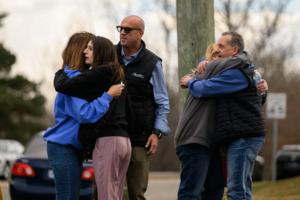
Temple Israel shooter's brother was a Hezbollah commander, Israel says
The brother of the man who carried out Thursday’s attack at a West Bloomfield Township synagogue was a Hezbollah commander killed in an Israeli airstrike days earlier, the Israel Defense Forces said Sunday.
The IDF tweeted a post on X that identified the commander as Ibrahim Muhammad Ghazali, saying he managed weapons operations in a ...Read more
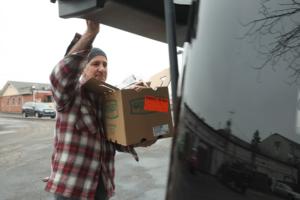
Muslim-run food pantry helps neighbors but faces halal meat shortage during Ramadan
CHICAGO -- Before the doors swung open at the ICNA Relief Food Pantry in suburban Glendale Heights on a recent Thursday, volunteers in lime-yellow hi-vis vests were putting out large boxes of vegetables and fruit and trays of breads, buns and a few smatterings of cookies from a nearby bakery. Families were lining up, ready to come inside two or ...Read more
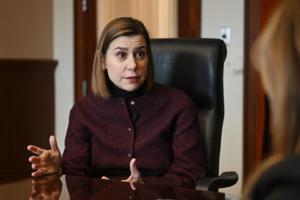
Michigan Sen. Slotkin seeks to 'bring temperature down' in wake of Temple Israel attack
WEST BLOOMFIELD TOWNSHIP, Mich. — U.S. Sen. Elissa Slotkin was in Michigan on Friday, the day after a Metro Detroit temple was attacked, working with Jewish and Lebanese American community leaders to find a way forward.
“Leaders have the responsibility to bring the temperature down, to remain calm and to lead with purpose in mind," Slotkin ...Read more
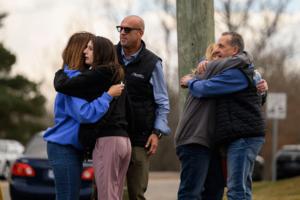
Synagogue attacker died of self-inflicted gunshot and had fireworks in truck, FBI says
WEST BLOOMFIELD TOWNSHIP, Mich.— A Dearborn Heights man who attacked Temple Israel in West Bloomfield on Thursday and engaged in a gunfight with security officers died of a self-inflicted gunshot wound, the FBI said on Friday.
Ayman Ghazali, 41, of Dearborn Heights allegedly slammed his Ford F-150 through the front doors of Temple Israel on ...Read more
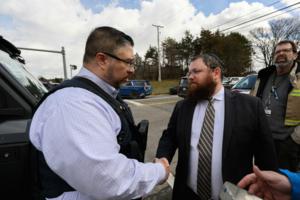
Michigan's Temple Israel synagogue shooter's family recently killed in airstrike
DETROIT — A Dearborn Heights man whose relatives were recently killed in a military strike in Lebanon is the accused assailant in Thursday's attack on the Temple Israel synagogue in West Bloomfield Township, two sources apprised of the investigation told The Detroit News.
Ayman Ghazali, 41, a restaurant worker in Dearborn Heights, is accused ...Read more
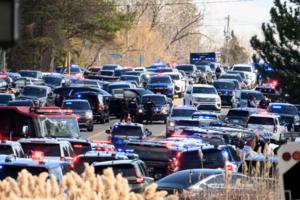
Who was the Michigan's Temple Israel shooter: What we know about Ayman Ghazali
DETROIT — The suspected gunman who attacked a West Bloomfield Township synagogue on Thursday has been identified as a Dearborn Heights man.
Ayman Ghazali, 41, a restaurant worker, allegedly crashed his truck into the Temple Israel synagogue just after noon on Thursday and opened fire with a rifle. Authorities said he was killed by security ...Read more
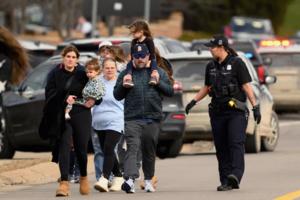
Michigan's Temple Israel synagogue rallies after attack: It 'won't derail us' from mission
WEST BLOOMFIELD TOWNSHIP, Mich. — Temple Israel, the nation's largest reform synagogue, rallied together on Friday after a gunman rammed his truck into the temple's building, with some saying they refuse to live in fear or let what happened derail them.
About 103 kids were attending classes at Temple Israel, along with 40 to 50 staff members,...Read more
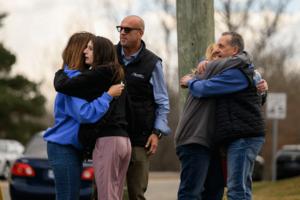
Michigan Gov. Gretchen Whitmer condemns Temple Israel attack, calls to lower 'rhetoric' of antisemitism
WEST BLOOMFIELD TOWNSHIP, Mich. — Gov. Gretchen Whitmer called on Michiganians to "lower the rhetoric" of antisemitism in the state and the country less than 24 hours after a man drove his truck into a West Bloomfield Township synagogue and opened fire.
"Yesterday’s attack was antisemitism. It was hate. Plain and simple," Whitmer said ...Read more
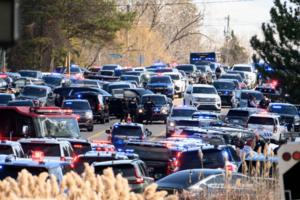
Who was the Michigan's Temple Israel shooter: What we know about Ayman Ghazali
DETROIT — The suspected gunman who attacked a West Bloomfield Township synagogue on Thursday has been identified as a Dearborn Heights man.
Ayman Ghazali, 41, a restaurant worker, allegedly crashed his truck into the Temple Israel synagogue just after noon on Thursday and opened fire with a rifle. Authorities said he was killed by security ...Read more
Popular Stories
- Judge orders Trump administration to allow clergy access at Illinois' Broadview immigration facility for Easter holy days
- Temple Israel attack in Michigan was Hezbollah-inspired act of terror, FBI says
- Temple Israel attack in Michigan was Hezbollah-inspired terror act, FBI says
- NYPD to increase security around synagogues amid increased terrorist threat
- Baltimore Catholic abuse survivors break from national group, form new coalition
Comics