That brightly packaged sexual enhancement pill at the gas station might be laced with dangerous drugs
Published in Health & Fitness
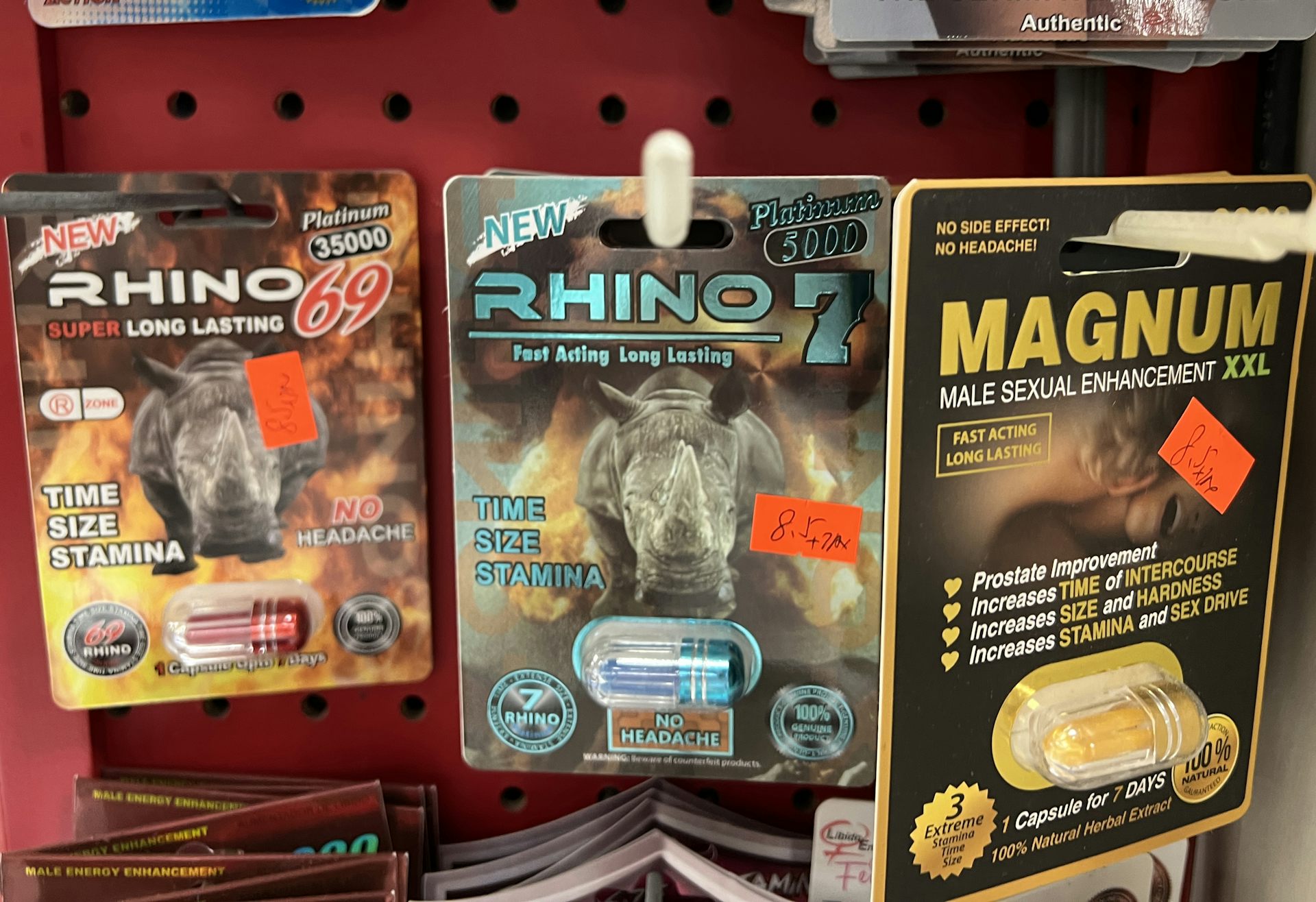




Brightly colored packaging, promises of better sexual performance and names like “Rhino,” “Anaconda” and “Magnum” make sexual enhancement products difficult to miss. They can be found online, in convenience stores and at gas stations, and some can even be ordered through delivery services.
But what’s inside the package may be considerably different from what appears on the label.
In May 2023, the U.S. Food and Drug Administration warned consumers not to use a sexual enhancement product called Rhino 7S Type F3 7000, one of many Rhino-branded products. Laboratory testing had found that it contained two ingredients that did not appear on its label: sildenafil – the active ingredient in the prescription erectile dysfunction medication Viagra – and acetaminophen, the widely used pain reliever also sold as Tylenol.
This finding was not an isolated incident.
Dating back to 2007, the FDA has maintained an expanding list of health fraud scams, including sexual enhancement and energy products found to contain hidden pharmaceutical ingredients.
Today, the sexual enhancement market is still going strong – and still putting out adulterated substances. Seven new products were added to the FDA’s list in September 2026. Recent warnings have involved pills, gummies, honey products, coffee and even chocolates marketed as sexual enhancers.
As a public health researcher who studies substance use and health behaviors with unregulated products, I see these products as part of a larger challenge created by global supply chains, online commerce and a regulatory system that struggles to keep pace with rapidly changing products.
In the U.S., the FDA regulates dietary supplements under a different framework than for prescription and over-the-counter drugs. Those drugs undergo a rigorous application process involving three phases of trials that usually take nearly a decade to complete.
Supplements, on the other hand, are regulated under the Dietary Supplement Health and Education Act of 1994, which holds manufacturers responsible for ensuring that their supplements are safe and properly labeled. So dietary supplements aren’t completely unregulated, but they generally do not go through the FDA’s premarket approval process. This means the FDA does not approve them for safety and effectiveness before they reach consumers, as it does with medications.
That creates an important distinction between pharmaceutical drugs like Viagra and products marketed as dietary supplements, such as many Rhino-branded sexual enhancement products. Viagra is an FDA-approved prescription drug: Its active ingredient, sildenafil, has been evaluated in clinical trials for safety, effectiveness, dosing and manufacturing quality for an approved medical use.
After a dietary supplement goes to market, the FDA periodically inspects its manufacturing facilities and collects and tests some products. But it does not routinely test every supplement on store shelves. Instead, the agency prioritizes products associated with illnesses or injuries and those suspected of containing fraudulent, adulterated or otherwise illegal ingredients.
Sildenafil and tadalafil, the active ingredients in Viagra and Cialis, belong to a class of medications called phosphodiesterase type 5 inhibitors. They are effective treatments for erectile dysfunction when appropriately prescribed.
But consuming these drugs unknowingly is very different from taking them under medical supervision. They are known to interact with nitrate medications, including nitroglycerin used by some people with heart disease. The combination can produce a dangerous drop in blood pressure.
The Rhino 7S case presented an additional risk: undeclared acetaminophen. It was not clear why acetaminophen was present in the supplement or how it got there. Someone taking the supplement while also using Tylenol, cold medicine or other acetaminophen-containing products could unknowingly exceed recommended amounts. Acetaminophen overdose can cause severe liver injury and, in extreme cases, acute liver failure or death.
Research suggests that adulteration is not limited to a handful of recognizable drug ingredients. A 2023 scientific review identified 112 unapproved phosphodiesterase type 5 inhibitors and related compounds that had been detected as adulterants in sexual enhancement products between 2003 and mid-2023. Adulterated supplements can contain approved drugs, unapproved analogues and other modified compounds.
This is not solely an American problem. Studies have identified undeclared erectile dysfunction drugs in supplements sold in Europe, Asia, the Middle East and elsewhere.
In one study of 158 sexual enhancement supplements available in the United Arab Emirates, researchers found undeclared sildenafil, tadalafil or vardenafil in more than 12% of all sexual enhancement products they tested.
The World Health Organization has warned that increasingly complex international supply chains and the growth of e-commerce make controlling substandard and falsified health products particularly difficult. The makers of these products might source their ingredients from one country, manufacture or package them in another and sell them online to a consumer thousands of miles away.
Illicit international pharmaceutical commerce is a major problem worldwide. From December 2024 to May 2025, the international law enforcement body Interpol conducted Operation Pangea XVII, in which authorities in 90 countries seized more than 50 million doses of illicit pharmaceuticals. Erectile dysfunction medications were the second-most commonly seized product type, behind psychostimulants, which are drugs that affect how the brain regulates dopamine.
The following year, another international law enforcement operation disrupted roughly 13,000 websites, social media pages and channels and automated bots connected to illicit medicine sales. Erectile dysfunction medications were again among the most frequently seized products.
But identifying one dangerous product does not eliminate the broader market. Packaging can change. Products can disappear and reappear under new names. Sellers can move from one website or social media account to another. Manufacturers can also alter chemical ingredients.
Researchers who tracked a sexual enhancement supplement marketed as “POWER” from 2007 through 2022 found phosphodiesterase type 5 inhibitors in every version they tested, but the specific adulterants changed over time. Despite warnings and seizures by European food and health authorities, the product was still being sold online at the end of the study period.
Laboratory testing of supplements is therefore essential, but testing alone cannot solve the problem. Even the FDA acknowledges that its public warning list represents only a fraction of contaminated products being sold. In other words, a product’s absence from the FDA database should not be interpreted as evidence that it is safe.
Words such as “natural,” “herbal” or “dietary supplement” signal to consumers that a sexual enhancement product does not contain pharmaceutical ingredients. But that is not necessarily the case.
U.S. law requires a specific FDA disclaimer when supplement manufacturers make claims about function, but it does not require sexual enhancement supplements to carry a warning explaining that “natural” or “herbal” products may contain undeclared pharmaceutical ingredients. FDA labeling rules are therefore not designed to warn consumers specifically about hidden drugs in these products.
Online sales add another layer of complexity. Under federal law, some online marketplaces must verify identifying information from certain high-volume third-party sellers and provide consumers with a mechanism for reporting suspicious marketplace activity. But the law does not generally require marketplaces to test dietary supplements for hidden pharmaceutical ingredients or proactively report every potentially adulterated product to the FDA.
The appeal of these products is easy to understand: They offer a private, convenient and widely available solution to problems that many men find embarrassing to talk about. But that convenience can obscure a basic problem — consumers may have no reliable way to know whether the ingredients listed on the package match what is inside.
For sexual health products in particular, reducing that uncertainty will depend not only on regulation and surveillance, but also on making conversations about sexual health feel routine enough that people have safer places to turn for help.
The Conversation reached out to RhinoPills for comment, and they did not respond.
This article is republished from The Conversation, a nonprofit, independent news organization bringing you facts and trustworthy analysis to help you make sense of our complex world. It was written by: Andrew Yockey, University of Illinois Urbana-Champaign
Read more:
Beware of natural supplements for sex gain and weight loss
The dietary supplement you’re taking could be tainted with prescription medications and dangerous hidden ingredients, according to a new study
Doctors don’t talk to their patients about sexual health. Here’s why they should
Andrew Yockey does not work for, consult, own shares in or receive funding from any company or organization that would benefit from this article, and has disclosed no relevant affiliations beyond their academic appointment.










Comments