HHS plans new research into autism development, treatment
Published in Health & Fitness
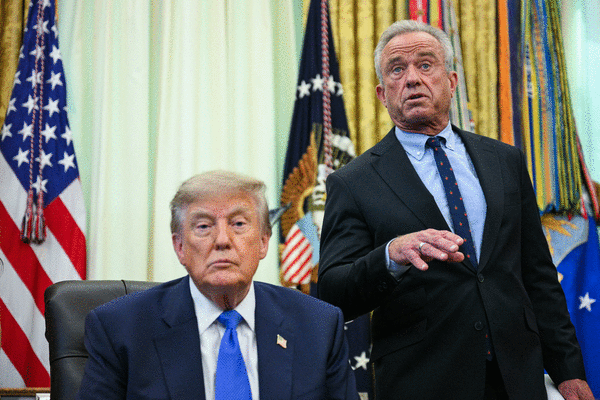
The U.S. Department of Health and Human Services plans to launch a new research initiative related to autism, using AI and other technology to map how the condition develops and identify opportunities for early intervention.
The initiative, called SPECTRA, will analyze available data and then fill in the gaps on “the missing biology needed to treat earlier and prevent avoidable illness,” according to a draft document reviewed by Bloomberg News. The program will operate under the Advanced Research Projects Agency for Health, a division of HHS that funds potential breakthroughs in biomedical research at an accelerated pace.
The draft document did not indicate how much funding the initiative will receive.
The program aims to examine the combination of “genetic, biological, environmental, and social factors” that may contribute to autism. HHS Secretary Robert F. Kennedy Jr. has dismissed the idea that genetic factors and increased screening alone explain a rise in autism prevalence.
A spokesperson for HHS declined to comment on the proposal.
The agency’s draft proposal says combining more extensive testing and at-home monitoring with AI could help identify autism trajectories earlier and lead to more targeted prevention and treatment. One possibility is studying wearable devices to help collect data and predict crises.
Alycia Halladay, chief science officer at the Autism Science Foundation, said the draft proposal touched on similar themes that an HHS advisory panel on autism research and policy mentioned in a recently adopted plan. It wasn’t clear on whether vaccines would be considered as an environmental factor that could contribute to the trajectory of autism, she said.
“There’s a lot of good ideas here, but there’s not a whole lot of what will be done or how it will be done,” Halladay said.
The proposal comes weeks after the department’s Interagency Autism Coordinating Committee voted in favor of a new blueprint for autism policy despite objections from patient advocacy groups over the abbreviated timeline and drafting process.
President Donald Trump has often expressed a desire to understand the root cause of autism, and Kennedy has repeatedly pledged to find that answer. The administration has linked Tylenol use during pregnancy to the rise in autism rates and Trump told women not to take it. More recently, Trump suggested that childhood vaccinations may be connected to autism. Medical authorities reject both assertions.
The National Institutes of Health announced a $50 million research initiative to explore the causes of autism spectrum disorder in September. The investigators are examining potential genetic, environmental and medical links to autism, and whether changes in diagnostic practices may have contributed to a perceived rise in prevalence. The initiative has been generally well-received by experts.
©2026 Bloomberg L.P. Visit bloomberg.com. Distributed by Tribune Content Agency, LLC.








Comments