They trained him for diabetes alerts. Then, this Idaho dog sniffed something worse
Published in Health & Fitness
BOISE, Idaho -- Jaylin Dozier chugged apple juice and water, but she couldn’t quench her thirst. It was a summer day in July 2024, and she thought maybe she was just sick or dehydrated.
Her mom, Amanda Dozier, a nurse practitioner, ran through a number of tests at her clinic. A urine analysis showed her daughter had high levels of glucose and ketones.
“I was like, that can’t be right,” Dozier told the Idaho Statesman. She reran that test and, in the meantime, did a blood sugar test that clocked in too high for the machine to read. It just read “error.” Then, she did a hemoglobin A1C blood test. Jaylin’s results were about double what is normal.
“If you know me, I’m very blunt, and so the words just came out,” she said, “and it was, ‘Holy crap, you have diabetes.’ ”
She and her daughter rushed to the hospital, where Jaylin, who was 14 at the time, stayed for days.
Type 1 diabetes didn’t run in their family. The unexpected and sudden diagnosis turned their lives upside down. They would wake up throughout the night to check Jaylin’s blood sugar levels. Dozier feared waking up to find her daughter unconscious or not breathing — a mother’s worst nightmare.
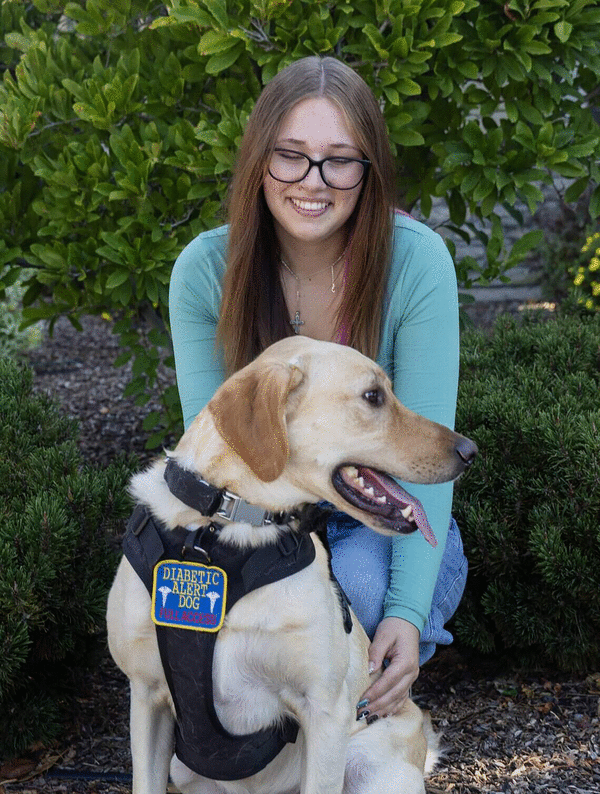
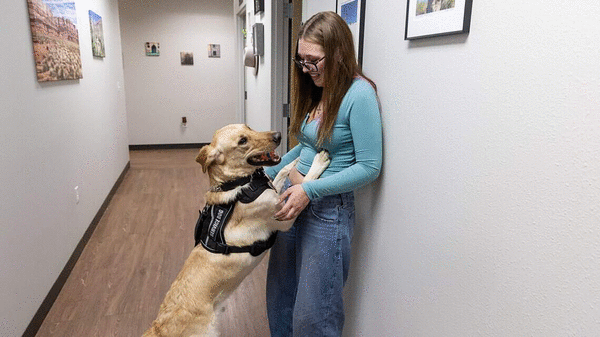
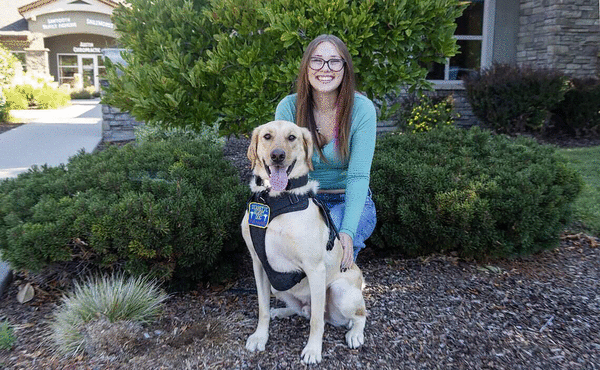
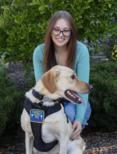
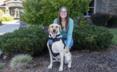
That’s where Barkley came in, an excitable, friendly yellow lab who is obsessed with balls and could sniff out a green tennis ball in an entire stadium of purple ones. Barkley is Jaylin’s diabetes alert dog. He quickly turned into a literal lifesaver — for far more people than just Jaylin and her family. Devices malfunction, tests fail and people miss things. But Barkley’s nose — and love for balls — never wavers.
“As a mom to a newly diagnosed diabetic, it’s kind of like having a newborn in your house again,” Dozier said as Barkley sat excitedly next to her. “You’re panicked with every little breath and every little noise. And so the idea of having a dog that could kind of take over for that was a godsend.”
Still, finding and training Barkley has been a journey that has come with some unexpected twists.
The training
After Jaylin was diagnosed with diabetes, the family decided to get an alert dog. Diabetic alert dogs can be expensive, and require families to travel to different areas to train with a dog for months. They aren’t attainable for many.
But for the Doziers, that process also wasn’t necessary. A close friend of the family who trains police dogs offered to help. They just needed to find the right dog first. The perfect dog needed to love balls or tug toys, be neurotic and extremely obsessive. The family looked at more than 60 dogs, but none were quite right. Then, they found a dog named Corduroy at the Idaho Humane Society who hit all the requirements.
There was only one problem: He was on a hold. They had finally found the perfect dog, but he wasn’t available. So the search continued.
A few days later, though, Corduroy came off of hold at the Humane Society.
Early the next morning, around Labor Day in 2024, just a few months after Jaylin was diagnosed, Dozier and her husband stood in line in front of the Humane Society before it even opened. When they got home, Dozier ushered her daughter downstairs.
When Jaylin got outside, she saw her new, 1 1/2-year-old dog, ready to report for work.
Barkley is smart and picked up commands quickly. Within 15 minutes, Dozier said, he knew sit, stay and down — all in another language. Trainers recommend training service dogs in another language so someone else can’t control the dog, Dozier said. It’s a tactic used with police dogs.
When the family first adopted Barkley, they acquired samples of Jaylin’s saliva and sweat from when she had low blood sugar, and have since gotten samples from high blood sugar and a sample of ketones. Then, they started training Barkley to sniff out those scents and alert them when he smelled them. When he did it, just like any other job, they paid him — with the ball.
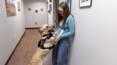
Every day, they’d have training assignments. They’d make training into a game. They would hide the samples in different settings, and Barkley would run around to find the smell. To alert to low blood sugar, he sits and his ears pop. It’s subtle, so it doesn’t disturb people in public places. But if he doesn’t get his payment, he gets more and more persistent. If Jaylin were unconscious, he wouldn’t just let up.
“He would start bumping her, like, ‘Hey, I smelled the smell, where’s the ball,’” Dozier said. If Jaylin still doesn’t respond, he is trained to go find someone and lead them to her. A note in his vest tells people that if they see him by himself, they should follow him.
An unexpected growl
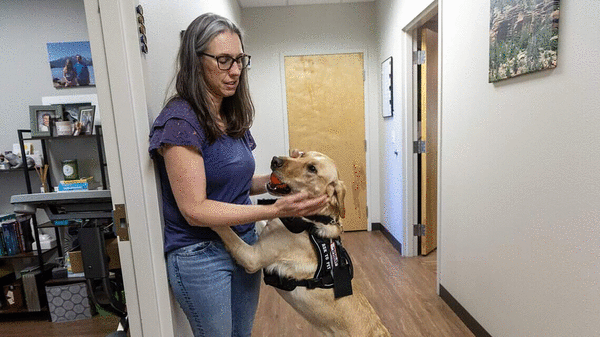
As they were in the process of training, Dozier started bringing Barkley to her clinic to socialize him. When he got to the center the first time, he did something out of character. He growled at Ami O’Gorman, who works as the office manager. O’Gorman loves dogs, and dogs love her. She was taken aback, and almost offended, she told the Statesman.
The growling worried Dozier, too. They couldn’t have a service dog who randomly growled at people.
But Barkley never growled at O’Gorman again after that, so they carried on.
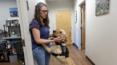
Then it happened again — to another person. That patient had previously been diagnosed with thyroid cancer. Dozier came out to the waiting room and thought, let’s see what he does, she said. Barkley sniffed the patient all over, and pointed right at her neck, around where the thyroid is located. Dozier started to realize, Barkley’s growling may have meant he sensed something was wrong.
Dozier then checked O’Gorman, and sure enough, she found a spot. It was skin cancer. O’Gorman said she had had skin cancer before, but she had not yet found the recurrence. Barkley had.
A few months later, another man came in and Barkley growled at him, too. Russell Shipman, like O’Gorman, loves dogs. He has five rescue dogs at his home, and is the person who will always take another if a dog needs a new home. If he had more property, he said, he’d fill it with dogs. So he had no idea why this sweet, friendly dog had growled at him.
Dozier came out and started walking Shipman back for an exam. “She goes, ‘Hang on,’ because I had to wait to get back in the room. She didn’t want to say anything out here,” Shipman told the Statesman. “And so then we talked. She goes, ‘OK, let me tell you a little story about him now.’ ”
Shipman, who had skin cancer, never doubted Barkley.
“I find a lot of people in Idaho, they trust dogs, I think, over their doctors sometimes,” he said.
Since then, Barkley has growled at several other people, and all but one have been diagnosed with some type of cancer, Dozier said. The other patient was pregnant.
Dozier hypothesized that rapidly dividing cells have a scent that dogs can smell. The metabolism on those cells is a lot higher, she said. Studies have shown dogs can be trained to detect cancer. Cancerous cells have a specific smell, and dogs’ noses are 10,000 to 100,000 times better than humans, according to the American Kennel Club. Dogs can be trained to alert to these odors by sniffing samples of breath, plasma and saliva, and have the capacity to detect cancerous cells early on in the disease’s progression, according to the Kennel Club.
Dozier acknowledged it can be hard to believe.
“I’m super skeptical because, you know, I need evidence and science and all the things to back everything I do,” she said. “This one, I can’t explain.”
Relief that ‘it wasn’t all on me’
A few months after the family adopted Barkley, they were on a trip to Arizona. They stopped at a hotel, and Barkley started “going nuts,” Dozier said.
“And I’m sitting here going, ‘He’s supposed to be a service dog,’ ” Dozier said.
Jaylin had gone to the bathroom, and Barkley went behind the front desk and was sniffing around. When Jaylin came out of the bathroom, Barkley rushed straight over to her. He sat down.
“And then his ears flicked up, and he turned and looked at us like, ‘Where’s the ball? Look what I just did,’ ” Dozier said. Jaylin looked at her sugars on her continuous glucose monitor and they weren’t low. Then she held out her hand. She was shaky. It was the first time Barkley alerted them, and he caught the drop before Jaylin’s device.
When her sugars drop, she said, it almost feels like she’s going to faint.
“It’s like a cold sweat,” she said. “You get really shaky and weak. My eyes get blurry. It’s like panic.”
When her levels are high, she said she feels irritable — a descriptor her mom lovingly agreed with — and nauseous. She also gets a bad headache.
She has an insulin pump and a continuous glucose monitor, but Barkley is faster. The early alerts mean she can address the issue before her health takes a turn for the worst.
Even when he’s sleeping — in his crate, because he is still a puppy who sometimes likes to eat things he shouldn’t — Barkley can smell if her sugars are changing.
“He would smell it and start going nuts, and he’s got a heck of a bark, and he’ll tell us,” Dozier said.
Jaylin, now 16, goes to an alternative school. She attends in person a few days a week and online the rest of the time. She was attending a traditional public school, but her absences built up when she was diagnosed with diabetes near the start of her freshman year.
Like any teenager, she hopes to one day leave her parents’ home after high school and be on her own. But she and her mom can rest easier knowing that she’ll have Barkley.
“It provides a lot of comfort to know that there’s somebody watching,” Jaylin said. “It was just like a huge relief to know that somebody else was watching over it, too, and it wasn’t all on me.”
“He’s made it so I can sleep at night,” her mom added, “and that’s pretty huge.”
In the clinic, Barkley has become somewhat of a celebrity. Some patients specifically ask if he can be there for their appointment so they can get scanned.
Dozier is a science person. She needs to know for sure, to do the tests and follow the studies. But with Barkley, Dozier trusts him.
“He knows what he’s doing, and I trust his nose,” she said. “Sometimes I trust his nose better than I trust … the medical testing that we do. I mean, he doesn’t lie.”
©2026 Idaho Statesman. Visit at idahostatesman.com. Distributed by Tribune Content Agency, LLC.









Comments