California is one of worst states for ticks. How to keep kids and pets safe
Published in Health & Fitness
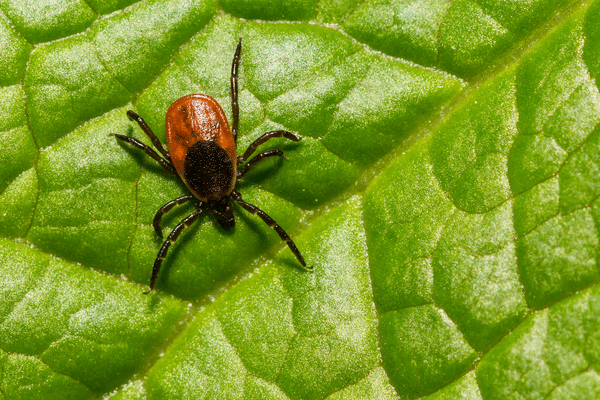
Summer means more time outdoors — but it also means a greater chance of encountering ticks, according to pest experts.
California ranks among the nation’s worst states for ticks in 2025, according to a new report from pest control company Terminix.
The Golden State — particularly the Los Angeles and San Francisco areas — is one of the country’s biggest tick hot spots.
“When it comes to enjoying the great outdoors, nothing can ruin your day quite like a tick bite,” Terminix said. “These tiny critters may be small, but even just one can pack quite a punch and transmit diseases like Lyme disease or Rocky Mountain spotted fever.”
According to the California Department of Public Health, adult ticks are generally most active from November through March, while immature, or nymphal, ticks are most active from March through July.
Since nymphs are tiny and difficult to spot, they’re more likely to go unnoticed and can pose a greater risk of transmitting disease.
“Higher tick populations in your area can increase your risk of exposure to these diseases, so knowing the states with the most ticks helps you know when to take extra precautions,” Terminix said.
Here’s how to protect your family and pets this summer:
Where are ticks the worst?
According to Terminix, California ranks among the five worst states for ticks due to its warm climate, high humidity, abundant vegetation and outdoor recreation areas.
While the Northeast continues to experience the highest overall tick populations, the company said, tick activity remains widespread across much of the country.
“Overall, the Northeastern region of the United States generally experiences the highest populations of ticks, with common species including the black-legged tick and the American dog tick,” Terminix said.
What do ticks look like?
Ticks are tiny, wingless parasites that live in grassy, brushy and wooded areas, where they attach to people and animals to feed on blood, according to the Cleveland Clinic.
Depending on their life stage, ticks can be as small as a poppy seed, making them easy to miss.
“Unlike mosquitoes, ticks don’t just bite and run,” the Cleveland Clinic said. “They bury their heads into your skin. Then, they feed off your blood for hours or even days.”
Tick bites can transmit bacteria, viruses and parasites that cause serious illnesses.
What diseases do ticks carry?
According to the U.S. Centers for Disease Control and Prevention, ticks can transmit illnesses including Lyme disease and Rocky Mountain spotted fever.
They can also carry alpha-gal syndrome, a disease and potentially life-threatening allergy to red meat and other mammal-derived products that can develop after certain tick bites.
Many tick-borne illnesses share similar early symptoms, including fever, chills, muscle aches, fatigue and a rash.
Earlier this year, a Northern California resident was hospitalized with a newly identified and extremely rare tick-borne illness, becoming just the fourth documented case worldwide, according to the California Department of Public Health.
The patient was infected with Rickettsia lanei, a spotted fever group bacterium transmitted by ticks, mites and fleas, The Sacramento Bee previously reported.
What does a tick bite look like?
According to pest company Orkin, tick bites appear as red bumps and sometimes a bulls-eye rash associated with Lyme disease, causing itching and burning.
What should you do if a tick bites you?
If you’ve been bitten by a tick, wash your hands and clean the bite area with soap and water, according to the Mayo Clinic.
You should watch for signs of illness over the following days and contact your healthcare provider if you develop a rash, fever, flu-like symptoms or believe the bite has become infected.
Call 911 if you experience severe symptoms such as difficulty breathing, paralysis, heart palpitations or a severe headache.
How can you protect yourself from ticks in California?
Whether you’re hiking, camping or spending time in your backyard, taking a few simple precautions can help reduce your risk of tick bites.
“If you live in a state with the most ticks, you know how concerning it can be to protect your family and pets from these pervasive pests,” Terminix said.
To lower your risk of exposure, the company recommends:
—Keeping grass mowed and brush trimmed around your home.
—Wearing long sleeves and long pants when walking through grassy or wooded areas.
—Using an EPA-registered insect repellent.
—Checking yourself, your children and your gear for ticks after spending time outdoors.
“However, effectively managing tick populations around your home often requires a more robust approach,” the company said.
How can you protect your pets from ticks?
Ticks can also spread diseases to pets.
According to the American Veterinary Medical Association, ticks can transmit Lyme disease to dogs and can also infect cats and horses.
Tick prevention in pets requires vet-prescribed oral or topical medications, environmental management, such as keeping grass mowed, and regular check-ups.
______
©2026 The Sacramento Bee. Visit sacbee.com. Distributed by Tribune Content Agency, LLC.









Comments