Ask the Pediatrician: Baby sunburn prevention tips
Published in Health & Fitness
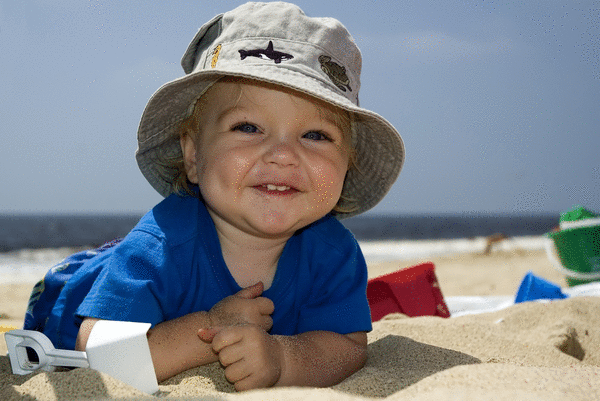
Sunny days invite outdoor family fun. When heading out with your little ones, keep in mind that babies need extra protection from sunburn. With a few simple precautions, you can help keep their skin healthy now and in the future.
Babies are more at risk of sunburn because their skin is thinner and more delicate than adult skin. They can burn more quickly, sometimes after just a short time outside. Babies with darker skin tones can develop sunburn, too. Additionally, babies are not able tell you when they are too hot or starting to burn, so they rely on adults to move them out of the sun and provide protection.
Sunburns are uncomfortable for anyone, but especially for babies. A severe sunburn in a baby is a medical emergency and needs care right away. The cells in babies' skin are especially sensitive to damage from sunlight. We also know that avoiding sunburns early in life can help prevent skin cancer, including melanoma, and signs of aging like wrinkles later in life.
The best way to protect babies from sunburn is to keep them out of direct sunlight and in the shade as much as possible. Babies younger than 6 months should be kept out of direct and indirect sunlight entirely because of the risk of heat stroke. Use shade-covered strollers and sunshades with UV protection or seek shade under trees or a beach umbrella.
Another way to help is to dress babies in lightweight long sleeve clothing, long pants and wide brimmed hats to protect the skin. It’s best to avoid having a baby outside between 10 a.m. and 4 p.m., when the sun's rays are strongest. For babies 6 months and older, regularly apply sunscreen to uncovered areas like the hands and face.
When choosing a sunscreen for your baby, look for products labeled "broad spectrum." That means it will block the two main types of the sun's rays, UVA and UVB. Look for sunscreen with a sun protection factor (SPF) of at least 15. For babies, mineral-based sunscreens are best. These work by using minerals that sit on top of the skin and block the harmful UV rays. Mineral-based sunscreens with zinc oxide or titanium dioxide are perfect for sensitive baby skin, since they are unlikely to cause rashes or irritation. Spray-on sunscreens can contain propellant chemicals that are not recommended for babies.
For the best protection, sunscreen should be applied 15 to 30 minutes before going outside and be reapplied every 90 minutes to 2 hours, particularly if a baby goes into the water. Be sure to follow the instructions on the bottle.
Overall, any type of sunscreen is better than none.
____
Deepti Gupta, MD, FAAD, FAAP is a pediatric dermatologist practicing at Seattle Children's Hospital. She is triple board-certified in Pediatrics, Dermatology, and Pediatric Dermatology. She is a member of the American Academy of Pediatrics Section on Dermatology Executive Board and Education Committee.
Matthew Mahoney, DO, is a pediatrician and dermatology resident. He recently completed his training in pediatrics and is currently in dermatology residency at the University of Minnesota. He plans to practice pediatric dermatology with a focus on improving how doctors communicate with patients and expanding access to pediatric dermatology care in rural communities. He is a member of the American Academy of Pediatrics Section on Dermatology Education Committee.
©2026 Tribune Content Agency, LLC.








Comments