Study finds sugar substitute could increase risk of stroke
Published in Health & Fitness
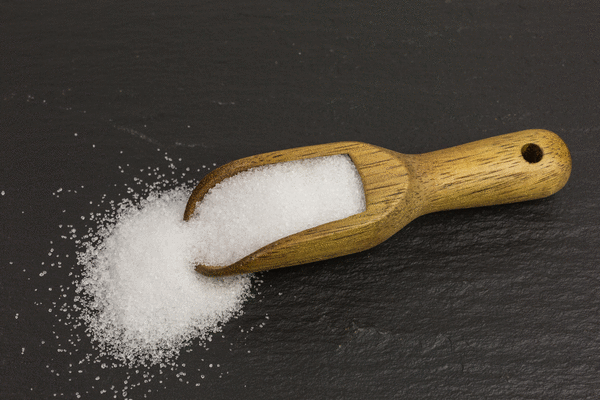
Long thought safe, the sugar substitute erythritol could increase your risk of stroke. Researchers at the University of Colorado, Boulder found that the sweetener impairs certain functions of blood vessels that would otherwise help ease stroke risks.
When exposed to the amount of sweetener in a typical diet drink, the blood vessel cells reacted strongly in three ways that combined to increase stroke risk. The researchers observed cells dropping production of nitric oxide, a compound that relaxes blood vessels, increasing a protein that constricts vessels and failing to produce a third compound that breaks up blood clots. Clots can block blood vessels, leading to a stroke.
“Big picture, if your vessels are more constricted and your ability to break down blood clots is lowered, your risk of stroke goes up,” Auburn Berry, a UC Boulder graduate student who worked on the study, said in a story on the school’s website.
The researchers published their study in the Journal of Applied Physiology in June.
Recognized as safe by the Food and Drug Administration in 2001, erythritol can be found in diet drinks, low-calorie popsicles and keto-friendly protein bars. Derived from fermenting sugars found in watermelon, pears and grapes, the sweetener is 80% as sweet as sugar, but does not increase blood sugar or impact insulin levels.
Products containing erythritol include diet drinks like Bai, Monster, Gatorade G2 and Vitamin Water Zero, frozen treats from Halo Top, Nicks and Sambazon, sweeteners including Truvia and Splenda Naturals, and protein bars such as SlimFast, think! and some flavors of Quest and Perfect Keto bars. Products listing “sugar alcohols” may also include erythritol.
It’s not just a stroke risk.
The University of Colorado research references a study from the Cleveland Clinic finding that men and women who consumed more erythritol were significantly more likely to suffer a heart attack or stroke within the next three years.
That study, funded by the National Institutes of Health, analyzed the records of 4,000 patients from the United States and Europe. The researchers also found that erythritol increased spontaneous blood clotting both in the lab and in healthy volunteers.
The UC Boulder researchers cautioned that more human studies are needed, but they urged people to consider their own dietary needs based on their findings.
“Given the epidemiological study that inspired our work, and now our cellular findings, we believe it would be prudent for people to monitor their consumption of non-nutrient-sweeteners such as this one,” senior author Christopher DeSouza said on the Boulder Today website.
_____
©2026 Baltimore Sun. Visit baltimoresun.com. Distributed by Tribune Content Agency, LLC.









Comments