Ask the Pediatrician: Medication safety tips for families
Published in Health & Fitness
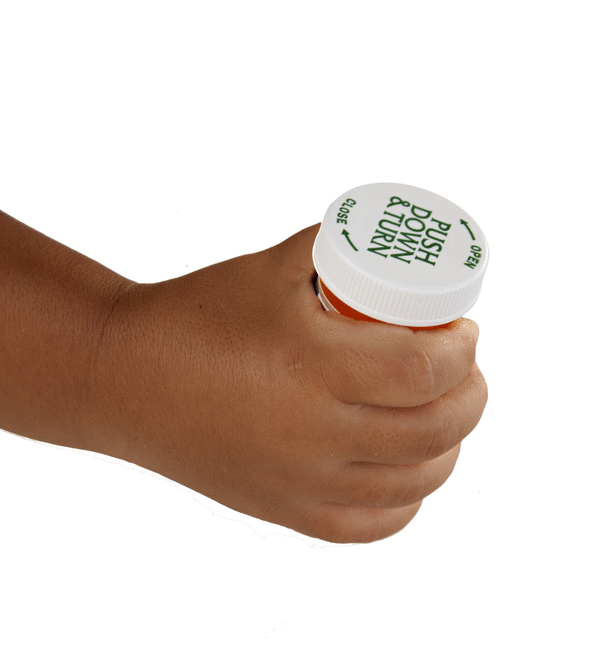
Each year, about 50,000 children under age 5 end up in emergency departments for poisoning after swallowing medicine unintentionally.
Medications are meant to improve and save lives. But when a medicine gets into the wrong hands and is taken by a child or teen, the results can be deadly. That’s why all prescription drugs, over-the-counter medicines and supplements should be stored safely and kept out of reach.
Even small amounts of common medicines can be deadly for babies and young children— sometimes just a pill or two. This includes fever and pain medicines, prescription opioids, heart and diabetes medications, and even vitamins, or common supplements such as iron. Teenagers can sometimes make poor choices with pills, especially prescriptions, with tragic results.
If your child is unconscious, not breathing, having seizures or other worrisome symptoms from possible poison contact or ingestion, call 911 or your local emergency number. If your child has mild or no symptoms, call or email the Poison Center, 800-222-1222 or PoisonHelp.org.
Just like you protect your child in your vehicle by using car seats and seat belts, you need to protect your children at home by locking up medicines and other common household poisons. Here are some medicine safety tips for parents, grandparents and anyone who has a child or teen in their home.
Use medicine containers with safety caps that are child resistant. No medicine container is fully child-proof and children may be able to open child-resistant caps so keep them out of reach and out of sight of children.
Store all prescription and over-the-counter medicines and supplements in their original packages in locked cabinets or containers. Safety latches that lock when you close a cabinet door can help keep children away from harmful products, but they do not always work. Consider buying a small safe or lockbox to lock up all medicines and drugs. Be sure to put the medicines back right after using them.
Remind babysitters, grandparents and other visitors to keep purses, bags or jackets that have medicines in them away from children's reach.
When taking medicine, do it over a bathroom sink and/or away from common areas of your home in case you drop or spill it. If you spill medicine, clean it up immediately. For many opioids and other powerful painkillers, even a small amount consumed or absorbed through the skin (liquid and patches) can be life-threatening.
It’s important to never refer to medicine as "candy" or another appealing name. This can confuse or tempt a child to try other pills when you're not watching.
Be careful to give the correct dose and measure it out exactly. This includes reading the label each time you give over-the-counter drugs like acetaminophen and ibuprofen. Giving the wrong dose of a medication by mistake is a common medication error that leads to emergency department visits. Use a medicine syringe or dropper to ensure the correct dosage is given and never use adult-strength medications for children.
Follow dosing and timing instructions given to you by your doctor. If you forget to give a dose, give it as soon as possible and give the next dose at the correct time following the late dose. Do not give two doses at the same time or extra doses without speaking with your doctor. If you are unsure about giving a dose, check with your doctor or pharmacist.
Feel free to ask your pediatrician questions about your child’s medications. Many parents have trouble understanding medicine instructions. If you are confused about how or whether to give your child a medicine or if the medicine can be mixed with food or liquid, it is better to ask questions than to give the medicine incorrectly. You can even ask to be shown how to administer the correct dose and/or have the pharmacists or doctor write the instructions down for later reference.
Give medications that treat symptoms (such as long-lasting cough) only if your child needs it. Over-the-counter cough or cold medicines can have serious side effects and are not recommended for children under 6 years, and they should never be used in children under 2.
Give one medication at a time. Cold medications often have more than one type of medicine in one bottle (a pain reliever such as acetaminophen plus a cough medicine). Do not give a medicine for fever or pain if you have already given a cold medicine that has a fever or pain medicine in it.
If your child has a fever and is uncomfortable, you can give medicine to lower it if their fever is over 102 degrees Fahrenheit. Fever is a sign that the body is fighting the infection and medicine to bring fever down is an issue of comfort. It's not necessary if your child is comfortable.
Safely discard all unused medications, particularly powerful drugs like opioids and heart and diabetes drugs. Read the medicine label for safe ways to get rid of old or extra medicine. Medicine patches used for pain relief should be removed, folded in half and flushed. Many pharmacies, poison control centers, and public safety stations like fire stations and doctor's offices will accept old medicines for safe disposal, but call first.
____
Mary Beth Miotto, MD, MPH, FAAP is a general pediatrician in Massachusetts and the Immediate Past President of the Massachusetts Chapter of the American Academy of Pediatrics. She is a member of the AAP Committee on the Psychosocial Aspects on Child and Family Health and the Bright Futures Advisory Team.
©2025 Tribune Content Agency, LLC.





Comments