Those blurbs on book covers? Don't believe what you read
Published in Books News
When book lovers grabbed William Kent Krueger’s early novels because of Lee Child’s praise on the cover — “Krueger hits the sweet spot every time” — there was just one issue: Child hadn’t read the books.
“Lee’s a pretty good friend. I asked him for a quote and he said, ‘I can’t read the book, Kent. I don’t have enough time, but I’ll give you a good quote,’” recalled the St. Paul writer, whose latest book (without a Child quote on the cover) is “Apostle’s Cove.” “And he did, without reading the book. And for the next three or four books, that was the lead quote on the covers.”
Krueger said he knows Child is not the only writer who does that.
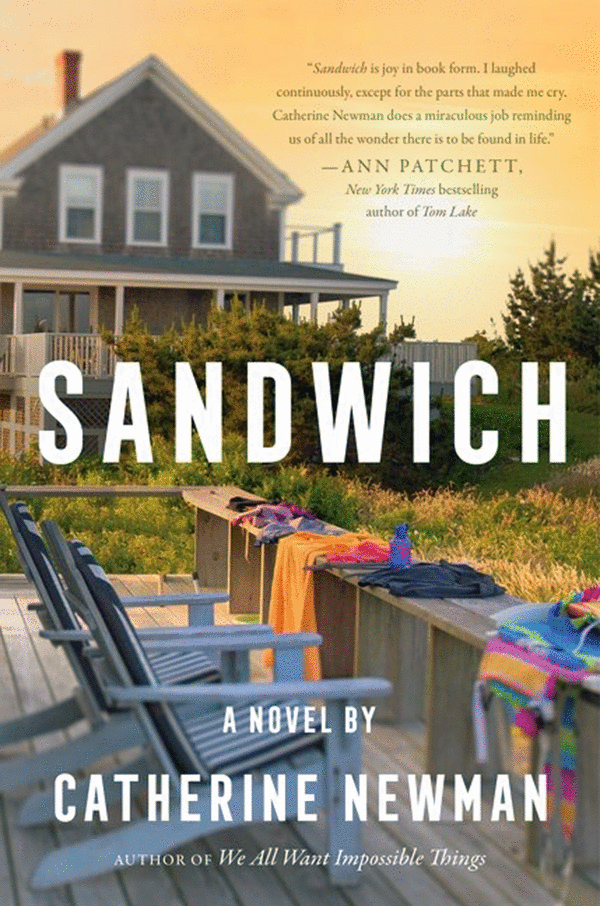
Writing glowing praise for the cover of a book, or “blurbing,” is common practice in the publishing industry. Kudos from a bestselling writer are believed to help sell titles from a writer with less renown. The queen of the blurbosphere is Ann Patchett, who’s not just a novelist but also a bookstore owner (Parnassus, in Nashville). Her recommendations adorn book jackets including pal Kevin Wilson’s books such as “The Family Fang,” employee Lindsay Lynch’s debut novel “Do Tell” and other titles, including Catherine Newman’s bestselling “Sandwich.”
The idea behind blurbs is that if a beloved writer likes a book (assuming they have read it), maybe you will, too. But that’s not a universal belief.
“How often does a blurb from a filmmaker appear on another filmmaker’s movie poster? A blurb from a musician on another musician’s album cover?” asked Simon & Schuster publisher Sean Manning in a story for Publishers Weekly. “The argument has always been that this is what makes the book business so special: the collegiality of authors and their willingness to support one another. I disagree. I believe the insistence on blurbs has become incredibly damaging to what should be our industry’s ultimate goal: producing books of the highest possible quality.”
Manning announced that his company would eschew blurbs because he wants writers to spend their time creating books, not blurbs.
That struggle is real, says Krueger — who, for the record, says he only blurbs books he has read (this year, his praise appeared on the covers of books by Joshua Moehling and Minnesota Star Tribune publisher Steve Grove ). But reading and blurbing a book takes time away from his own writing.
“I have started saying ‘no’ to anybody I don’t have a personal connection with, which is the thing readers need to be aware of when they’re reading those quotes. Typically, we know each other. We’re colleagues or friends. We’re not going to say anything bad about the book of a colleague,” said Krueger, who added that the very idea behind author quotes may be wrong, since he enjoys Stephen King’s books but not necessarily the ones King blurbs.
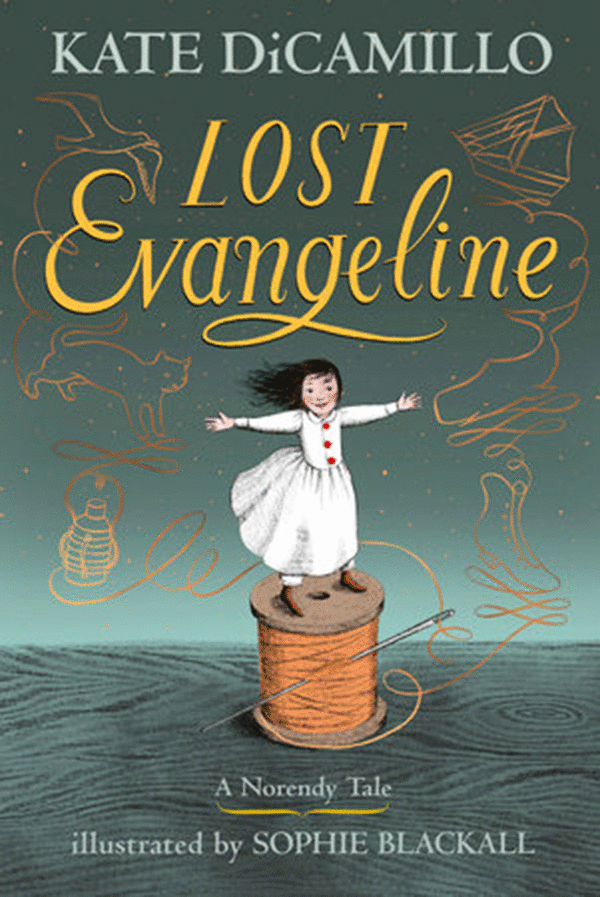
“The Lost Evangeline” writer Kate DiCamillo used to blurb books she liked but decided to go cold turkey: “I was very aware there was no way to be fair, because they were coming at me from different directions. So I started a strict no-blurb policy, which I have stuck to.”
Mindy Mejia has benefited from a Krueger blurb on some of her books and said she tries to keep readers in mind when she does it.
“You want to praise a book in a way that sets some expectations: ‘Oh, I like locked-room mysteries, too, so this might be good,’” the Apple Valley novelist said. “I’m always happy to take a look. I’m in [professional organizations] Mystery Writers of America and Sisters in Crime, so I sometimes get requests that way.”
Kathleen West, the Minneapolis novelist whose “Making Friends Can Be Murder” came out last summer and whose sequel, “Merry Christmas Can Be Murder,” is just out, agrees the process of asking other writers for blurbs is “awkward,” but says there are blurbers whose praise means something to her.
“K.J. Dell Antonia, I know she’s honest. She has a newsletter. And Taylor Jenkins Reid, I do tend to notice what she likes,” said West. “I was at dinner with a couple friends who read super widely and they mentioned blurbs — ‘This book had a quote from so-and-so.’ So I do think it still matters to people, seeing books that an author we like blurbs."
Like West, Catherine Dang wonders if blurbs are so prevalent that they’ve become meaningless.
“There are a few authors whose blurbs I would take seriously, like Stephen King or Ta-Nehisi Coates or Judy Blume,” said the University of Minnesota graduate, whose latest novel is “What Hunger.” “But I think blurbs have lost their value, just because there are so many. We’re constantly giving them out, we’re constantly expecting them from other writers.”
King, like Patchett, blurbs a lot of new titles — and Dang thinks his name on a cover means something. It sold her on Kate Elizabeth Russell’s debut novel “My Dark Vanessa” a few years ago, for instance. And she’s a blurb beneficiary. When bestselling thriller writer Laura Dave agreed to sing the praises of Dang’s debut novel, “Nice Girls,” Dang thinks it increased the buzz around it.
Manning wrote that he thinks blurbing helps create a “literary ecosystem that often rewards connections over talent.” Dang’s not sure about that, but she does wonder if blurbing is almost like running in circles.
“I think it’s a necessary evil at this point in the business. I give blurbs, hoping someone else will give me a blurb, and I think it’s the same way with other people who are blurbing me,” said Dang, who at least wants to make sure people can believe it when she enthuses about a novel. In other words: She reads the book she blurbs.
“It’s like you’re putting your name and your stamp of approval out there,” Dang said. “At least know what you’re advertising.”
©2025 The Minnesota Star Tribune. Visit at startribune.com. Distributed by Tribune Content Agency, LLC.





Comments