Proposition 4 fails as California keeps ban on publicly funded campaigns
Published in News & Features
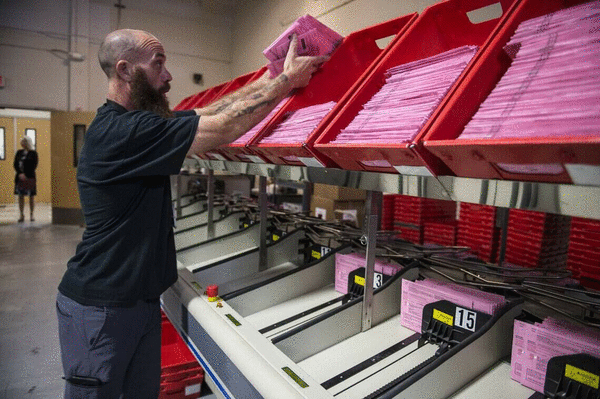
SACRAMENTO, Calif. — Backers of Proposition 4 conceded Thursday, but vowed to continue the fight over publicly financing candidates in California elections.
Prop. 4 would have repealed California’s ban on the use of public funds to support political candidates.
In a statement, the League of Women Voters of California said it would be the “narrowest defeat of a California ballot measure in more than a decade.”
Preliminary results as of Friday morning show Prop. 4 won the support of 49.8% of voters, with 50.2% voting against it. The state only has around 95,000 ballots left to process.
“The razor-thin margin shows just how close California is to embracing a democracy where running for office doesn’t require personal wealth or connections to wealthy donors,” said Jenny Farrell, the group’s executive director. “We believe that with a few thoughtful adjustments to the measure’s language, we can build on this momentum and get this important reform across the finish line.”
Prop. 4 didn’t set aside money for candidates to use. Instead, it would have unwound a 1988 measure that banned public funding of campaigns. The new measure would have allowed local governments and state lawmakers to create a public financing system if they chose. It would have prohibited the use of public funds that are already earmarked for education, transportation or public safety.
The Democratic supermajority in the Legislature put Prop. 4 on the ballot. It had support from groups such as California Common Cause and the California Nurses Association. They pitched it as a good-governance measure that would help counter the influence of special interest groups.
Critics such as the California Taxpayers Association argued Prop. 4 could amount to a taxpayer-funded blank check for political candidates, with no limits on how much a candidate could receive or how many candidates could qualify for the money.
The existing ban on public financing didn’t apply to charter cities, which have greater autonomy in municipal affairs. A handful of those cities have set up their own system of public financing, including Berkeley, Oakland and San Francisco.
The low-profile proposition wasn’t a major draw for donors. Backers reported spending roughly $218,000 through Oct. 17, while opponents didn’t create a fundraising committee at all.
____
©2026 The Sacramento Bee. Visit at sacbee.com. Distributed by Tribune Content Agency, LLC.





Comments