Democrats nominate Jeffries to be House Speaker, a historic first
Published in News & Features
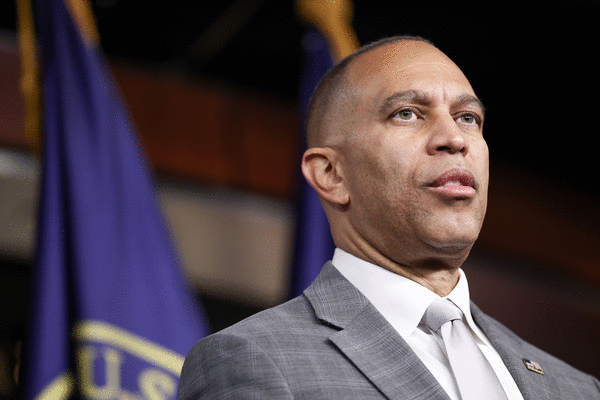
WASHINGTON — House Minority Leader Hakeem Jeffries won a closed-door vote of the Democratic caucus Wednesday setting him up to be the nation’s first Black speaker of the House, a historic step that follows Democrats’ staggering election wins earlier this month.
Jeffries, who had called for a recorded vote of the more than 250-member caucus that will serve in the next Congress despite facing no announced opponent, won decisively, 251-11. The margin suggests Jeffries will easily surpass the necessary 218 votes he will need on the House floor when the full chamber votes in January.
Outgoing Rep. Nancy Pelosi, D-Calif., who made history two decades ago as the nation’s first woman speaker, arrived for the vote chanting “Hakeem Jeffries!”
“We've been looking at people's talents, not a particular gender or race, and I think that's a good thing,” outgoing Rep. Steny Hoyer, D-MD, told reporters ahead of the election.
“I think Hakeem Jeffries is going to be a good speaker,” Hoyer continued. “He has the confidence of the caucus, and he has a good leadership team that is close knit and very organized.”
Jeffries' nomination followed the election of current Democratic Caucus Vice Chairman Ted Lieu, D-Calif., to serve as the caucus chair in the next Congress. Separate votes were set to follow Wednesday morning, keeping Jeffries' leadership team intact: House Minority Whip Katherine Clark, D-Mass., as the new majority leader and Democratic Caucus Chairman Pete Aguilar, D-Calif., as majority whip.
Jeffries expressed confidence in the weeks leading up to his securing the top Democratic spot in the lower chamber, brushing aside questions about incoming members who had said they remained “undecided” ahead of the election.
Pelosi was nominated for speaker by acclamation ahead of her first election to the position in 2007. But Jeffries’ allies portrayed his decision to move forward with a recorded vote as a show of strength after a group of incoming progressives had floated forcing a recorded vote in the internal leadership race. The entire leadership team will be tested despite their numerical advantage over Republicans by the same internal tensions facing Senate Democrats, where current Minority Leader Chuck Schumer, D-N.Y., is being challenged to lead the majority by Sen. Chris Van Hollen, D-Md.
Jeffries said Tuesday that the approach to the caucus vote mirrored the caucus’ 2018 transition from minority to majority, giving members an opportunity to weigh in on who was best positioned to lead based on their “track record, experience and vision.”
Jeffries has already outlined some of his top priorities of his speakership such as a hefty healthcare agenda, immigration legislation, and a multitude of investigations into the Trump administration.
------------
©2026 CQ-Roll Call, Inc. Visit at rollcall.com. Distributed by Tribune Content Agency, LLC.





Comments