Baltimore wants to raise parking fines, permit fees to bring in $19.2 million
Published in News & Features
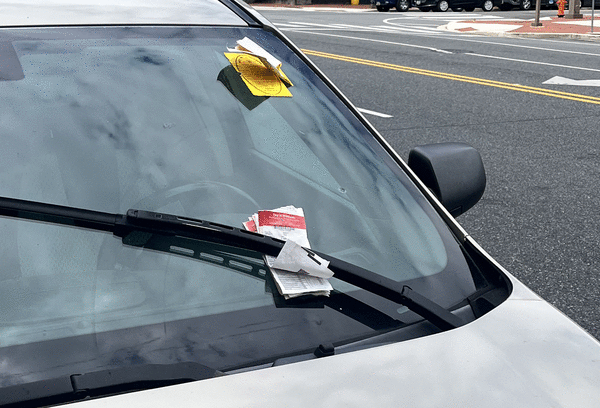
BALTIMORE — Baltimore officials want residents and businesses to pay more for illegal parking, trash dumping, and a range of city permits, proposing increases expected to generate $19.2 million annually as the city grapples with rising costs and budget pressures.
The proposal follows a review of city fees that found many have remained unchanged for nearly two decades, even as the cost of providing government services has climbed. Officials say the increases would help cover those costs while discouraging violations that affect residents’ quality of life.
But the city has not yet released a complete schedule showing how much individual fines and fees would increase under the proposal, leaving residents and businesses without a clear picture of what they could be required to pay.
The proposal also comes as Baltimore faces a projected $36.3 million fiscal 2027 year-end General Fund shortfall, driven by spending overruns, including overtime and vehicle expenses in the Fire and Police departments. The city’s overall revenue growth has slowed, adding pressure to its finances.
Bob Cenname, the city’s deputy finance director, said outdated fees have shifted some of the cost of providing services away from the people using them and onto the city’s broader tax base.
“The average resident is actually bearing the cost of [flat fees and fines],” Cenname said. “It really falls on the city budget and the everyday resident to bear the cost for those services. By modernizing our fines and fees, we want to take that burden off the average resident.”
But higher fees would also increase costs for residents, property owners and businesses seeking permits or services, raising questions about how those increases would be distributed.
Fees fail to keep pace
From fiscal 2014 to fiscal 2024, Baltimore’s annual fee revenue remained essentially flat, declining from $82.3 million to $81.5 million, according to a March 2026 study conducted by PFM Group Consulting. Over the same period, the city’s total General Fund revenue increased an average of 3.4% annually.
Most fees have not been adjusted since the 2000s.
The study examined 716 city fees, representing about 54% of the fee revenue collected in fiscal 2024. It found that many charges failed to recover the administrative costs of providing services, including permit processing, plan reviews and inspections.
Consultants recommended raising many fees by 15% to 25%, with larger increases for certain categories, and adding a 10% technology surcharge to applicable permits. Those were recommendations, not an approved schedule of increases.
For example, Baltimore charges $45 for a basic use-and-occupancy permit, although the study estimated a minimum administrative cost of $118 to issue one. Consultants recommended increasing the fee by 25%, along with a technology surcharge.
“If somebody is asking for a construction permit the city has to send an inspector out to look at a building and make sure everything is okay before they finalize that permit,” Cenname said. “If the fee that’s being paid for that permit is flat, the cost of us to deliver that service or to provide that inspector has grown over a long period of time.”
The consultant’s report also acknowledged a potential downside to raising fees too aggressively: Charges intended to recover the full cost of city services can make compliance more expensive, discourage investment or create barriers for residents and businesses.
The proposal includes a technology fee intended to help pay for systems used to process permits, conduct inspections and maintain city records. Consultants recommended a 10% surcharge on applicable services.
Cenname said the additional money would help finance improvements in the city’s technology and service delivery.
Higher fines intended to discourage violations
Beyond recovering the cost of services, city officials say higher penalties for unlawful behavior could discourage violations such as illegal dumping, speeding, running red lights and parking illegally.
City Administrator Faith Leach said the administration views the proposed increases as both a revenue measure and a way to improve residents’ quality of life.
“Think illegal dumping, think speeding, all of those things,” Leach said. “We want to eliminate illegal parking. The two are separate issues. This is not just about collecting revenue. Around this city I’ve seen a countless number of folks run red lights and I’ve seen any number of bus lane violations for example. That is behavior we want to curb in the City of Baltimore.”
The proposal raises a question the city has not yet addressed in the draft: Whether higher penalties alone would discourage violations without additional enforcement.
City officials argue that recovering more revenue from fees could support additional staffing and technology, but the effectiveness of higher fines would also depend on how consistently violations are identified and penalties collected.
The city is also pursuing increased penalties after gaining broader authority from the Maryland General Assembly earlier this year. Legislation that took effect October 1 removed the previous statutory ceiling on certain fines the city can impose for ordinance violations.
Next steps
None of the increases Cenname and Leach detailed have been enacted as of yet. Cenname said that the Board of Estimates must approve the technology fee while the Baltimore City Council must approve the other two increases – fines and fee rates – due to their inclusion in the Baltimore City Charter.
---------------
©2026 The Baltimore Sun. Visit at baltimoresun.com. Distributed by Tribune Content Agency, LLC.






Comments