US diesel futures slump on export ban fears even as oil rises
Published in News & Features
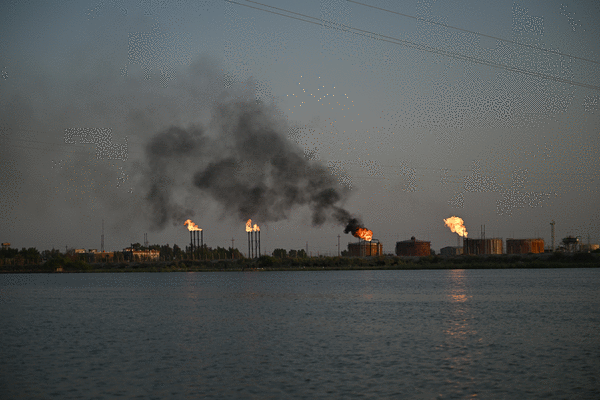
U.S. diesel futures slumped as speculation swirled that the White House is considering an export ban, with key refinery infrastructure around the globe still offline.
President Donald Trump joined a chorus of Republican lawmakers this week calling for a ban on American exports of the workhorse fuel, essential to everything from transport to farming and energy. The White House is preparing a plan to enact such a measure, Politico reported on Wednesday, sending futures tumbling as much as 7.5% to an intraday low. A White House official said the report is not accurate, Reuters later reported.
Crude oil, meanwhile, rose back above $100 a barrel in a choppy session, snapping five days of declines as traders factored dislocations in global fuel markets and fresh attacks in the Strait of Hormuz amid the Iran war. Brent, the global benchmark, settled up nearly 4% at around $103. Though still elevated compared to pre-war levels, oil futures have traded within a relatively contained range compared to fuel as some crude barrels make it out of the Middle East.
Diesel has rallied by more than 80% this year, with U.S. retail prices touching records, frustrating consumers ahead of the midterm elections in November. Spiraling energy costs are also a headache for the Federal Reserve and other central banks seeking to tame inflation.
The U.S. has become a major diesel supplier as the world grapples with a plunge in flows due to snarled supply chains and infrastructure damage from the Iran war and Russia-Ukraine conflict. Concerns over the effect of a potential halt in U.S. diesel shipments overshadowed optimism that Saudi Arabia’s crude exports are set to recover.
The kingdom was said to be aiming for a meaningful resumption of its East-West pipeline to the Red Sea by Saturday following drone attacks. It also appears to be sustaining an elevated pace of exports from the Persian Gulf.
U.S. stockpiles of diesel continue to dwindle, falling by 428,000 barrels, according to the Energy Information Administration. That came even as stockpiles at Cushing, Oklahoma, rose just over 2 million barrels to the highest since May, the data show. Distillates exports, however, fell to their lowest in almost three months, fueling hopes that the drop could help stave off an export ban.
Energy Secretary Chris Wright said Wednesday the Trump administration is working with refiners to voluntarily curb fuel exports. Reuters earlier reported that Wright had downplayed the effectiveness of an outright export ban.
If a U.S. export ban on diesel is implemented, the move threatens to squeeze markets in Europe and elsewhere. The country’s diesel exports surged to a weekly record near 2 million barrels a day last month.
And though a potential ban could lower domestic diesel prices initially, the constraints on transporting oil around the country would eventually lead inventories to fill, forcing refiners to cut production, said Hamad Hussain, senior climate and commodities economist at Capital Economics.
Attacks on ships crossing Hormuz stoked some long positioning on Wednesday. The United Kingdom Maritime Trade Operations reported a cargo vessel on fire and adrift after being struck while transiting the world’s most important energy choke point, underscoring ongoing risks even as more barrels slip through the waterway on tankers with their transponders turned off.
Traders have also been watching for potential progress toward an agreement that could help to stabilize shipping through Hormuz as diplomats gather in New York for the United Nations General Assembly. Trump said officials had a “very productive” meeting, even after he threatened to “annihilate” the Islamic Republic. More meetings are planned, he added.
Iran President Masoud Pezeshkian told world leaders at the U.N. his country won’t allow freedom of navigation through Hormuz while sanctions and a U.S. blockade remain in place, underscoring the difficulty in reaching a peace deal with Washington.
Multiple efforts to end the conflict have so far proved fruitless, including an interim deal in June that was in place for a short period. Since then, the U.S. has maintained a blockade of Iran’s ports, limiting its export revenues. In retaliation, Iran has kept attacking ships in Hormuz.
_____
(With assistance from Alex Longley, Bingyan Wang and Charles Gorrivan.)
_____
©2026 Bloomberg L.P. Visit bloomberg.com. Distributed by Tribune Content Agency, LLC.






Comments