Maryland counties struggle to fund EMTs, more as state shifts costs to locals
Published in News & Features
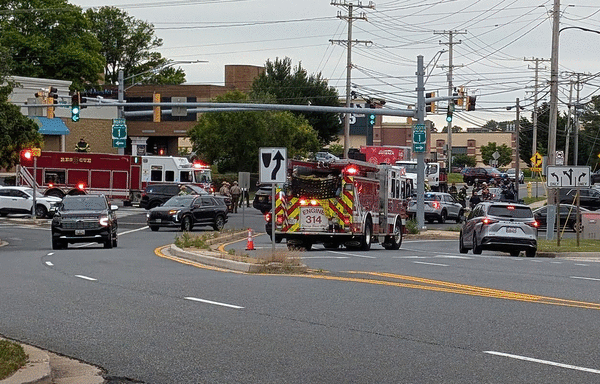
Maryland counties are being forced to squeeze funding for paramedics and EMTs as rising costs and reduced state support put pressure on local budgets.
The pressure intensified July 1, when Gov. Wes Moore’s fiscal 2027 budget took effect and shifted more costs to local governments, including reducing the state’s contribution to teachers’ pensions and education programs. The changes mean counties must absorb more of those costs while also facing rising expenses to staff emergency services, local leaders told The Baltimore Sun on Wednesday.
Harford County added $10 million to its education costs in fiscal 2027, county Treasurer Robert Sandlass said, putting additional pressure on the county’s ability to fund emergency personnel as it struggles to recruit and retain paramedics and EMTs.
“The county has had to hire all of those paramedics and EMTs and outfit them, and that’s certainly one of those places where (costs) are just going to get more and more expensive,” said Harford County Treasurer Robert Sandlass. “It’s a very tight labor market for those individuals. They’re highly skilled. They’re in demand. You have to pay a market rate.”
Counties also face higher emergency services costs as volunteer fire departments struggle to recruit and retain volunteers because of a nationwide decline in volunteer firefighters, increasing reliance on paid emergency personnel, Sandlass said.
Prince George’s County is also facing pressure on its social-service and health programs, a county council member said. County Councilmember Jolene Ivey said the county’s health and social services departments are already underfunded, and added financial pressures make it harder to hire enough personnel.
“They’re always short-staffed. They’re always needing more resources,” Ivey told The Sun. “So the thought of fewer resources is alarming.”
The pressure comes as Maryland is projected to face additional budget shortfalls over the next five years. To close a $1.4 billion budget shortfall for fiscal 2027, Moore made nearly a billion dollars in cuts to state programs and fund transfers. Most notable was a $150 million cut to the local income tax reserve account, which officials argued was necessary because the state had overpaid local jurisdictions their share of income taxes the comptroller collects.
Kevin Kinnally, legislative director at the Maryland Association of Counties, said counties are seriously considering raising property and income taxes, particularly as the federal government’s dismantling of the Federal Emergency Management Agency has compounded pressure from the state.
“Counties are shifting all over the place, kind of in real time, dealing with all these pressures at the federal and state level,” Kinnally said. “So when you have things like, ‘Hey, if there’s a tornado tomorrow, and the feds don’t show up, what are we going to do? The state doesn’t have a big reserve fund.’ Things like that are top of mind.”
The governor’s budget also adjusted the state’s share of retirement costs for teachers, community college staff and librarians to save $39 million, shifting more of it to local governments. There was also a $27 million cut to disparity grant funding, which helps low-income jurisdictions support essential services, affecting Baltimore City and counties including Prince George’s and several on the Eastern Shore and in Western Maryland.
The governor’s office declined to respond to questions Wednesday about county leaders’ concerns, whether the state plans to provide additional relief to local governments and how the administration plans to address potential impacts on cities and counties because of projected budget shortfalls in future years.
Maryland economists cautioned that taxpayers could lose essential programs if the state continues pushing costs to the local level.
Daraius Irani, vice president of business and public engagement at Towson University, said counties have limited ability to make up higher costs through income taxes because state law caps their local income-tax rates at half the state’s rate. That limits how much additional revenue counties can raise to cover higher costs, Irani said.
JP Krahel, an accounting professor at Loyola University Maryland, said shifting more costs to counties could widen differences in public services between wealthier and poorer jurisdictions because communities with larger tax bases have more revenue to draw from.
“Municipalities that have wealthier people living in more expensive homes with higher property taxes can afford better equipment for teachers (and) better public services, and that further increases property value. And it kind of creates this tiered system where those homes in lower value neighborhoods are suffering,” Krahel said.
As state and local budgets remain under pressure, county officials say the challenge will be keeping emergency services staffed without asking taxpayers to pay more.
_____
©2026 Baltimore Sun. Visit baltimoresun.com. Distributed by Tribune Content Agency, LLC.






Comments