Ex-police officer testifies Tupac Shakur uninterested in naming shooter
Published in News & Features
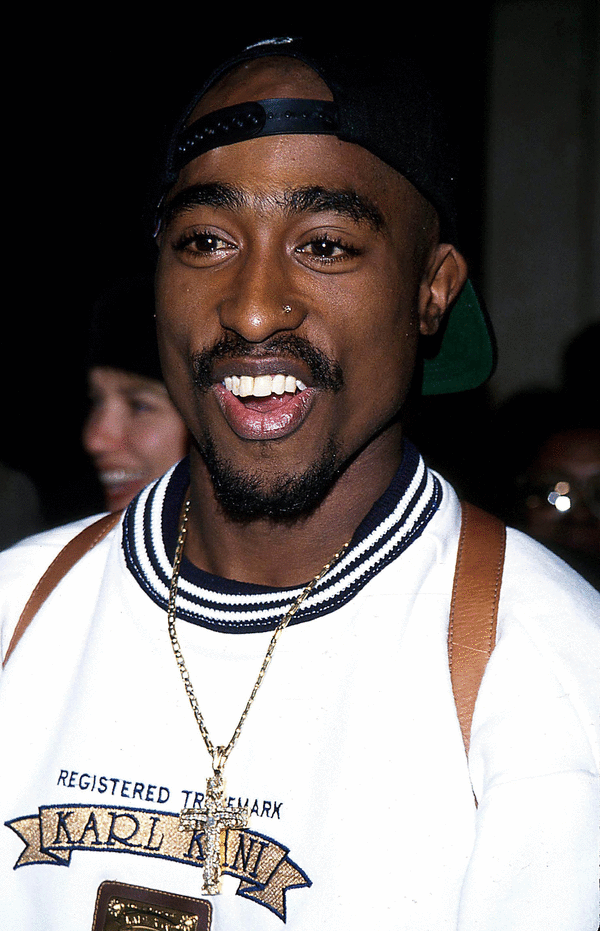
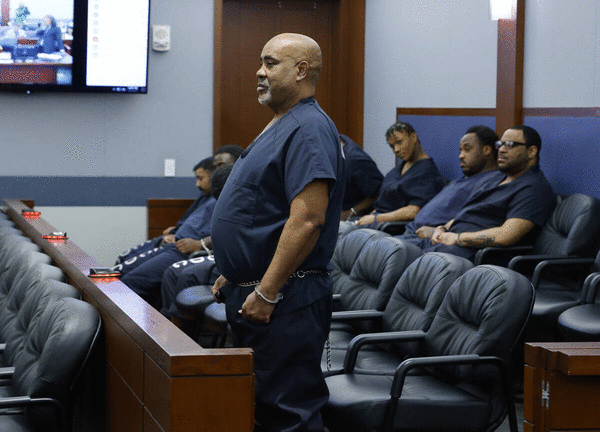
LAS VEGAS — The first witness Monday at the trial of the man accused of orchestrating the killing of rapper Tupac Shakur was a former Metropolitan Police Department officer who spoke with Shakur after the shooting that would ultimately claim his life.
Garry Dale rode in an ambulance with Shakur as the rapper was being rushed to University Medical Center. Shakur was still talking then.
“I was trying to convince him to tell me the name of whoever his assailants were,” Dale said.
Shakur was not interested.
He said something to the effect of, “No, we’ll take care of it,” according to Dale.
Shakur died days after the shooting and now, 30 years later, Duane “Keffe D” Davis, 63, is on trial in connection with the rapper’s September 1996 death.
No one was arrested in the slaying until Davis was taken into custody in 2023 outside his home in Henderson. The trial has attracted broad media attention; scores of TV cameras and lights sat outside the Regional Justice Center Monday morning.
Prosecutors have said Davis’ public statements drove a renewed effort to investigate the case.
Chief Deputy District Attorney Binu Palal used Davis’ comments against him in the prosecution’s opening statement, playing clips of Davis talking about the killing.
In a memoir that he has since disputed writing, Davis described “tossing” a gun into the back seat of the Cadillac in which he was riding, so another man could commit the shooting.
Police have said Davis is the last person alive out of the four who were in the car.
“Now, nearly 30 years later, we’re going to ask you to finally hold Duane Davis accountable,” Palal said.
Defense attorney Michael Sanft questioned his client’s credibility and the quality of law enforcement’s investigation.
“There are no facts to point to Keffe,” he said. “Not one.”
Speaking of his client’s statements, he showed jurors a PowerPoint slide that said: “Bulls---.”
Authorities have alleged Davis was the “shot-caller” who conceived the plan to exact revenge on the rapper and Death Row Records CEO Marion “Suge” Knight in retaliation for an attack by Shakur and his entourage against Davis’ nephew, Orlando Anderson, earlier that night at the MGM Grand.
“Duane Davis did not pull the trigger, but what he did do is plan the retaliation for the beating of his nephew,” Palal said. “You will learn that Duane Davis got the gun. You will learn that he got into a white Cadillac. You will learn when the opportunity presented itself for retribution, Duane Davis made sure that the shooter was armed and ready to execute (Shakur). And remarkably, you will learn that from Duane Davis himself.”
Retired Metro homicide Detective Brent Becker testified that he arrived at the scene around 1 a.m. on Sept. 8, 1996, about two hours after the shooting.
“Everyone had skedaddled by the time we got there, or at least the time I got there,” he said.
Shakur’s staff who were in the car behind Shakur and Knight described a white Cadillac pulling up alongside Knight’s car and someone from the Cadillac opening fire, he recalled.
The only information detectives had about a suspect was a description of two to four men, probably all Black.
Police had trouble scheduling an interview with Knight, the Death Row Records head who was grazed by a bullet, Becker said.
When he did show up to talk to investigators, Becker said he brought three attorneys with him, including David Chesnoff and George Kelesis, who was nominated earlier this year to be Nevada’s U.S. attorney.
Chesnoff said after court that he could not recall the substance of the interview. Kelesis did not immediately respond to requests for comment.
During that interview, Knight seemed “timid” and rehearsed, in contrast to his boisterous public persona, the retired detective said.
Becker said Knight claimed to not know anything or recognize anybody.
“I thought he lied to us,” said Becker.
Metro’s investigation was met with other problems.
Becker became concerned about leaks and began locking the case files in his desk. Some material related to the investigation disappeared, he said.
“Were you aware that some Metro employees sold a Polaroid of Tupac on the autopsy table to the Daily Mail?” asked Chief Deputy District Attorney Marc DiGiacomo.
Becker recalled noticing someone walk into the autopsy room with a Polaroid and then seeing in a book a Polaroid photo of Shakur’s body that did not appear to have been taken by investigators.
Ingrid Stokes, another witness, testified that she was spending the weekend in Las Vegas with friends at the time of the shooting.
One of her friends knew Knight and was talking to him as their cars were alongside each other, she said. They were waiting at a light on Flamingo Road when they heard gunshots.
“I freak out and I scream,” she said.
She recalled grabbing her friend’s head to bring the other woman down and protect her.
Stokes could not gauge what direction the shots were coming from, but believed the shooter was likely shooting at her car, too.
Her friend in the driver’s seat was frozen in fear. Stokes put the car in drive and told her to go. As they drove off, they almost hit a whitish four-door car, she said.
“There was a lot going on,” she said. “There was a lot of adrenaline.”
_____
©2026 Las Vegas Review-Journal. Visit reviewjournal.com. Distributed by Tribune Content Agency, LLC.




Comments