Analysis: 10 of 11 races shift toward Democrats in latest Inside Elections ratings changes
Published in News & Features
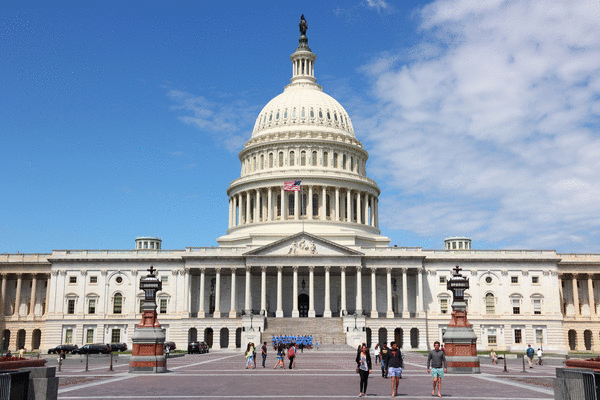
WASHINGTON — With less than three months to go before Election Day, control of both chambers of Congress remains in play.
While Democrats lack many guaranteed pickups, there continues to be growing softness or vulnerability for Republicans on the outskirts of the House and Senate battleground. President Donald Trump’s low job approval rating is creating potential targets in red-leaning areas that aren’t typically seen as Democratic opportunities.
One of the biggest examples is Iowa, which is competitive up and down the ballot this year. About a third of all the recent rating changes by Inside Elections came from the Hawkeye State alone.
According to statewide and district-level data, Democratic state Auditor Rob Sand is well positioned in the race for governor against Republican businessman Zach Lahn. Democrats haven’t won a gubernatorial race in Iowa in 20 years, but Inside Elections has changed the rating from Toss-up to Tilt Democratic.
Inside Elections has also shifted Iowa’s open Senate race from Lean Republican to Tilt Republican. Democratic state Rep. Josh Turek is running even with or slightly behind GOP Rep. Ashley Hinson, but, with lower statewide name identification, he’s got room to grow and could benefit from Sand’s performance on the ballot.
Iowa’s 3rd District, where GOP Zach Nunn faces Democratic state Sen. Sarah Trone Garriott, has shifted from Tilt Republican to Toss-up. And Iowa’s 2nd District, which Hinson is leaving to run for the Senate, has moved from Likely Republican to Lean Republican. Republican former state Rep. Joe Mitchell faces a tough environment as he tries to hold off Democratic state Rep. Lindsay James. The race for the 1st District, where GOP Rep. Mariannette Miller-Meeks faces Democratic former state Rep. Christina Bohannan, continues to be rated a Toss-up, but that rating feels generous to the congresswoman and could be shifting to the Democratic column soon.
In other Senate races, Democrats have a narrow but distinct advantage in two races at the core of the battleground. Both Georgia (where Democratic Sen. Jon Ossoff faces GOP Rep. Mike Collins) and North Carolina (where Democratic former Gov. Roy Cooper and former Republican National Committee Chairman Michael Whatley are squaring off) have shifted from Toss-up to Tilt Democratic. That leaves Michigan as the only Toss-up Senate contest, according to Inside Elections — for now.
In Texas, the Senate race shifts from Likely Republican to Lean Republican. A couple of decades of nonstop statewide losses doesn’t mean Democratic state Rep. James Talarico can’t win this year. Polling shows him running mostly ahead of state Attorney General Ken Paxton, but if Republicans make enough of a financial investment, they might be able to consolidate the GOP vote enough to drag Paxton across the finish line.
Texas Democrats haven’t come anywhere close to winning a gubernatorial race since Ann Richards lost reelection to Republican George W. Bush in 1994. But Democrat Gina Hinojosa is making GOP Gov. Greg Abbott work for a fourth term. The state legislator hasn’t raised as much money as Talarico or former Senate and gubernatorial candidate Beto O’Rourke, but the political environment is better. That race shifts from Solid Republican to Likely Republican.
But there’s some good news for Republicans. In Kansas, outgoing Democratic Gov. Laura Kelly’s preferred choice lost in the primary, and Republican state Senate President Ty Masterson is the favorite to succeed her in November. That race is shifting from Toss-up to Tilt Republican.
There have been two other recent rating changes in House races.
In Michigan’s 8th District, national Republicans’ preferred challenger, Navy veteran Amir Hassan, lost the primary, despite having Trump’s endorsement. Instead, GOP voters nominated a candidate who had previously suspended his bid and didn’t have a campaign website when he won the primary. And while Trump finished ahead of Kamala Harris in the district in 2024, Democratic Rep. Kristen McDonald-Rivet had $4.2 million in the bank on July 15 and has the national environment in her favor this cycle. This race has shifted from Likely Democratic to Solid Democratic.
Finally, in Ohio’s 7th District, the combination of domestic abuse allegations against GOP Rep. Max Miller, his refusal to drop out of the race and the overall mood of the electorate gives Democrats a surprise chance of flipping the seat. Until the dust settles a little, the race is shifting from Lean Republican to Toss-up.
Here’s a summary of the 11 race rating changes:
Moving in Republicans’ favor
Kansas Governor (Open; Laura Kelly, D, term-limited): from Toss-up to Tilt Republican
Moving in Democrats’ favor
Georgia Senate (Jon Ossoff, D): from Toss-up to Tilt Democratic
North Carolina Senate (Open; Thom Tillis, R, not seeking reelection): from Toss-up to Tilt Democratic
Texas Senate (Open; John Cornyn, R, lost in primary): from Likely Republican to Lean Republican
Iowa Senate (Open; Joni Ernst, R, not seeking reelection): from Lean Republican to Tilt Republican
Ohio’s 7th District (Max Miller, R): from Lean Republican to Toss-up
Iowa’s 3rd District (Zach Nunn, R): from Tilt Republican to to Toss-up
Iowa’s 2nd District (Open; Ashley Hinson, R, running for Senate): from Likely Republican to Lean Republican
Michigan’s 8th District (Kristen McDonald-Rivet, D): from Likely Democratic to Solid Democratic
Iowa Governor (Open; Kim Reynolds, R, not seeking reelection): from Toss-up to Tilt Democratic
Texas Governor (Greg Abbott, R): from Solid Republican to Likely Republican
_____
©2026 CQ-Roll Call, Inc. Visit at rollcall.com. Distributed by Tribune Content Agency, LLC.




Comments