Texas is being sued over its new THC ban. Here's how it could affect you
Published in News & Features
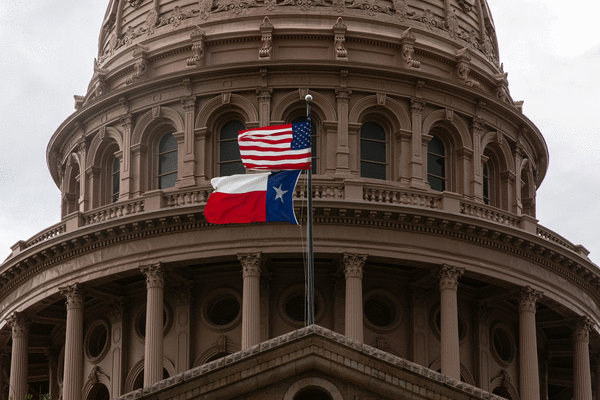
Texas’ new ban on most hemp-derived THC products has only been in effect for a few days, but it’s already being challenged in court.
Members of the hemp industry have sued state lawmakers, arguing the new rules violate federal law and the U.S. Constitution.
The legal challenge comes as Texans are still trying to understand which products are now illegal and what the new law means.
Here’s what the lawsuit argues and what Texans should know while it’s pending.
Why is Texas being sued over the new hemp-derived THC ban?
Hemp retailers CBD Pros USA and Happy Cactus Apothecary, along with hemp distributor, Cannect Wellness, argue Texas is banning products federal law already considers legal hemp.
The businesses filed the lawsuit against the Texas Department of State Health Services, Attorney General Ken Paxton, Galveston County Criminal District Attorney Jack Roady and Galveston County Sheriff Jimmy Fullen.
The businesses say the 2018 Farm Bill legalized hemp containing no more than 0.3% delta-9 THC and that Texas can’t treat those products like Schedule I controlled substances simply because they contain other forms of THC.
The lawsuit also argues the new law prevents some federally legal hemp products from being sold in Texas or transported through the state.
According to the complaint, the responsibility of regulating products that move between states belongs to the federal governemnt, not individual states.
Because of those arguments, the plaintiffs are asking a federal judge to temporarily block the state from enforcing the ban while the lawsuit moves through the courts.
They argue the ban is already hurting Texas hemp businesses, causing them to lose customers and revenue, and could force some companies to close before the court has a chance to decide whether the law is legal.
What does the lawsuit mean for Texans right now?
Unless a judge rules in favor of the plaintiffs, the state’s latest hemp-derived THC ban remains in effect.
That means products covered by the ban, including THCA flower, Delta-8 THC, Delta-10 THC and THCP, are still considered illegal under Texas law.
The main exception is hemp products containing no more than 0.3% naturally occurring delta-9 THC by dry weight, which remain legal.
Texans caught possessing products covered by the ban can face serious criminal penalties. For example, possessing even a small amount of an illegal THC product can be charged as a state jail felony, carrying 180 days to two years in a state jail and a fine of up to $10,000.
Penalties become more severe as the amount involved increases, with some offenses carrying decades in prison or even a potential life sentence.
Businesses that continue selling products covered by the ban can also face license revocation and civil fines of up to $10,000 per day.
_____
©2026 Fort Worth Star-Telegram. Visit at star-telegram.com Distributed by Tribune Content Agency, LLC.




Comments