Middle East tensions ease as the US and Iran pause strikes
Published in News & Features
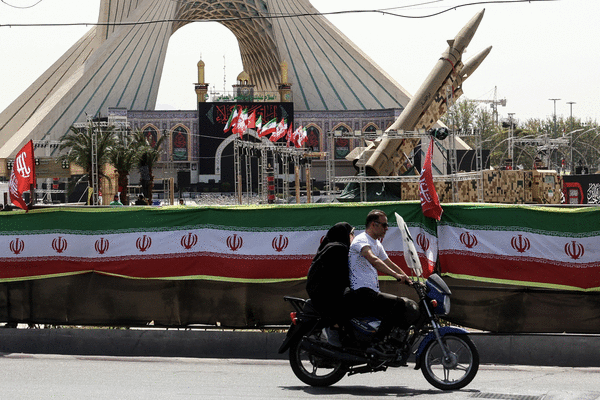
The U.S. and Iran maintained a pause in attacks for a third straight day, helping to push down oil prices and boost global stock and bond markets.
U.S. President Donald Trump, who last week threatened to intensify strikes against the Islamic Republic after two weeks of clashes, is instead giving diplomacy “some space,” according to Mike Waltz, Washington’s ambassador to the United Nations.
Talks are “ongoing” between the sides, he said, without giving details. Iran’s Foreign Ministry spokesman, Esmail Baghaei, on Monday said that while “it’s possible that mediators share messages from the U.S. side about current developments,” no formal negotiations are currently taking place.
Tensions in the region remain high, and the Iran-backed Houthis claimed on Monday they targeted Saudi Arabian oil facilities with drones, although didn’t say when. Saudi Arabia hasn’t announced an attack from Yemen since Saturday morning, though did say Monday it intercepted several drones launched from Iraq at petroleum facilities.
Trump has consistently said “he prefers a diplomatic solution, but he continues to retain all options if Iran continues terrorist activities in the Strait of Hormuz or against allies,” a White House spokesman said in a statement.
Axios reported Sunday that Admiral Brad Cooper, the top U.S. commander overseeing the Middle East, recommended stopping strikes because they had reached the limit of their effectiveness, citing sources in the region.
Iran’s army said it halted its retaliation against U.S. bases and troops in the region as a result of Trump’s decision to hold off on strikes. The Islamic Republic had been attacking the likes of Kuwait, Bahrain and Jordan on a near-daily basis in the two weeks before the U.S.’s pause on Friday.
Brent crude fell almost 6% in early trading on Monday to under $91 a barrel, after climbing 10% last week on the worsening fighting. U.S. Treasury yields also dipped, while S&P 500 rose about 1%.
Israeli Prime Minister Benjamin Netanyahu is scheduled to meet Trump in Washington on Tuesday. He said he plans to press the U.S. leader on keeping a “constant watch” on Iran’s nuclear program, one of many issues now in limbo following the breakdown of an interim peace deal agreed last month.
Iran has said there’s no change to the status of the Strait of Hormuz, meaning it’s likely to continue targeting commercial ships that don’t receive its permission before transiting. Traffic through the vital waterway — through which one fifth of the world’s oil and liquefied natural gas supplies flowed before the conflict — remains negligible.
On Monday, Iranian state TV said Tehran forced six ships going through the southern corridor near the Omani coast to turn around. One of the ships suffered an “incident,” according to the reporting, which cited an Iranian official with knowledge of the matter.
“We have never allowed, and will never allow, the United States to determine the timing of the war,” an Iranian foreign ministry spokesman said separately on Monday. “We will defend ourselves whenever our interests require it, and we will certainly use diplomatic tools whenever we feel it is appropriate.”
The U.S., meanwhile, is maintaining its blockade on Iran’s ports.
The lull in fighting came as Iranian and Omani officials met over the weekend in a fresh attempt to resolve shipping through Hormuz. Iran said the talks were constructive and some progress was made, though gave no details, adding consultations were continuing.
In recent weeks, Iran tried to persuade Oman to establish a joint management system of the strait that may have effectively tolled ships. It’s unclear if the two are still discussing that, though Tehran has consistently said it wants to control traffic in the chokepoint.
The clashes between the Houthis and Saudi Arabia over the past week have also ratcheted up risks for shippers. The Houthis, a militant group based in Yemen, fired on vessels in the southern Red Sea after threatening any calling at Saudi ports.
A Saudi-led coalition responded with attacks on Houthi positions in Yemen on Friday and Saturday, leading the group to target the Saudi port cities of Yanbu and Jizan with missiles and drones. There was no immediate confirmation from the Saudi government or oil giant Saudi Aramco, whose facilities the Houthis said they targeted.
©2026 Bloomberg L.P. Visit bloomberg.com. Distributed by Tribune Content Agency, LLC.






Comments