Could Congress help save Lake Mead? That may require emergency cash
Published in News & Features
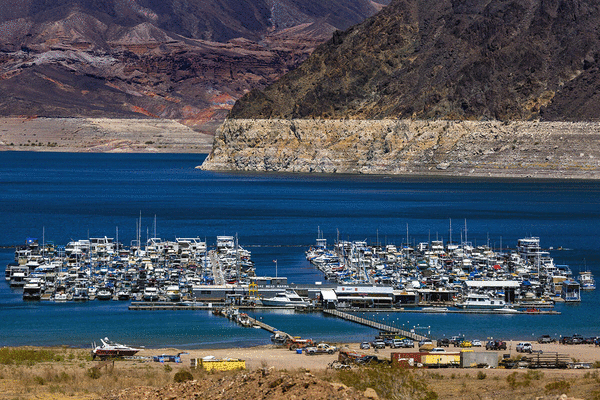
LAS VEGAS — As Lake Mead begins its nosedive toward historic lows, a bipartisan group of 12 Western representatives in Congress is calling for emergency funding to help fund solutions.
One of the officials who sent a letter to House leadership on Wednesday is Rep. Dina Titus, D-Nev., who said in a phone interview that the measure is in direct response to a record-low water year.
“This is an emergency,” Titus said. “And it’s not unprecedented. Some money came out of the Inflation Reduction Act to do this, and we certainly feel like water security is a part of national security.”
In 2022, the Inflation Reduction Act provided $4 billion in federal funding to help solve the Colorado River crisis — a number that Titus says is a fair estimate for what lawmakers would like to see dedicated to it again.
The letter comes days after the Trump administration said it would pay a water district in Southern California up to $65 million in an effort to keep 3 feet of water in Lake Mead; the reservoir, which provides about 90 percent of Southern Nevada’s drinking water, will fall to record lows over the next two years, according to federal projections.
Four Republicans from Arizona — Reps. Elijah Crane, Andy Biggs, Paul Gosar and Abraham Hamadeh — joined eight Democrats from Nevada, California, New Mexico and Arizona in asking leaders for the drought mitigation funding.
A leading group of academics said in a paper last week that the combined storage of Lake Mead and Lake Powell is the lowest it has been since 1957, during the construction of Glen Canyon Dam. Those numbers will only worsen, they say.
Next week, the Interior Department is set to release a document that will detail how shortages will be allocated among the seven states that share the river, with Nevada likely to take a significant cut over for at least the next two years.
“Now is not the time to let federal support dry up,” reads the letter, which adds that projects worth funding include water reductions, conservation measures and so-called augmentation projects that increase supply, such as ocean desalination.
Specifics on the amount of money and what projects those dollars may go to were deliberately left off the letter, Titus said.
“Let’s get the money set aside in a fund, and then we can determine which are the best priorities,” Titus said.
The Southern Nevada Water Authority, which Titus said endorsed the letter, is the agency that would leverage federal funding to save water. Though the regional agency’s conservation measures have been controversial, water managers say they are necessary and often set an example for other states.
Some high-priority examples of projects are improving the Las Vegas Wash system that carries wastewater back to Lake Mead and plumbing upgrades to reduce seepage, Titus said.
In a statement, water authority spokesman Bronson Mack said the agency applauds Titus’ efforts and “additional federal support will help ensure continued conservation, system efficiency, and water supply resilience efforts.”
Titus noted that in addition to crossing the partisan divide, the representatives who signed on to the letter are from states in both the Upper and Lower Colorado River Basins.
In standstill negotiations that have taken years, the Upper Basin states of Colorado, Utah, Wyoming and New Mexico have insisted that mandatory cuts should come from the Lower Basin states of Nevada, California and Arizona.
When the Trump administration’s Department of Government Efficiency turned national attention toward reducing the size of the federal government and tightening its purse strings, Titus said federal funding for something like drought wasn’t seen as a viable option. Now, Titus believes the tide is changing.
“You see the bathtub rings, and the projections are even worse,” Titus said. “This drought is not going away. We’ve got to do something.”
_____
©2026 Las Vegas Review-Journal. Visit reviewjournal.com.. Distributed by Tribune Content Agency, LLC.



Comments