Kentucky Gov. Andy Beshear to tap $255 million in surplus funds to reverse Medicaid cuts
Published in News & Features

LEXINGTON, Ky. — Gov. Andy Beshear announced Wednesday the state will use $255 million generated from savings and surpluses to reverse a proposed cut to Medicaid, the state-federal healthcare program for the poor and disabled.
In addition, Beshear said the state will use $4 million to restore some funding to a senior meals program, which Beshear said the General Assembly underfunded in the two-year budget.
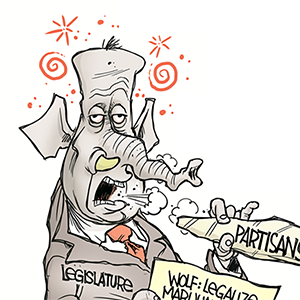
Beshear, a Democrat, blamed the General Assembly for failing to provide adequate funding to the program in the two-year budget passed earlier this year. Meanwhile, the Republican-controlled General Assembly has said Beshear has latitude to move money within the program.
House Speaker David Osborne, R-Prospect, said the General Assembly fully funded Medicaid in the two-year budget.
“Neither the governor, nor his administration, have provided any actual evidence of why they need more money,” Osborne said. “Rather than frightening vulnerable Kentuckians — including children, individuals with profound disabilities, and seniors — with threats of cuts, it’s time to stop crying wolf and start managing Medicaid with the seriousness, transparency, and accountability Kentuckians expect.”
Senate President Robert Stivers, R-Manchester, did not immediately respond to a request for comment.
Medicaid serves 1.3 million people in Kentucky, according to state Department of Medicaid Services statistics for July.
Medicaid providers were told June 1 to expect a 4% reduction in reimbursements for services come Aug. 1, prompting many advocates and Medicaid patients to rally in Frankfort in recent weeks to demand those cuts be reversed. In addition, more than 200 groups and medical providers released a letter Wednesday urging Beshear and state legislative leaders to reverse the cuts.
“My administration will apply $255 million from these funds to close the Medicaid gap and reverse the General Assembly’s cuts. This means the providers and services that our families rely on will not be at risk this year. There will be no 4% cut,” Beshear said during a Wednesday press conference in Frankfort.
Beshear said the money to reverse the cuts comes from savings and better-than-expected tax revenues, including a $350 million one-time corporate income tax payment the state received in July. Beshear said he believes the state will continue to generate more revenue than originally projected.
Still, Beshear said he believes the state will end the fiscal year with up to $700 million in its Budget Reserve Trust Fund, often called the rainy day fund. The current fiscal year ends June 30, 2027.
Beshear said it’s possible the House and Senate may challenge his use of that money to plug the hole in Medicaid.
“In the past, this might have required action by the General Assembly, but leadership of the General Assembly, including direct quotes from the Speaker of the House, have repeatedly stated that they’ve given me more flexibility to manage the budget,” Beshear said. “Today, I’m taking them at their word, and I’m applying these dollars to reverse cuts and prevent painful impacts to our Kentucky families.”
Kentucky Cabinet for Health and Family Services Secretary Dr. Steven Stack said the $255 million will only restore cuts in the first year of the state’s two-year budget. The General Assembly will have to address the second-year shortfall when it returns in January, Stack said.
Advocates for people with disabilities push for reversal of cuts
Medicaid helps pay for medical care for the poor and pays for services to people with intellectual and physical disabilities through a series of programs called waivers. Those programs are designed to keep people with disabilities in their homes and communities and out of nursing home care.
Hundreds of people with disabilities rallied in Frankfort before a July 17 General Assembly subcommittee to decry the cuts. Advocates for people with disabilities held similar rallies in late June when the state said there would be similar cuts at Lee Specialty Clinic in Louisville, which also serves people with disabilities.
The state was eventually able to find $4.5 million in additional money for the clinic, but Beshear cautioned at the time it was only a temporary fix.
The Medicaid waiver programs have long wait lists for services. Kentucky Medicaid officials have previously said the current wait list is 19,000. There are roughly 1,000 spots available.
Beshear said Wednesday the $255 million will also be used to pay for some of those slots for one of those waiver programs which the legislature approved but did not fund.
But those waiver programs are costly.
Leslie Hoffman, a deputy commissioner for the state Department of Medicaid Services, told a legislative subcommittee July 17 the cost of the program was roughly $492,000 per person in 2020. That figure has climbed to $607,166 in 2026, according to the Kentucky Lantern.
Stack encouraged people to continue to discuss how Medicaid services have impacted their lives.
“Please continue to advocate thoughtfully, constructively, and clearly about the importance of these services in your life,” Stack said Wednesday.
_____
©2026 Lexington Herald-Leader. Visit kentucky.com. Distributed by Tribune Content Agency, LLC.





Comments