DMV bill, with controversial data sharing, signed into law by Gov. Gavin Newsom
Published in News & Features
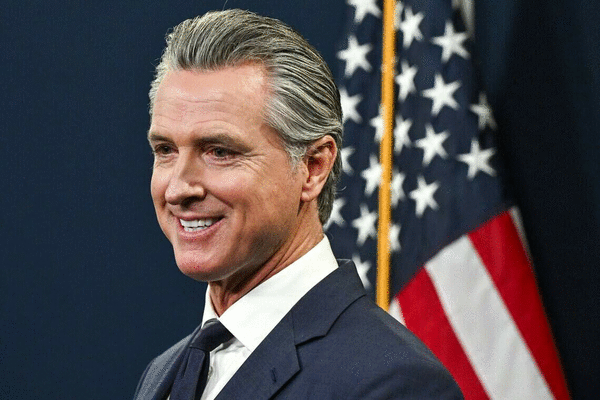
After months of back-and-forth with lawmakers, Gov. Gavin Newsom’s controversial transportation bill has been signed into law.
Newsom said it makes the state Department of Motor Vehicles more efficient and introduces provisions meant to “modernize” the agency’s function, including a provision that allows Californians to carry a digital ID card on their phones.
However, one provision raised concerns among privacy, immigration and LGBTQ+ advocates, prompting a stand-off between the governor and state legislators.
It allowed the DMV to use a system called State-by-State, which grants the agency access to drivers’ records from across the nation. The agency will use the system to verify that an applicant doesn’t hold a REAL ID in a different state — a check that’s required by federal law.
California will share its own records through the program, including state ID holders’ names, social security numbers and dates of birth would be accessible to DMVs across the country. Other information, including addresses, will be withheld. But back in May, activists said all this data should be private.
“We are facing unprecedented attacks on our state and communities by a federal administration that is actively unraveling the fabric of our democracy and barreling headfirst towards tyranny,” said a letter signed by a coalition of more than 160 activist groups, including Alianza Sacramento and Indivisible Sacramento.
“The first rule of combating tyranny is do not comply in advance. It is imperative that California not willingly give away data that the federal government could turn around and use to harm our communities,” the letter said.
The governor submitted the State-to-State proposal to the Legislature in January as part of his 2026-2027 budget proposal.
But citing the same concerns as the activists, state lawmakers refused to add the $56 million in funding requested by the governor to their own budgets.
Negotiations over several months yielded a compromise, according to reporting from CalMatters. Funding was ultimately restored after the budget committee added a series of guardrails to the state’s participation in the program.
In collaboration with an advisory committee, the DMV must develop a monitoring plan to track and respond to requests for data from other jurisdictions. That committee will include members of the communities who previously raised alarm, including an immigration rights advocate, a LGBTQ+ rights advocate and a cybersecurity expert, according to the bill.
But the governor’s office maintained that activist concerns were unfounded.
The suggestion that there’s immigrant-specific targeting is wrong, the office said in an email. They said the system is not accessible by federal immigration enforcement and it does not record drivers’ immigration statuses.
“California continues to lead in supporting immigrant families and protecting personal data from federal overreach,” a spokesperson for the governor told The Sacramento Bee in a statement. “The state is taking this same approach to protect Californians’ data during the REAL ID implementation, all while maintaining REAL ID compliance for the benefit of Californians.”
Contentions over the State-to-State program largely overshadowed the rest of the bill, despite the governor’s efforts to emphasize other provisions that will make drivers’ lives easier.
One change allows up to 60% of California drivers to obtain an electronic driver’s license — an increase from the 15% cap previously established for the statewide pilot program.
Car registrations and titles can now be issued electronically, and some DMV documentation will be sent via email, unless the driver declines to provide an address.
____
©2026 The Sacramento Bee. Visit at sacbee.com. Distributed by Tribune Content Agency, LLC.






Comments