Alligator Alcatraz is no more. Tents, cars, signs disappear from airport site
Published in News & Features
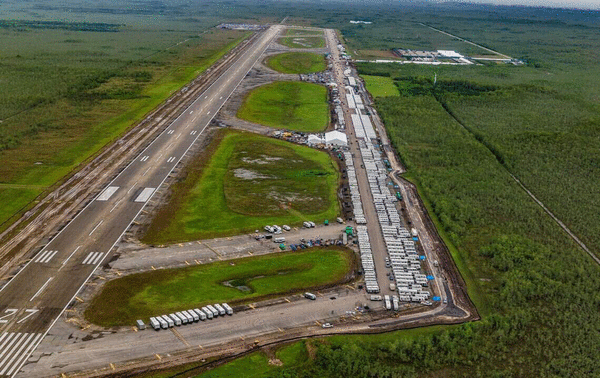
The bright blue sign reading ‘Alligator Alcatraz’ outside the silver chain-link gate at Dade-Collier Training and Transition Airport has been removed. The airstrip, formerly used to hold immigrants in industrial tents, is now cleared with only a few structures and cars remaining. And after Gov. Ron DeSantis invested over a billion dollars to transform the Everglades runway into an immigration detention center, it now looks as if that never occurred.
Aerial photos shared with the Miami Herald show that the airstrip, seized from Miami-Dade by the DeSantis administration through an emergency order, is mostly vacated. The now-closed first-of-its-kind state-run immigration detention center had been established to support the Trump administration’s mass deportation campaign.
As of Sunday, people who have monitored the facility’s entrance since last summer told the Herald that the black-and-gold Florida Highway Patrol vehicles, which had been parked at the one-way entrance with their blue sirens flashing, had left. Only one unidentified vehicle remained, sometimes assisting with opening and closing the gate as cars entered; someone from the vehicle had keys to unlock the fence.
Overhead photos of the airstrip, shared with the Herald, also show that all the tents had been removed, leaving the airstrip bare.
“Not much left but a couple of trucks and a few contractors standing around,” pilot Ra Schooley, who took the aerial photos Sunday morning, remarked to the Herald.
The Florida Department of Emergency Management did not respond to the Herald’s request for comment.
Miami-Dade mayor’s office told the Herald on Monday that the state had not returned control of the property to the county.
In June, DeSantis announced that the detention center, a brainchild of his attorney general, James Uthmeier, was shutting down and had served its purpose. DeSantis credited the site with detaining almost 21,000 immigrants and touted it as a model for how states could partner with the federal government on immigration enforcement.
DeSantis said that the airstrip facilitated the deportation of immigrants, whom he described as ‘dangerous people.’ During the announcement of the facility’s closure, with Trump’s border czar, Tom Homan, standing under a white tent on the airport’s runway, DeSantis said that the detention center was never meant to be permanent.
“I said from the beginning that this was an emergency solution that would be temporary,” he told reporters in the June press conference.
Environmental conservationists, immigration lawyers and advocates, who welcomed the closure of the detention center — where immigrants reported poor living conditions and faced pepper spray and beatings — also raised concerns that the facility may have harmed the nearby Everglades wetlands ecosystem.
The environmental groups were the first to file a lawsuit against the state and federal governments when the detention facility was hastily erected within days last summer. The groups have maintained that in the rush to support Trump’s crackdown on illegal immigration by building the facility, the government failed to comply with federal environmental regulations that require an impact assessment before such projects are undertaken.
The case involved a Florida federal judge temporarily shutting the site in August, but the order could not take full effect; an appeals court paused it and later found that the judge might have overstepped their authority by ordering the site to close. The case is still working its way through the courts.
The groups also accused the DeSantis administration of pollution, citing that the detention center’s diesel-powered generators and bright lights had exceeded federal standards and required a special permit that they say the state never obtained.
As the facility’s closure became imminent, Miami-Dade’s mayor, Danielle Levine Cava, announced in June that the federal parks system would assume control of the airstrip and the 17,000 acres surrounding the Big Cypress Preserve. Previously, Levine had rejected purchase proposals from DeSantis, who later took ownership of the land through state powers.
Environmental groups followed the mayor’s recommendation by calling for the airstrip to become an environmental preserve. A letter from the Friends of the Everglades, the environmental group whose founder fought in the 1960s for the airport to be shuttered, laid out a five-point plan that called for the airport runway to be removed completely and for the land to be returned to “a purpose that reflects their environmental significance.”
Other environmentalists, like Betty Osceola, have called for the land to be returned to the Miccosukee Tribe, whose lands surround the airport.
“This has been doing training missions and training flights, and will continue to do that,” DeSantis said when asked about the future of the airstrip in June.
A notice from the Federal Aviation Administration currently says the airstrip is closed to planes until September.
DeSantis, who has pushed for the Everglades restoration project, still found that the more than a billion dollars spent operating the detention center for less than a year was worth it.
_____
©2026 Miami Herald. Visit miamiherald.com. Distributed by Tribune Content Agency, LLC.






Comments