Iran says agreement on Hormuz shipping reached with Oman
Published in News & Features
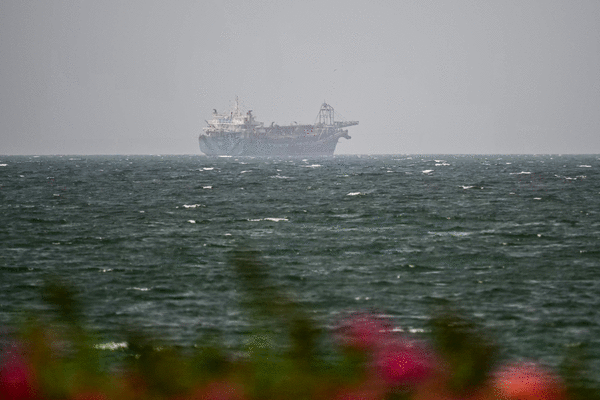
Iran said it reached an agreement with Oman on a proposed route for shipping through the Strait of Hormuz, a potential step toward a reopening of the critical waterway for energy supplies.
A joint statement from Tehran and Muscat is under review and in the final drafting stage, Iranian foreign ministry spokesman Esmail Baghaei told reporters on Wednesday, according to a post on Telegram. Negotiations between the two countries are “forward-moving” and a deal would be struck “if certain third parties do not obstruct this process,” he said.
Iran and Oman have been in discussions for several days about a management plan for the Strait of Hormuz, which has emerged as the focal point of the ongoing war between the U.S. and the Islamic Republic. Baghaei didn’t mention any role of Washington in its statement, except to say the closure of the strait was a result of attacks by the U.S. and Israel.
The White House didn’t respond to a request for comment on the announcement. U.S. President Donald Trump said late Tuesday that a deal on the Strait of Hormuz is imminent. He has repeatedly claimed diplomatic breakthroughs in the past, only for a lasting agreement to prove elusive.
Oil steadied on Wednesday amid mounting signs that the strait might be reopened, potentially restoring production of millions of barrels a day disrupted by the five-month conflict. Brent crude traded around $79 a barrel.
Iran’s latest announcement on Hormuz comes after months of deadlock between the U.S. and Tehran over how to conclude the war, with control over shipping through the waterway a particular sticking point. Tehran has demanded that vessels obtain permission to cross and pay fees to transit, and has attacked ships it deems to be in violation.
The U.S., in turn, has blockaded Iranian ports. The issue led to the collapse of a ceasefire and interim peace agreement last month.
While fighting between the sides has paused for now, a number of other issues remain unresolved — not least Iran’s nuclear program — and there hasn’t been an agreement to start formal negotiations.
Iranian state TV earlier played down the outcome of the Iran-Oman discussions, citing a person familiar with the matter as saying an agreement between Tehran and Muscat would not necessarily mean the strait would open immediately. That would be contingent “on a change in U.S. behavior,” according to the report.
Iranian Deputy Foreign Minister Kazem Gharibabadi told state-run IRNA that Iran and Oman are negotiating a “temporary route” that would remain active for two to four months, with a significant portion of traffic passing through the Islamic Republic’s territorial waters. “This understanding does not mean the full reopening of the Strait of Hormuz,” he said.
In a Fox News interview recorded Tuesday, Trump repeated a threat that if Iran doesn’t “make a deal, it’s going to be too bad.” Over the weekend, the president held off on attacks he said would have been the largest since World War II.
Trump told reporters in Los Angeles on Tuesday night that talks with Iran are “moving along very nicely,” adding, “We’ll know in 48 hours.”
Iran’s stance on Hormuz has complicated Trump’s efforts to turn the page on a war — now in its sixth month — that he had claimed would only take weeks. Shipping disruptions in Hormuz raised energy prices globally and pose a particular threat to Trump and his Republican Party at home, where American voters are already feeling pinched by high costs of living ahead of November midterm elections.
While visible traffic through the strait has been limited, millions of barrels a day have continued to cross the waterway even during periods of elevated hostility in recent weeks. Middle Eastern producers have ferried cargoes out of the gulf as part of a shuttle program put in place by several countries in the region. Even with a deal to reopen Hormuz, it’s likely that at least some shuttling will continue as shipowners weigh up whether to take the risk of sailing back into the Persian Gulf.
_____
With assistance from Jeff Mason and Tom Fevrier.
_____
©2026 Bloomberg L.P. Visit bloomberg.com. Distributed by Tribune Content Agency, LLC.





Comments