Top US general for Europe resigns as Trump squeezes NATO allies
Published in News & Features
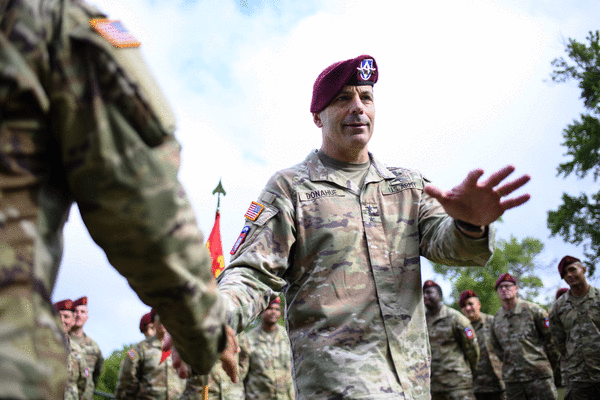
WASHINGTON — The top U.S. commander for Europe and Africa stepped down on Thursday, following through on a plan that caught military leaders by surprise and sending another signal that the Trump administration wants to scale back its defense commitment to the continent.
Army Gen. Christopher Donahue, who had been seen as one of the US military’s rising stars, will be replaced by a lower-ranked general in an acting capacity until President Donald Trump picks a successor. Donahue had been nominated by former President Joe Biden and served in the role for about 18 months, far less than the typical tenure for the position.
His abrupt decision to depart — which Army officials confirmed last week — has fueled speculation that politics were at play. The Pentagon has declined to comment on the move but it fit with a push by Defense Secretary Pete Hegseth to dismiss many generals appointed in the Biden era and cut the overall number of high-ranking officers.
A Pentagon official who asked not to be identified discussing internal matters said Donahue’s decision to retire was his own and that he wasn’t forced out.
“He’s been in every theater, in every dimension,” said former Ambassador to NATO Douglas Lute. “This is a jarring move, a disorienting move.”
U.S. Air Force Gen. Alexus Grynkewich, the NATO supreme allied commander, said Thursday that coincident with Donahue’s departure is a reduction in the post’s rank from a four-star to a three-star general — meaning that his successor may have less authority among allied counterparts and back home. That’s fueled further concern among retired U.S. military officers and U.S. allies in Europe that the administration has only begun to scale back its military presence in Europe.
Trump has been clear that he wants NATO allies to take more of the financial burden in defending the continent. He has already ordered the Pentagon to cut troop levels in Europe — a move that blindsided allies — and slashed the military assets Washington would provide in a crisis. Hegseth last month announced a six-month review on the U.S. force posture.
Trump’s stance will be a key topic of discussion when he joins other NATO leaders for a summit in Turkey next week. The U.S. has floated the idea of granting political and economic benefits to NATO allies that spend more on defense, raising the prospect of a two-tier alliance.
The tension has shown up in other ways, too. Senior U.K. defense officials have struggled to get the U.S.’s attention during visits to the U.S., according to people familiar with the matter who asked not to be identified discussing private meetings. They said ministers have flown to the U.S. only to be told top Pentagon officials are too busy to meet them.
Allies had taken reassurance from commanders such as Donahue and Grynkewich, because they trust their recommendations on force posture aren’t driven by politics, according to Jim Townsend, a former deputy assistant secretary of defense for Europe and NATO policy.
“He was very well regarded in the Armed Services Committee, where I sit — both sides of the aisle thought really highly of him,” Sen. Tim Kaine, a Virginia Democrat, told CBS’s Face the Nation last week. “The news that he was being ushered out caught us all by surprise. And we don’t yet have good answers from the Pentagon.”
Donahue had also helped oversee initial U.S. military support for Ukraine, a push that Trump has opposed in his second term.
He’d also been caught up in political mudslinging because he was the last U.S. service member to leave Afghanistan during the 2021 withdrawal. That moment was captured in a now-iconic photograph taken through a night-vision scope that showed Donahue boarding the final flight out as Kabul fell to the Taliban.
Trump and Hegseth have hammered Biden over the Afghanistan withdrawal, and Hegseth announced a new review of the decision-making behind the pull-out last year in what he called a push for accountability surrounding “one of America’s darkest and deadliest international moments.”
(Ellen Milligan and Andrea Palasciano contributed to this report.)
©2026 Bloomberg L.P. Visit bloomberg.com. Distributed by Tribune Content Agency, LLC.






Comments