Westinghouse is adding more fuel to a nuclear revival ahead of IPO
Published in Business News
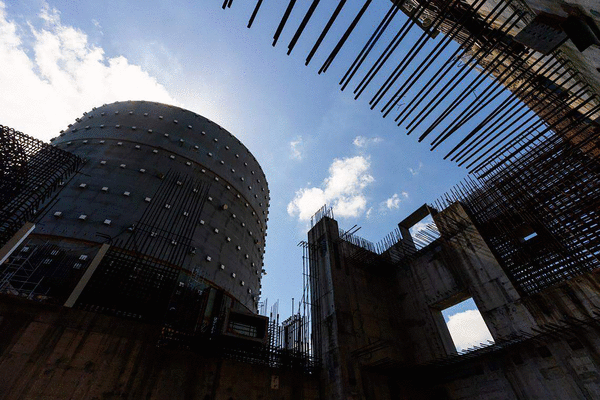
Within the span of a few hours on Wednesday, Westinghouse Electric Co. announced a $1 billion new nuclear fuel factory in South Carolina, was named as the technology of choice in a proposal for a mammoth nuclear campus in Kentucky, and hosted the Under Secretary of Energy at its Etna innovation center.
The latest announcements came days after the Nuclear Regulatory Commission renewed the certification for Westinghouse’s marquee large reactor design, AP1000, until 2066, a decision that NRC Chairman Ho Nieh said “provides the regulatory foundation for America to move from building individual reactors to deploying them at scale.”
Westinghouse, in a statement about the new fuel factory in South Carolina, used similar language, saying it would “enable the effective long-term operation of today’s nuclear fleet and support the industrialization of AP1000 reactors worldwide.”
Cranberry-based Westinghouse is preparing to go public, its owners Brookfield and Cameco disclosed in July. Its registration statement with the Securities and Exchange Commission was filed confidentially and has not yet been made public, but industry experts anticipate the IPO is imminent.
As the date nears, a steady drumbeat of announcements and deals have added momentum to the idea that a nuclear renaissance is upon us and Westinghouse sits in the middle of it.
“We’ve made a tremendous amount of progress on nuclear” said Kyle Haustveit, the energy under secretary, after his visit to Westinghouse on Wednesday.
The U.S. government and the Department of Energy are working to remove barriers — financial, regulatory, and other — to ensure the buildout launches as envisioned, he said.
The Trump administration has pledged financing and permitting support for Westinghouse to enable construction on 10 AP1000 units to begin by 2030. Two weeks ago, the administration signed an agreement with South Korea as part of a trade deal which provides for South Korea to supply $120 billion for the construction of six AP1000s and two additional reactors using a Korean design. When the units are up and running, their profits will be split 50-50 between the U.S. government and South Korea until the latter is paid back its $120 billion investment plus interest. After that, the profit sharing would shift to 90-10 in favor of the U.S. government.
The potential locations of those AP1000 units haven’t been disclosed.
But on Wednesday, The Nuclear Company, a South Carolina-based infrastructure firm that formed a few years ago to deliver “on-time, on-budget construction of new nuclear fleets” unveiled its first major project, called Prosperity One. If built with the proposed six AP1000 units, the nuclear power campus in Lewis County, Kentucky would be the largest in the country.
The project is in the early stages and has not yet filed for NRC licensing. The Nuclear Company hopes to begin construction in 2028.
Further along is a project in Texas being developed by Fermi America. It’s an AI data center and power campus called Poject Matador, which has already submitted its licensing application to the NRC and engaged with two Korean firms – Hyundai Engineering & Construction Co. Ltd and Doosan Enerbility Co., Ltd – to develop the first of four AP1000 units envisioned for the site.
It remains to be seen which AP1000 contract is signed first and when shovels hit the ground, but the nuclear industry expects a rush of announcements will follow the first as project developers become more confident that the supply chain, labor and capital will show up.
“You can’t expect a single reactor to be built when there’s no line of sight,” Haustveit. “We need to make sure we have a runway for multiple reactors to be built.”
Michael Valore, vice president at Westinghouse, is eager for the nuclear industry in the U.S. to go into repetition mode on nuclear reactors, as other countries have.
“The United States has not been great at large infrastructure projects,” he said during a panel at the Pittsburgh Regional Alliance’s Nuclear and Industrial Future Conference last week. “We’ve typically said, ‘Wow, that first thing we did was really hard. Let's just never do that.’ And most other countries that have become adept at building… nuclear, they're just doing it multiple times.”
In Hopkins, South Carolina, Westinghouse’s $1 billion fuel factory will be built on a campus that already houses a nuclear fuel factory with about 1,200 workers who make fuel pellets, rods and assemblies that go into the current fleet of light-water reactors — like the ones operating at the Beaver Valley Nuclear Power Station.
The current facility opened in 1969. In 2023, Westinghouse began trying to make fuel with slightly higher levels of enriched uranium. Last year, it announced it was the first to place this kind of fuel into an operating reactor, at Plant Vogtle in Georgia, which also houses the only AP1000 reactors ever built in the U.S.
The new facility, under construction now and set to open in 2030, will make this more-enriched fuel, Westinghouse said, which promises to last longer and allow nuclear plants to space out their outages.
According to the company, the fuel manufactured at its South Carolina facility powers 10% of all electricity in the U.S.
©2026 PG Publishing Co. Visit at post-gazette.com. Distributed by Tribune Content Agency, LLC.








Comments