Labor group: Amazon-linked delivery trucks rack up thousands of tickets a year in NYC
Published in Business News
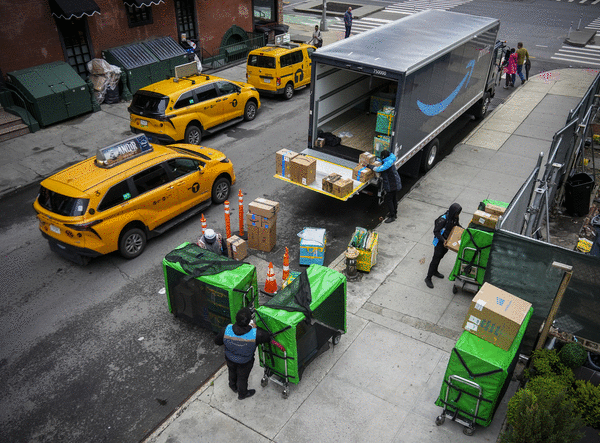
Delivery trucks hired by Amazon, the e-commerce giant, racked up more than 14,000 tickets between 2021 and 2025 for parking, red-light and speed-camera violations in NYC, according to an analysis of public data by the labor coalition Alliance for a Greater New York.
According to the data, from July 2021 through June 2025 — four city fiscal years — trucks working for delivery services hired by Amazon were written up 3,602 times for blocking bus lanes and other public transit access citywide.
In that same period, 2,162 tickets were issued to Amazon delivery vehicles via automated camera for speeding in a school zone.
Vehicles working for the e-commerce behemoth were cited for blocking bike lanes 854 times, crosswalks 338 times, and sidewalk cuts 5 times.
The city’s automated red-light cameras assessed fines to Amazon-linked vehicles 728 times over the four fiscal years, and the e-commerce fleet was written up 2,051 times for blocking fire hydrants.
The data, presented by ALIGN on a map showing the location of each violation, tracks tickets issued to any license plates from a fleet of 1,553 Amazon-affiliated vehicles identified from the city’s illegal-idling database. Of those, 637 vehicles came back with traffic and parking tickets.
Delivery trucks in general — delivering goods from a variety of companies — have swarmed the streets of New York since the COVID-19 pandemic, when lockdowns and store closures drove many to rely on mail-order goods.
But that trend has continued well past the end of lockdown, with the city’s Transportation Department piloting various strategies to reduce the number of trucks on the street providing what’s known as “last-mile” delivery — the final trip from a package warehouse to a customer’s stoop.
But for Daisy Chung, a campaign director with ALIGN, the sheer size of Amazon’s operation and its promise of fast delivery speeds mean its drivers rack up a significant tally of tickets
“Amazon is known for its two-day deliveries,” she said. “It’s both the scale and the prioritization of speed that’s concerning here.”
“Those things are coming at a cost, and it’s going to be borne by workers and New Yorkers,” she said.
The map, released this week, is part of the group’s push to back Intro 518 — a city council bill that would require Amazon and other operators of so-called last-mile warehouses to directly hire and pay their delivery workforce.
The retailer currently contracts with a cavalcade of companies to deliver its goods nationwide.
These firms, known as “delivery service partners,” operate as independent firms, even when driving Amazon-branded trucks. In a statement to the Daily News, Amazon said it contracts with over 40 local partners to provide delivery services citywide.
Asked about ALIGN’s data analysis, a spokesperson for Amazon said the company has invested millions in training for delivery drivers and as well as in-vehicle surveillance to monitor driving patterns — but that responsibility for safe operation ultimately falls to the independent firms who pay them.
“Delivery Service Partners are local, independent businesses, responsible for their own operations and for following the traffic and parking laws in the communities where they operate, including addressing any citations,” Leigh Anne Gullett said in a statement.
“We work closely with them to promote safe delivery practices, from hands-on driver training to in-vehicle safety technology, and we continue to invest in solutions like our e-cargo bike and on-foot delivery programs that reduce the need for vehicles on city streets and help us be a good neighbor in the communities we serve,” she added.
Chung claimed the separation between Amazon and its delivery partners exists precisely to put distance between the company and the drivers tasked with meeting its fast-delivery standards.
“These DSPs are exclusively delivering for Amazon,” Chung said. “These DSPs are essentially desks inside these last-mile warehouse facilities.”
“(Amazon) is then saying, ‘our liability and responsibility ends right before the gate,’ when workers are dispatched to do deliveries,” she said. “Here’s a company that controls all aspects, but then they can’t be held responsible for the types of harms that New York City residents may encounter.”
Thirty-five of the City Council’s 51 members have signed on to co-sponsor Intro 518. The bill is awaiting a vote following an April hearing before the Committee on Consumer and Worker Protection.
©2026 New York Daily News. Visit at nydailynews.com. Distributed by Tribune Content Agency, LLC.









Comments