Archer Aviation to acquire Boeing's automated air taxi effort
Published in Business News
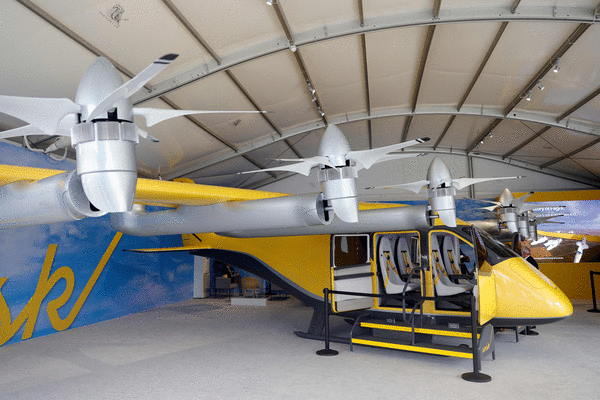
The California air taxi startup Archer Aviation is set to acquire Boeing's Wisk Aero in an agreement that would allow the companies to collaborate and share technology.
Boeing launched Wisk in 2019 with the intent to build fully autonomous air taxis for short trips. Archer got its start one year earlier, aiming to bring piloted air taxis to the mass market.
The companies said they signed definitive agreements Monday for San Jose-based Archer to acquire Wisk along with Boeing's air traffic software provider SkyGrid and drone maker Insitu. Under the terms of the deal, Boeing would take a minority stake in Archer and retain access to Wisk's autonomous flight technology. Financial terms were not disclosed.
The deal is expected to close by the end of the year, the companies said.
"This transaction is a win-win for Boeing and Archer," said Brian Yutko, Boeing vice president of commercial airplanes product development, in a statement. "It's clear this transaction will create an industry leader in the advanced aviation market."
According to a filing with the U.S. Securities and Exchange Commission, Boeing agreed to take a nearly 20% stake in Archer and is allowed to nominate one person to Archer's board of directors.
Archer shares rose nearly 7% in midday trading Monday. The company has a market value of more than $4.5 billion.
The deal with Boeing could give Archer a boost in its battle with Joby Aviation, another California-based air taxi company that has a market value of more than $8.5 billion.
Vermont-based Beta Technologies is also competing in the race to deploy air taxis at a commercial scale.
Wisk got its start as a joint venture between Boeing and Google co-founder Larry Page's Kitty Hawk Corp. and has flown six generations of electric vertical takeoff and landing aircraft, or eVTOL. In 2022, Boeing invested $450 million in Wisk to support its mission to build a self-flying air taxi.
Archer and Joby say their air taxis will bring the dream of flying cars to life with fast, lightweight aircraft that shuttle passengers over congested cities like an Uber in the sky.
"This is a watershed moment for Archer and the future of physical AI in aerospace and defense," Archer's founder and chief executive, Adam Goldstein, said in a statement. "This is the next big step forward in becoming a diversified platform, rapidly growing our revenue base and bringing scale to our business."
Archer and Wisk have nearly 2 million combined flight hours, the companies said. A news release from Archer said the deal "positions Archer to deliver an end-to-end physical AI platform across commercial aerospace, defense and air traffic management that can lead the next generation of aviation."
A corresponding news release from Boeing said, "The transaction allows Boeing to retain strategic upside through its stake in Archer and simultaneously focus current and future investments into Boeing's core businesses."
Federal regulation of the air taxi market and technology is still under development. The companies are also vying for physical infrastructure that would enable their aircraft to take off and land in crowded areas.
Last year, Archer bought control of Hawthorne Municipal Airport for $126 million to build a hub for electric air taxis and test advanced aviation technology.
©2026 Los Angeles Times. Visit at latimes.com. Distributed by Tribune Content Agency, LLC.









Comments