Seattle couple making $173K unsure having children is financially doable
Published in Business News

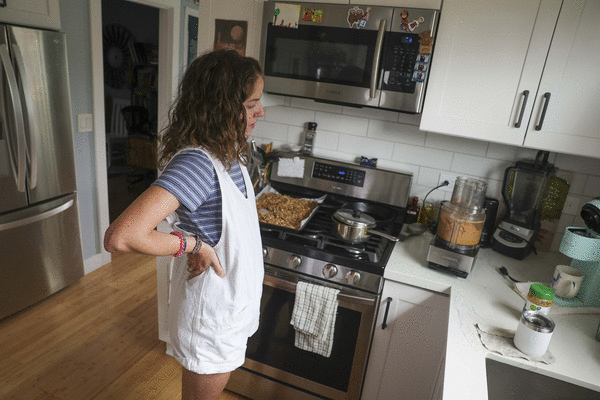




SEATTLE Jorge Aranda and Mattie Gottbrath are at a crossroads. The couple want to have children one day, but to do so they may have to leave the city they love.
“We constantly ask ourselves whether we can live in Seattle long term, let alone with a kid,” said Aranda, 29.
The couple moved from St. Louis, Missouri, to Seattle in early 2023, when the company Aranda works for, Boeing, transferred him to the Puget Sound area.
At the time, Gottbrath, now 30, was between jobs, so she threw herself into volunteering while she looked for work.
More than three years later, South Seattle has become the couple’s home. They love the ambience, the proximity to nature and the sense that there’s always something to do. Most of all, they cherish the community they’ve built, including friends, neighbors and people they’ve met through St. Peter Catholic Church, which they attend weekly.
But the possibility looms that they’ll have to move away eventually.
Seattle’s cost of living continues to take them by surprise, even though both now earn more money than they did in St. Louis. And despite feeling financially stable, they don’t feel prepared to absorb the additional expenses of having and raising kids.
The couple shared their experiences for the Affording Seattle series, which explores how people in the city manage their money and make do in the face of cost-of-living challenges.
‘Drastically’ more expensive
When Boeing first transferred Aranda to Seattle, the company gave him a salary adjustment, bumping his base pay from $93,000 to $105,000.
Gottbrath also makes more in Seattle. Before the move, she last worked as a coordinator for Washington University in St. Louis, a private university, making $40,000 a year. Gottbrath now works at a Catholic community organizing nonprofit, making $68,000.
However, in the couple’s experience, the higher salaries weren’t commensurate with the cost-of-living increases they encountered.
“It’s just drastically different,” said Gottbrath.
The cost of living in Seattle is nearly 47% higher than the national average, according to the latest data published by the Council for Community and Economic Research, which tracks relative prices of goods and services. By contrast, the cost of living in St. Louis is 10% lower than the U.S. average.
First, there’s rent. In St. Louis, Aranda paid $880 a month for a two-bedroom home, while Gottbrath paid $750 for a home with roommates, for a total spend of $1,630. In Seattle, they pay 50% more, spending $2,550 a month on their house.
Then there’s the cost of food. Gottbrath and Aranda like to eat out. But they’re often taken aback by prices: $7 scoops of ice cream, $8 pastries, $20 sandwiches.
Aranda grew up eating conchas, a type of Mexican bread that’s lightly sweet with a crunchy, scalloped top. Back in the suburbs of Chicago, where he’s from, conchas cost between 50 cents to a dollar at most. The first conchas Aranda found in Seattle cost $2 apiece.
“That’s when I was like, ‘OK, well, I think I’ll stop eating conchas,’” he recalled.
Everything’s just a few dollars more expensive than they’re willing to spend. And those dollars add up.
These days, the couple eats out much less, despite wanting to visit their neighborhood bakeries, coffee shops and restaurants more often. In Seattle, it can be hard to afford one’s good intentions.
“Those are the types of businesses that I would like to support,” said Gottbrath.
Aranda and Gottbrath do most of their grocery shopping at Costco because they find the supermarkets in Beacon Hill are on the pricier side. They’re also careful about how much money they spend on entertainment.
Early in their move, the couple signed up for a local climbing gym. To justify the high monthly membership fees, they went frequently, leaving them with less time for any other interests. Some of those interests, like salsa dancing, were also sometimes twice as much as they used to pay back in St. Louis. Eventually, they canceled their memberships, and now they visit the gym occasionally when their friends have guest passes.
They emphasize that they feel relatively secure. Neither holds any debt, and they can capably cover their necessities.
But it’s long-term milestones like buying a home and starting a family that feel out of reach.
They’re saving aggressively for the future, including $1,600 a month for their wedding, planned for next year, $6,000 a month for a down payment on a home, and $600 per month for a new car.
The cost of children
Gottbrath and Aranda would like to become homeowners one day.
They want to provide stability for their future family. As renters, they feel at risk of having to move out should their landlord ever ask.
But housing prices in the Seattle area are some of the highest in the country. In King County, the median single-family home sold for $986,250 in June. The county ranks in the top 1% of median home values nationwide, according to an analysis of federal housing data conducted by the National Association of Realtors.
The couple estimates that they’d need six to 10 more years of saving to scrounge together a down payment here. In St. Louis, that timeline could be cut in half, Aranda said. The median price of single-family homes there was $343,800 in May.
Then there’s the cost of daycare. Back in the Midwest, they could likely count on some family members to help with child-rearing. But in Seattle, the two don’t have the same network of support.
The median cost of care for an infant at a daycare center in King County runs over $2,500 a month, or more than $30,000 per year, according to the latest data available from Child Care Aware Washington.
High costs present a dilemma for Gottbrath: Would she quit working to save on childcare? And if she did, how would she feel?
“If we decide to have kids, what kind of sacrifices will I feel I need to make, or actually make, in order to like, make things more sustainable for our family?” she said. “That calculation for me is a big one.”
Not ready to leave
Moving back to the Midwest makes sense practically. But Aranda and Gottbrath simply don’t feel ready to go. Part of them is holding out for a feasible path forward to materialize.
“We both love Seattle,” said Aranda. “We would certainly love to grow up and grow old with a family here.”
One reason they feel so rooted after just three years is their involvement in their South Seattle community. Every week, they volunteer at St. Vincent de Paul, which runs a program to support neighbors in need through phone calls, in-person visits and stipends for housing costs.
In addition, the couple lead a monthly youth group at their church, during which they discuss Catholic teachings and social justice. They also occasionally coach youth sports.
Through their volunteer work, the couple has seen firsthand what struggling with affordability looks like in Seattle.
But they emphasize that volunteering isn’t just a matter of giving, but an act that enriches them, too.
Through every shift and responsibility they take on, Gottbrath and Aranda feel like they’re creating the kind of community they want.
In 2022, Gottbrath spent nearly a year on a fellowship in Ecuador. There, she was inspired by the interdependence she witnessed among neighbors. People often looked after each other’s older relatives and took care of each other’s children. Today, she spends so much of her time volunteering in part because she wants to replicate that kind of mutual support in her life.
Aranda’s motivations are partly personal, too. Growing up, his family sometimes got groceries from local food banks. By volunteering, he feels like he’s helping his own parents through time.
The call to be closer to family in the Midwest still beckons.
In a few years, Gottbrath said, their parents will be older and more likely to need caretaking. Aranda’s sister recently had a child. The couple wants their future children to grow up near relatives.
But they’re not leaving just yet.
“Now more than ever since we moved here, it will be sad when and if we move from Seattle,” said Gottbrath. “Because of community we made here.”
Want to share your experience with affordability? Fill out the form below and a reporter may reach out to you.
MONTHLY BUDGET
Here’s a look at Jorge Aranda and Mattie Gottbrath’s budget:
$14,300 takehome pay. Mattie's takehome pay is $4,600 per month, and Jorge's is $9,700 per month.
Expenses:
$2,250: Rent for a house in the Beacon Hill neighborhood of Seattle
$120: Utilities
$500: Groceries, mostly from COstco
$300: Dining out
$120: Gas
$160: Entertainment
Savings:
$1,500: Saving for their wedding in July 2027
$6,000: Saving for a down payment
$600: Saving for a new car, which they aim to buy by 2028
$2,450: Retirement
©2026 The Seattle Times. Visit seattletimes.com. Distributed by Tribune Content Agency, LLC.










Comments