OpenAI, Anthropic valuations fuel VC fears of startup correction
Published in Science & Technology News
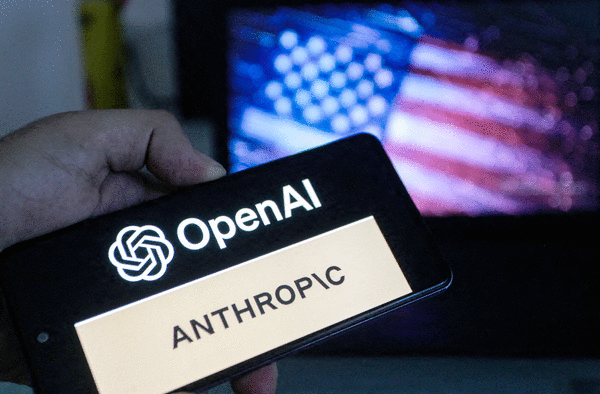
In late September, OpenAI entered discussions for its latest funding round with confidence. After having early discussions with prospective backers who had expressed interest, the company presented its terms: at least $30 billion in new capital at a $1.4 trillion valuation.
Few startups have been as successful at fundraising as OpenAI, which was last valued at $852 billion. This time, however, some investors felt the terms were too lofty, according to people familiar with the matter, who spoke on condition of anonymity to discuss private matters. Facing that feedback, as well as souring market conditions, the ChatGPT maker lowered its target valuation to $1.25 trillion and cut its funding goal by a third. The company declined to comment.
OpenAI’s downsized deal, combined with rival Anthropic PBC’s decision to pursue an IPO at a lower-than-expected $1.4 trillion valuation on a fully diluted basis, has sent shockwaves throughout the venture landscape. Suddenly, an industry already rattled by a weeks-long public market AI selloff is worrying more about whether private companies are on the cusp of a correction.
To be sure, some buzzy AI startups are still raising money at hefty valuations, sometimes without a product or revenue to speak of. There have also been positive signs for AI this week, including an upbeat earnings report from CoreWeave Inc. and a report that Anthropic’s bankers are weighing plans to increase its IPO valuation to $1.5 trillion or more — though the amount remains significantly below the $2 trillion that some bankers previously expected it to fetch in the listing.
Tomasz Tunguz, a general partner at Theory Ventures, said he’s begun to see investors apply more conservative revenue multiples for AI startup funding discussions just in the past two weeks. Similarly, B Capital co-founder and general partner Howard Morgan said he’s advising many startups to seek lower valuations than they were targeting, citing the two AI juggernauts as a driving factor.
“We’re seeing this in a number of companies we’re looking at investing in the AI space, where they were hoping for high single-digit or even double-digit billions,” Morgan said. “Now we’re saying to them, ‘No, that’s too high given your current revenues,’ which, in some cases, are still zero, or are relatively small.”
If it persists, that thinking would represent a stark shift. Throughout this year, venture investors have aggressively courted promising founders with unsolicited term sheets, and poured money into companies with unproven ideas and little to no revenue. Some startups have landed higher valuations within days of their most recent financings.
Over the past few weeks, the venture world has been beset by a series of new risks, including a rout in AI stocks, the prospect of rising interest rates and a scandal at Nvidia Corp., a key investor in the AI sector. The Democratic sweep in the U.S. midterm election is also poised to make it harder to build new data centers and secure computing resources for AI services.
Any sign of tighter access to capital or diminished valuation prospects for either OpenAI or Anthropic has the potential to ripple across the entire AI sector.
More than other startups, the two companies have defined the current AI boom and propelled it forward through their technology and by placing themselves at the center of a complex web of deals involving chipmakers, cloud providers and other partners. The two juggernauts were also on pace to account for more than a third of all capital invested in startups globally, according to data from Bloomberg Intelligence released in October.
“Anthropic going public is almost like a whole ecosystem going public,” said Sapphire Ventures president and partner Jai Das. If the public listing, expected next week, proceeds smoothly and Anthropic’s stock steadily gains, it’ll be business as usual for the AI trade, he said. If it doesn’t go well, however, “some companies are going to go out of business.”
For now, Das said, many startups hoping to pursue potential public offerings and other deals find themselves in a holding pattern until at least after the Anthropic IPO.
Uncertainty remains the watchword of the moment. Eric Bahn, partner at early-stage venture firm Hustle Fund, said that his firm is advising founders to “raise what they can as soon as they can, and try to control the burn” for the year ahead. Alexa von Tobel, managing partner of early-stage venture firm Inspired Capital, has also begun urging portfolio companies not to put off funding too long.
“The best founders sleep with one eye open to the markets,” she said. “In moments where you can see a sizable correction or a medium correction, cash is king.”
(With assistance from Shirin Ghaffary.)
©2026 Bloomberg L.P. Visit bloomberg.com. Distributed by Tribune Content Agency, LLC.





Comments