How protection of public land shapes political strategies in the American West
Published in Science & Technology News
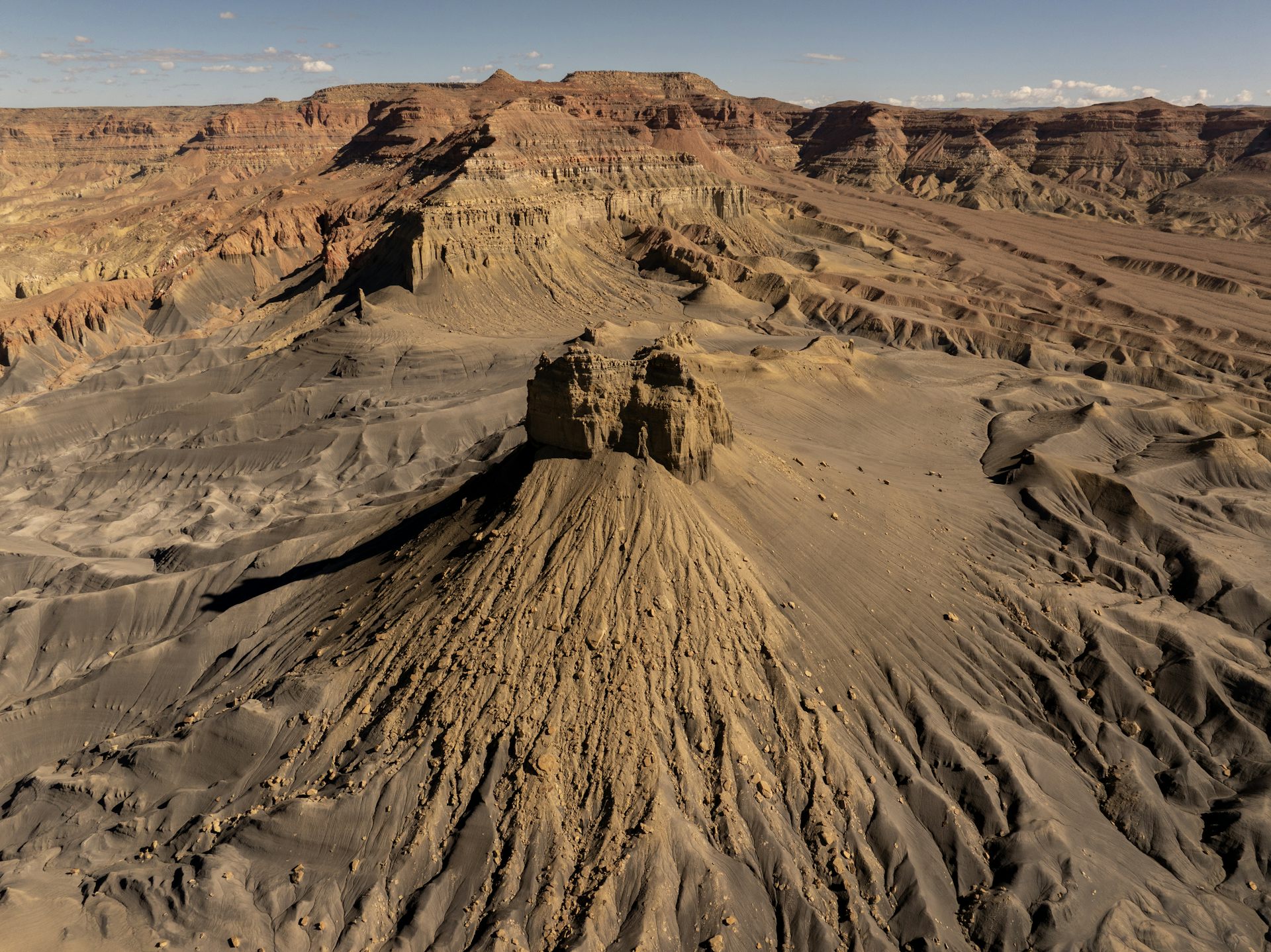




Public lands are intricately woven into the fabric of America. Years of data confirms that a majority of Americans, regardless of their political beliefs, want public lands to remain in federal hands – though not everyone agrees on how exactly those lands should be managed. And while it’s not clear that public lands were a crucial factor in the 2026 midterm election results, survey data suggests that it is an important issue in deciding whom to vote for.
Federal conservation efforts began in the late 1800s, with Yellowstone becoming the first national park in 1872. Today, 640 million acres, nearly 30% of the country’s land area, are administered by the federal government for a wide range of purposes, including conservation, forestry, grazing and energy production. These lands are held in trust by the federal government for the American people.
In our studies of the politics of the American West, where the vast majority of U.S. public lands are located, we are seeing efforts to make voters aware of candidates’ views on land protection and to use grassroots political tactics to influence management decisions.
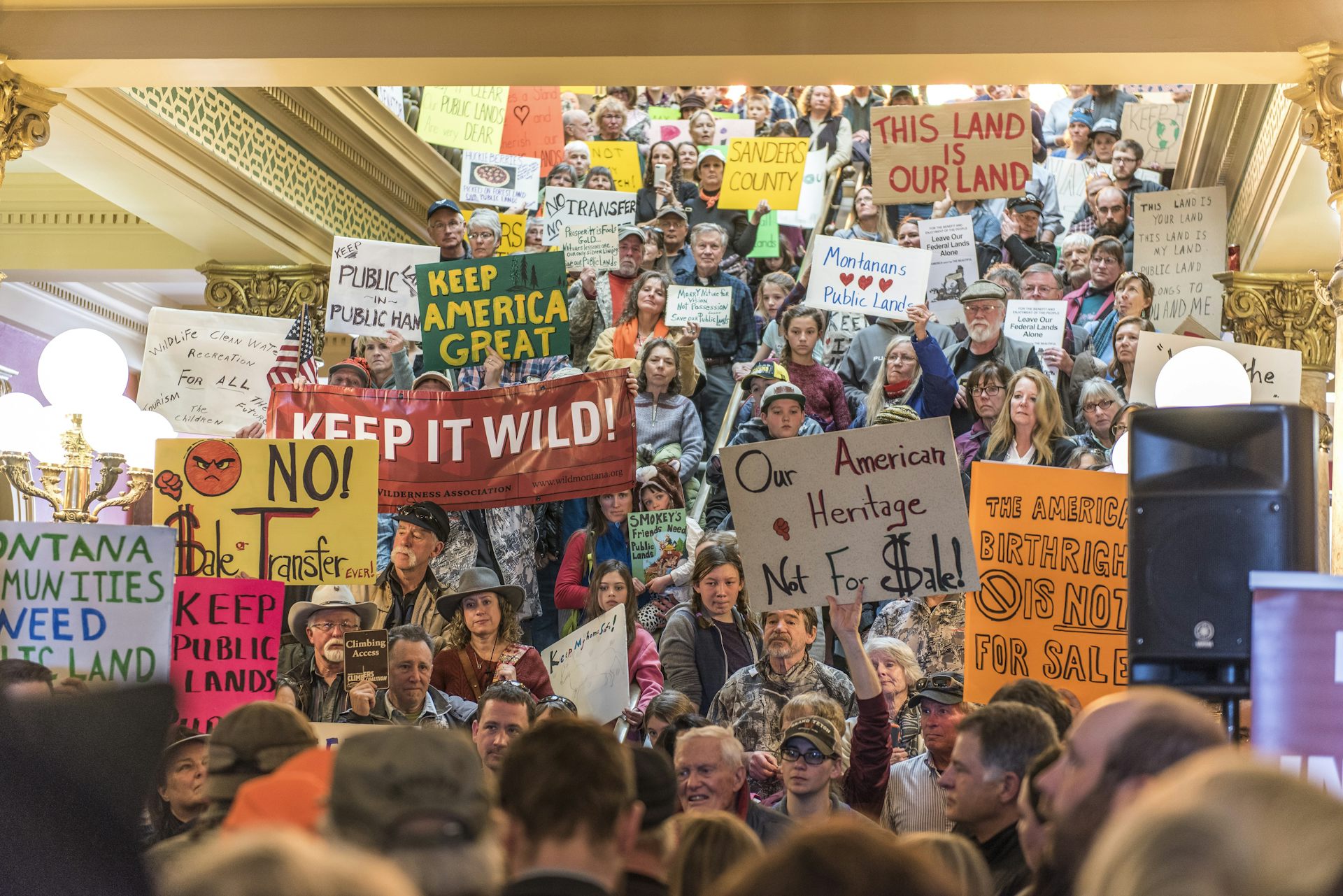
Protesting government efforts to turn turn public spaces into private property, or to allow development on public land, are key ways people show the value they place on public lands.
In 2017, at the start of Donald Trump’s first term as president, U.S. Rep. Jason Chaffetz, a Utah Republican, proposed that the federal government transfer land to individual states. The states, underfunded and understaffed to manage the land themselves, would likely have sold the land to private interests. The response created the #KeepItPublic social media campaign and mobilized conservation groups against the bill. Land Tawney, president of Backcountry Hunters and Anglers, said, “Once that bill was introduced, the hornet’s nest was kicked.” Chaffetz pulled the bill and left Congress five months later.
And in 2025, after Trump returned to the White House, U.S. Sen. Mike Lee, a Utah Republican, proposed that Congress require the U.S. Bureau of Land Management and the U.S. Forest Service to sell between 2.2 million to 3.3 million acres of public land in 11 Western states. He said the land sale would help “address local housing needs.”
But conservation groups and other Western lawmakers, including fellow Republican U.S. Sen. Tim Sheehy and Republican U.S. Rep. Ryan Zinke, also of Montana, declared the proposal a “threat to the Montana way of life” and forced Lee to withdraw the proposal.
There isn’t available evidence to suggest that voters choose members of Congress based solely on their views or action about the management of public lands.
But elected officials often swiftly distance themselves from or outright oppose efforts to modify or eliminate public land protections. That response signals they believe their land protection stances play a role in how the public views them.
For example, Trump administration efforts to reduce Bears Ears National Monument and to swap a parcel in Yosemite National Park with a private developer met with opposition from both parties in Congress.
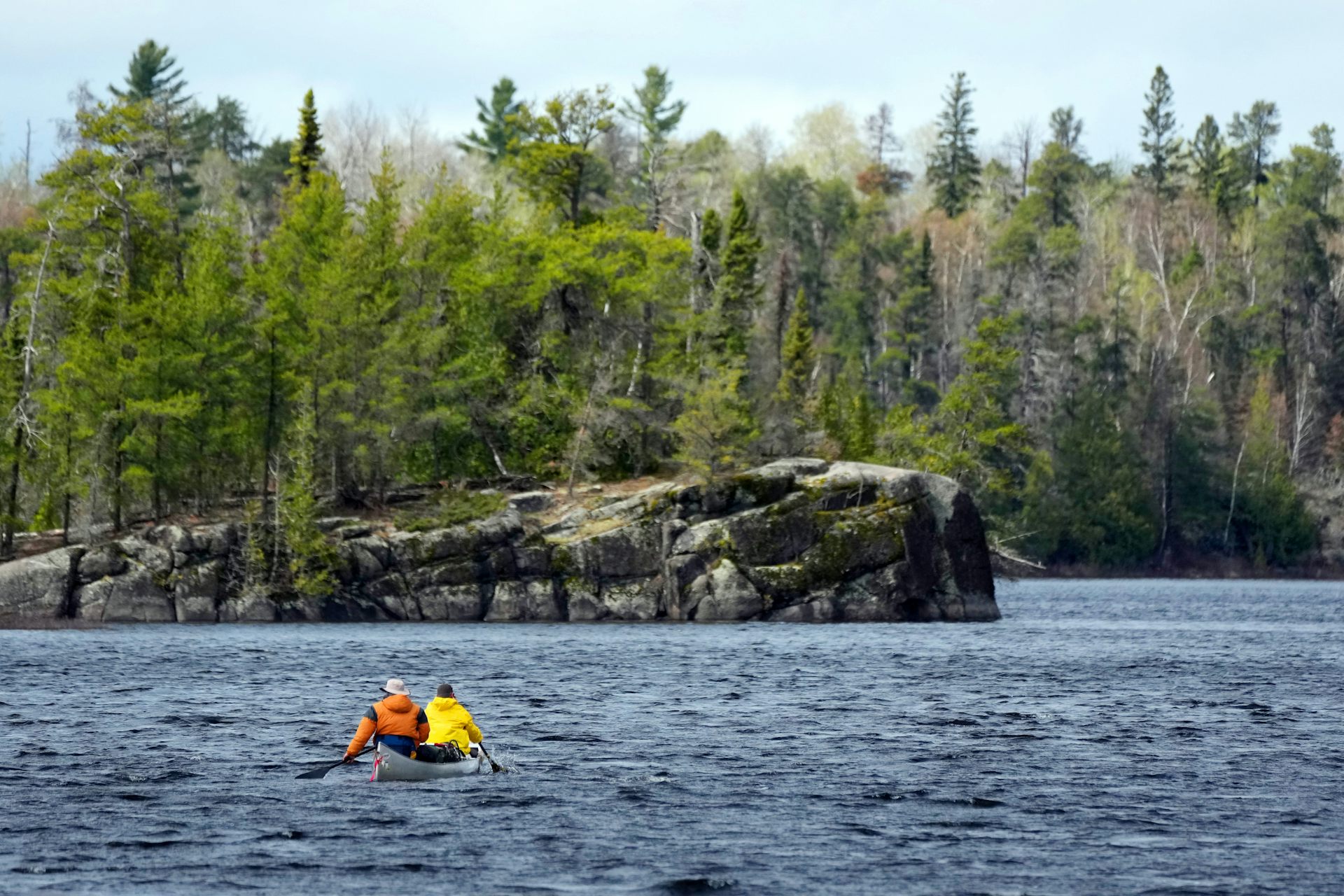
However, that opposition is not always successful at preventing development or natural resource extraction on public lands. In March and April 2026, both houses of Congress passed a resolution supporting mining near the Boundary Waters Canoe Area Wilderness in Minnesota, despite public outcry about the potential pollution of a vast wilderness.
In 2026, two new groups emerged to call attention to threats to public lands. Protect Wyoming and PAC for Public Lands in Idaho both formed specifically to compile and publicize elected officials’ public lands voting records, especially when those votes affect people’s rights to hunt, fish and enjoy the outdoors.
These groups may be able to tap into core land protection values broadly shared by many voters across the political spectrum. That could put more direct and consistent pressure on politicians to protect public lands.
The Trump administration has moved to limit people from mobilizing in support of public lands.
For instance, Trump’s Jan. 20, 2025, executive order declaring a “national energy emergency” has led the Department of the Interior to accelerate its review of proposals for oil and gas drilling, production and refining, and mining, along with other energy-related natural resource development.
A process that used to take one to two years has been reduced to no more than a month. That provides less time for people to review documents, understand what they say and decide how they feel about the proposals. However, 15 states are now suing the Trump administration, saying that fast-tracking violates federal law and seeking court orders to restore the previous process.
And in January 2026, the White House Council on Environmental Quality revised the rules around public comments on proposed federal land management actions. Government agencies are required under the National Environmental Policy Act to give the public a chance to comment on rule changes. It is the primary way the public can raise objections, question the thoroughness of the options, or to provide other evidence to help inform policy. The council significantly shortened, or in some cases eliminated, the time period during which the public may submit comments – though that decision has also been challenged in court, saying the Administrative Procedure Act requires the original amount of public comment.
How the government handles data center development may shed further light on the political power of public lands. Back in July 2025, Trump issued an executive order seeking to “utilize federally owned land and resources for the expeditious and orderly development of data centers.”
In fall 2026, media outlets and advocacy groups called attention to efforts to develop data centers on public lands, including at least 17 computing campuses in six states.
Nearly two-thirds of Americans oppose data centers being built in their communities. Some politicians have questioned the deals on federal land.
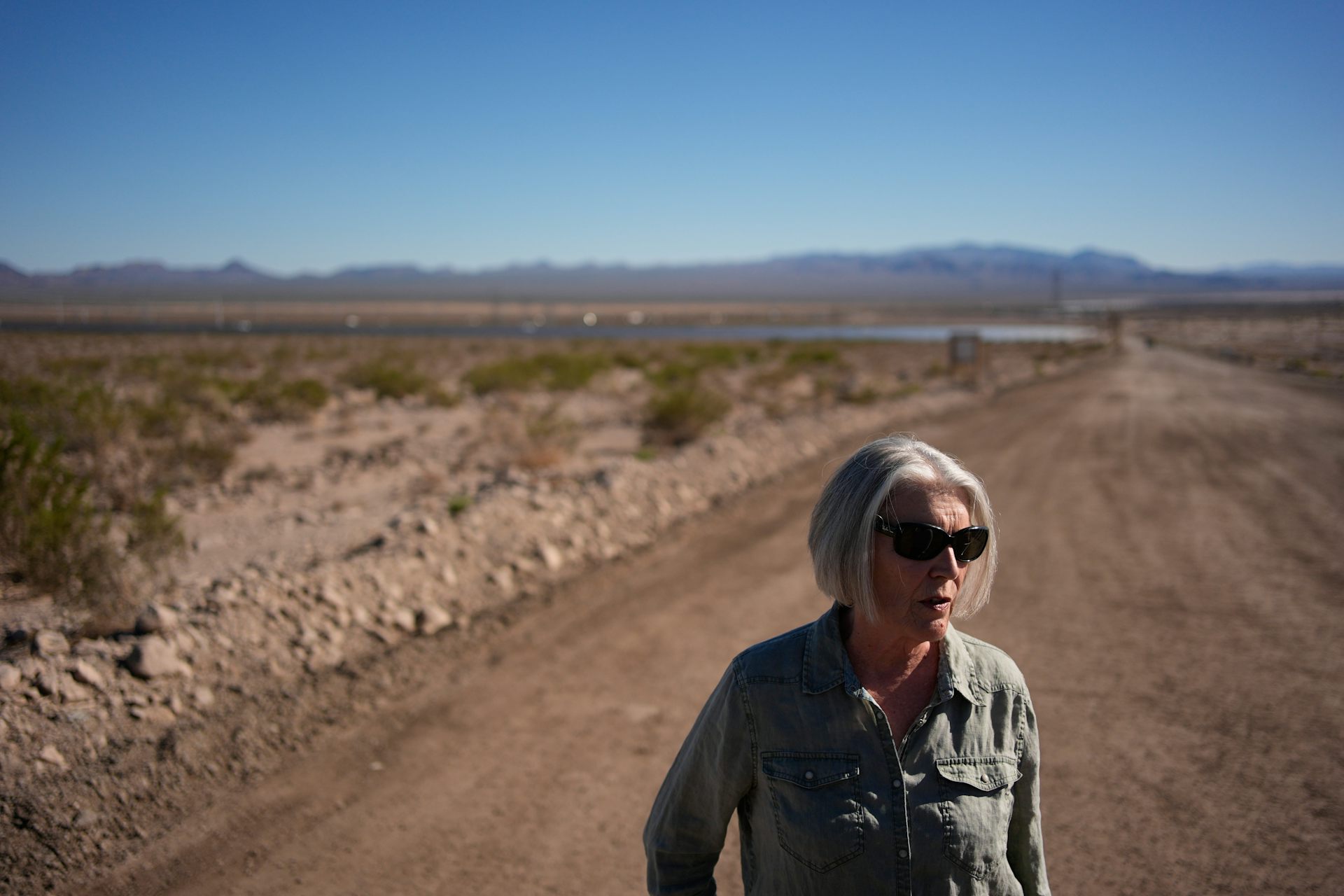
These centers were on the minds of voters in the midterm elections, nowhere more than in the Nevada gubernatorial race, where the Democratic challenger won on a platform to oppose projects on federal land. Voter discontent may not stop the Trump administration from moving forward, but it all but guarantees that data centers on public lands will be an issue in the 2028 general election. The degree to which the opposition gains political momentum could be another indicator of how the American public will act to continue to demand that public lands remain in public hands.
This article is republished from The Conversation, a nonprofit, independent news organization bringing you facts and trustworthy analysis to help you make sense of our complex world. It was written by: Erika Allen Wolters, Oregon State University and Monica Hubbard, Boise State University
Read more:
Bison restoration efforts and grazing rights hinge on one question: Are bison wildlife?
Why protecting wildland is crucial to American freedom and identity
Interior secretary manages vast lands that all Americans share − and can sway the balance between conservation and development
The authors do not work for, consult, own shares in or receive funding from any company or organization that would benefit from this article, and have disclosed no relevant affiliations beyond their academic appointment.






Comments