Florida is a national 'hot spot' for forest loss. Here's what's replacing the trees
Published in Science & Technology News
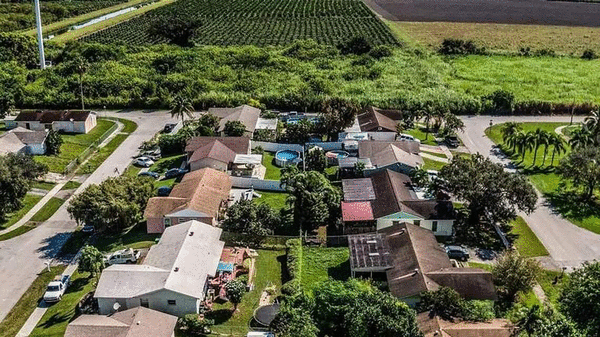
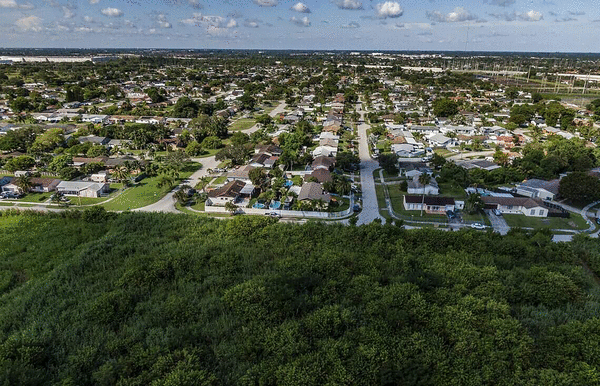
MIAMI — In recent decades, Florida has slashed its forests and converted them to condos and crops more than nearly every other state in the nation, a new report published Thursday found.
Florida was fourth on the list for the most forest lost in the 28-year period scientists analyzed as part of a Clark University study — with 658,000 acres lost, or over 23,000 acres lost per year. That’s like losing a forest the size of Coral Gables every year for 28 years in a row.
“One of the things that was surprising to us was just how much forest land we’re losing in the U.S. still,” said Chris Williams, a professor of geography at Clark University’s School of Climate, Environment, and Society and co-author of the study.
He called Florida a “hot spot” nationwide for forest lost.
The only states to best Florida for forestland lost between 1990 and 2017, the period Clark University researchers analyzed, were Georgia, North Carolina and Texas. Clark and his team analyzed satellite data to see what happened to all that former forestland.
“When you lose a forest, you have to look for a while to see if it recovers to a forest again. That takes decades,” Williams said.
About 55% of those former forests were paved for development, while the other 45% became farmland, they found. The northern end of Florida lost more forestland, and much of it was converted to agricultural land, but South Florida lost a good bit of forest too, and nearly all of it was developed.
While the study only runs through 2017 for now, Williams said they plan to update it through 2025 in the near future. When they do, Florida environmentalists hope it will tell a different story, thanks to some new policies in place to protect Florida’s remaining greenery.
Florida forever?
While Florida’s legislatures have largely ignored a 2014 constitutional amendment voters approved to direct land sales taxes toward conservation, there have been several big land conservation pushes at the state level since then.
The biggest deal is the Florida Wildlife Corridor, which was enshrined into Florida law in 2021 and came with $2 billion in earmarked state funding. The plan is to connect about 18 million acres of land in Florida with about 10 million of those acres already protected as state parks and conservation areas.
Since the law kicked in, Florida has preserved about half a million acres, said Kim Dinkins, policy and planning director for 1000 Friends of Florida. Some of that was outright buying the land, but much of it was buying easements — legal promises from land owners that they won’t develop the land, although they still own and maintain it.
“Hopefully that represents a bit of a turning point in deforestation in Florida but also provides us a plan moving forward,” she said. “It’s all about connecting and maintaining those pathways.”
However, 1000 Friends says about 1.1 million acres of that land inside the corridor is currently targeted for development by 2070, so local governments have already decided to pave over these areas. Another 3 million acres outside the corridor is also targeted, Dinkins said.
“Even though we’ve conserved so much land, we stand to lose a lot more,” she said.
With all the focus on the wildlife corridor, which does not reach Southeast Florida, legislature attention has waned from the 2000s era state land conservation program.
In the 26 years since the Florida Forever program began, the state has preserved about 1 million acres, it says. A few years ago, the state legislature committed to spending at least $100 million each year to help fund the program, which buys and manages green space for the state.
But this year, the state gave it $0 in new funding.
“It was passed by the legislature, but they failed to allocate it in their budget,” Dinkins said. “No one seems to have challenged it so far.”
©2026 Miami Herald. Visit at miamiherald.com. Distributed by Tribune Content Agency, LLC.




Comments