Nonprofit plans to sue US Fish and Wildlife for more shorebird protections amid Plum Island flag controversy
Published in Science & Technology News
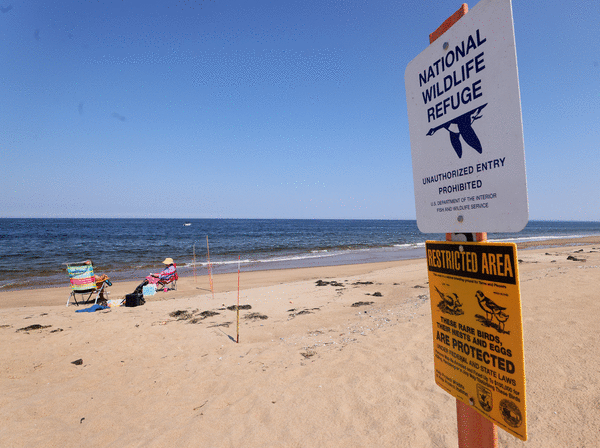
BOSTON — As the town of Newbury and residents of Plum Island are locked in a dispute over flying American flags during this week’s Independence Day celebrations and protecting endangered shorebirds, a nonprofit is planning to sue U.S. Fish and Wildlife Services to add more protections.
The Center for Biological Diversity sent a letter to U.S. Fish and Wildlife senior leadership on Wednesday, expressing its intent to sue the federal agency for failing to designate a critical habitat for red knot eastern shorebird “in a timely manner.”
Recipients of the letter included Secretary of the Interior Doug Burgum, U.S. Fish and Wildlife Director Brian Nesvik, and Acting Regional Director of the Northeast Region Sharon Marino, among others.
The center named Massachusetts among other locations where they say a critical habitat needs to be established for the red knot on beaches. These areas are where the species stops to rest during their lengthy migrations.
“The red knot is a shorebird with one of the steepest, if not the steepest, population declines in North America over the last three decades. The species depends on protected coastal stopover sites like those in Delaware Bay and Massachusetts for survival. Beaches at North American stopover locations offer sites where red knots can rest and gather sustenance to fuel the remainder of their migratory journeys,” the center’s senior attorney Danny Waltz said in the letter.
“The red knot faces the possibility of extinction from a multitude of threats. These threats include human disturbance of foraging and roosting, habitat destruction or modification from sea level rise and coastal development and engineering, depredation by native and nonnative predators, and natural or man-made disasters like hurricanes and oil spills,” he continued. “The overharvest of horseshoe crabs—a species whose eggs provide food for red knots during their migration—also threatens the red knot by reducing food availability for the species.”
The letter and threats of legal action against the agency come as Massachusetts towns are already restricting activities like Independence Day fireworks displays and beach activities.
Most recently, tempers have flared on Plum Island after the town of Newbury sent residents letters warning that flags and streamers on the beach may present a danger to endangered birds, as celebrations for America’s 250th birthday approach.
For the past several years, the town of Barnstable has canceled its Fourth of July fireworks display in order to protect nesting piping plovers — who officials say become startled by the loud noise from the display. This year, instead of a fireworks display, the town is hosting a “state-of-the-art drone show” as a “modern tribute” to America’s 250th birthday.
“Hundreds of synchronized drones will paint patriotic images and animations across the night sky, offering a spectacular and family-friendly alternative to traditional fireworks,” reads a press release listing Fourth of July activities across town. “Featuring approximately 22 illuminated aerial images, the show will celebrate the spirit of Cape Cod through scenes inspired by its history, maritime heritage, iconic landscapes, and cherished traditions — blending nostalgia, storytelling, and community pride in a visual tribute to Cape Cod as one of America’s most beloved gathering places.”
Several towns on Cape Cod already have extensive protections for several species of shorebirds, as well as other animals, including vehicle bans and periodic beach closures. Over 40 miles of critical habitat has been established along the Cape Cod National Seashore as well.
The center claims the feds failed to designate and protect critical habitat as required by law, with an April 2023 revision proposed to designate 683,405 acres of critical habitat for the shorebird not being finalized.
“The Fish and Wildlife Service’s delay in protecting the wild coastal areas that red knots call home is pushing them closer to extinction,” the center’s attorney added. “The federal government must protect the delicate Eastern shores that the red knot needs to survive.”
The Herald has requested comment from the U.S. Fish and Wildlife Service.
-------------
©2026 MediaNews Group, Inc. Visit at bostonherald.com. Distributed by Tribune Content Agency, LLC.






Comments