Duck-billed dinosaur fossil containing collagen stuns scientists
Published in Science & Technology News
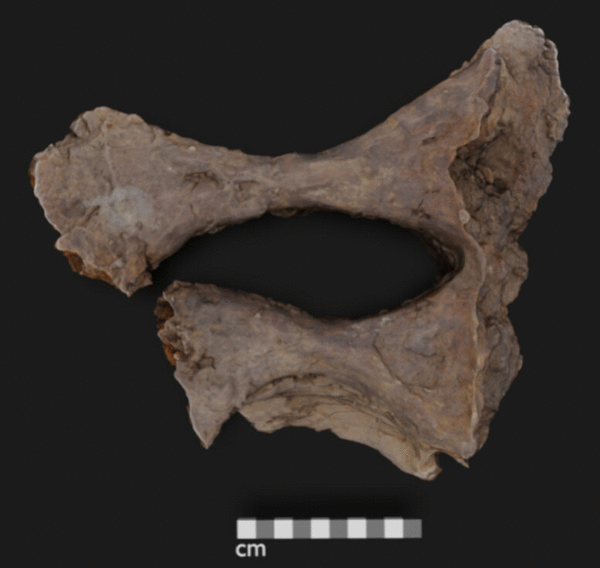
Reports of proteins in fossilized bones have stirred controversy in the scientific community for decades, as fossilization was thought to destroy organic components, replacing them with minerals over time. Now, a team of British researchers working in Montana’s Hell Creek Formation has found evidence of collagen in a 66-million-year-old Edmontosaurus bone.
Researchers from the University of Liverpool used a technique called cross-polarized light microscopy to identify and measure molecules of hydroxyproline, a building block found almost exclusively in collagen, the protein that gives structure to skin, bones and muscles. They verified the results using two additional analytical techniques and concluded the collagen was “original to the fossils … providing further evidence addressing this long-standing controversy,” the authors wrote in the journal Analytical Chemistry.
After analyzing the hip bone of the duck-billed Edmontosaurus, the researchers argued “beyond doubt” that organic compounds can survive fossilization, Professor Steve Taylor said in a university press release.
“Our results have far-reaching implications. Firstly, it refutes the hypothesis that any organics found in fossils must result from contamination,” he said.
“Secondly, it suggests that cross-polarized light microscopy images of fossil bones collected over the past century should be revisited. These images may reveal intact patches of bone collagen, potentially offering a ready-made trove of fossil candidates for further protein analysis. This could unlock new insights into dinosaurs, for example by revealing connections between species that remain unknown.
“Lastly, the findings inform the intriguing mystery of how these proteins have managed to persist in fossils for so long.”
Researchers from UCLA also confirmed the presence of hydroxyproline, according to the team. The independent verification provided important confirmation that degraded collagen fragments were genuinely present within the fossil.
Scientists who challenged previous claims of preserved organic tissue argued that such materials were modern contamination or bacterial residue rather than authentic dinosaur molecules.
The findings open the door to new ways of studying molecular traces of soft tissue from extinct animals. Organic molecules may reveal information about dinosaur growth, aging and disease.
Edmontosaurus, which lived during the Cretaceous Period alongside Tyrannosaurus rex, is known for its remarkable preservation. Some specimens retain impressions of skin and other soft-tissue structures, providing rare insights into dinosaur anatomy.
_____
©2026 Baltimore Sun. Visit baltimoresun.com. Distributed by Tribune Content Agency, LLC.






Comments