Rick Steves’ Europe: Güzelyurt: A beautiful land
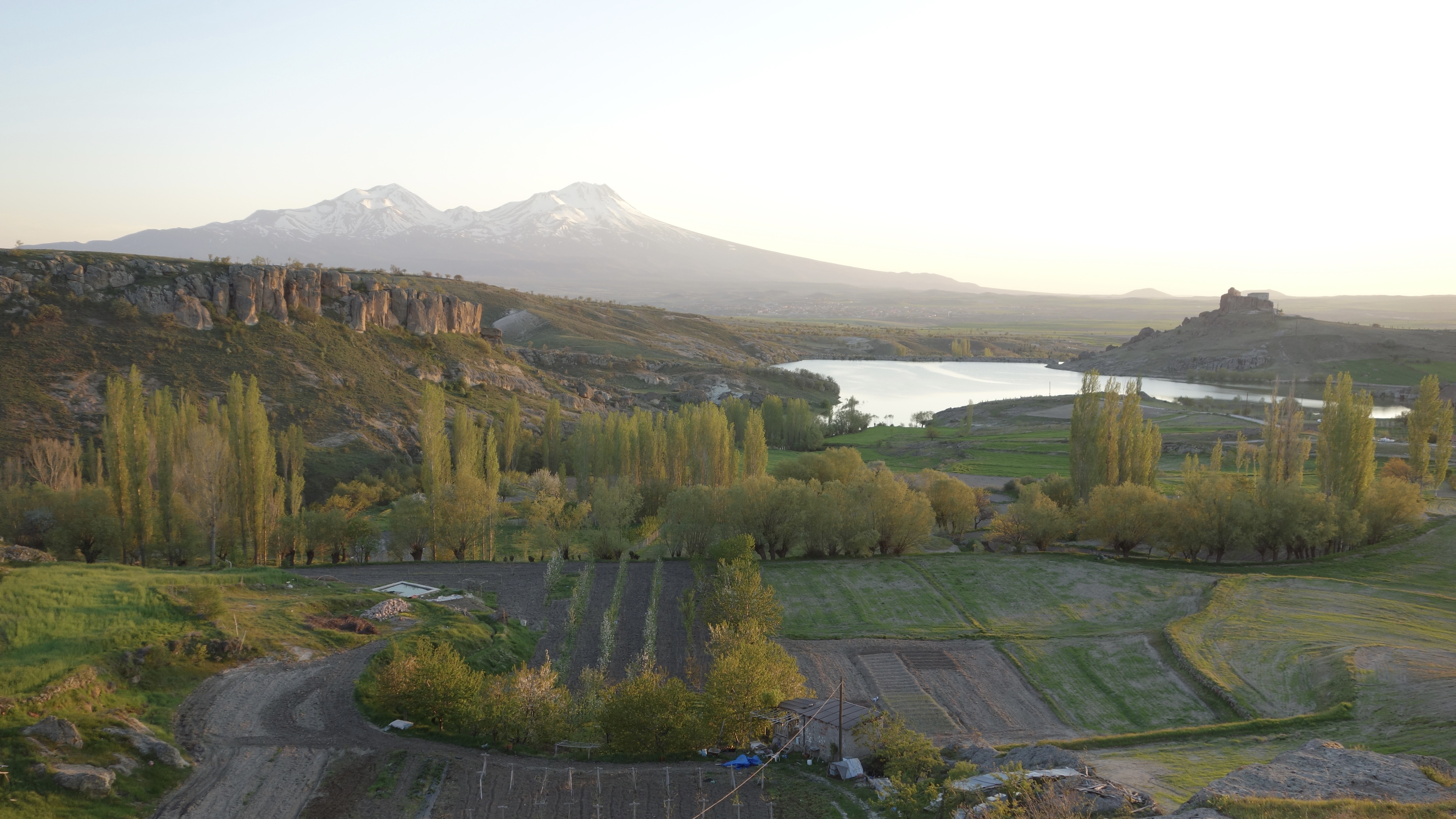


Güzelyurt, a town on the edge of Turkey's rural region of Cappadocia, is one of my favorite discoveries in this bizarre and fascinating corner of central Turkey. It sits at the edge of the Ihlara Valley, about 35 miles from the regional capital of Nevşehir. It's best known in Turkey as a town where historic enemies – Greeks, Turks, Kurds, and Bulgarians – live in peace. I like it as a place with almost no tourism, lots of history, and plenty of Turkish character.
Güzelyurt is a harmony of cultures, history, architecture, and religions. Averse to change, small towns like this are cultural humidors, keeping fragile traditions moist and full of local flavor. A bust of Atatürk – the founder of modern Turkey, who insisted on a separation of mosque and state – looms high over the small, modern market square at the heart of town.
Güzelyurt is filled with people enjoying petite glasses of sweet çay (tea) and the happy clatter of backgammon dice. Backgammon makes for a fun way to interact with locals – particularly the men of this town, who seem to be enjoying one eternal cigarette break. If you don't know how to play, it's no problem. (If you pause, someone'll likely move for you.)
Strolling streets that have changed little over the centuries, I pause to take in the village's sounds. It's an ancient soundtrack – the timeless white noise of daily life: Children play, birds chirp, roosters crow, shepherds chase goats, and mothers cackle. (I ignore that distant motorbike.)
I hike steeply down into a ravine, winding through a community in the rough, where the chores of daily life seem stuck in the Middle Ages. I come upon a little boy playing a flute as his mother cooks and, with gestures, gain the boy's permission to give the ancient-looking instrument a try. It's carved out of an eagle bone, just like in biblical times. As I hand it back to him I hear another flute, out of sight, coming from over the hill.
Climbing up the opposite side, my vista extends out over a lush and living gorge. Sixteen centuries ago, monks built monasteries into its cliffsides. The structures that resulted seem one with the volcanic rock out of which they were carved. Erosion drove most of the residents of the ancient town to more stable dwellings, but some remain, helping you appreciate the tenacity of Güzelyurt's people.
Though seemingly abandoned, there's still life in the old town. Residents somehow eke out a living from its crumbling terraces and neglected gardens. People do their humble chores as if stubbornly refusing to give up on Güzelyurt.
Right below me, sleeping in the greens and wet browns of this tidepool of simple living, is the former church of St. Gregorius. For centuries, Christians worshipped here, and the town had an interesting connection with Turkey's neighbor to the west, Greece.
Until the early 1800s, Greece and Turkey were both part of the Ottoman Empire. There were Muslim communities in Greece, and Greek Orthodox communities in Turkey. Like many Turkish towns, Güzelyurt was once Greek. Then in the 1920s, they had a huge population swap – most Christians here were moved to Greece, and Muslims there were sent to Turkey. So, Güzelyurt's historic church became a mosque – indicated by its single minaret.
The cliff rising from the gorge is stacked with building styles: Above the 1,600-year-old church sit troglodyte caves, Selçuk arches, and Ottoman facades. Beyond them gleams the tin dome of a 20th-century mosque, with its twin minarets giving a constant visual call to prayer. On a nearby hillside, I see the letters G-Ü-Z-E-L-Y-U-R-T spelled out in white rocks. The town's name means "beautiful land." To my left, and much farther in the distance, the snowy volcanic slopes of Mount Hasan's double peaks rule the horizon.
Hiking a little farther from town, I see the source of the music I'd heard from a distance: the goat-tending father of the flute-playing boy I'd met earlier. As herding families in rural Turkey have done for generations, both the father on the hillside and the son at home with mom play the eagle-bone flute – and the entire family knows that all is well. I realize that the mother regularly goes about her day with the comforting sound of her husband tending their flock. Though he's off on the hillside all day, the music means the family is somehow still together.
Cresting the goatherder's bluff, I survey the view and marvel at how the honey that holds this architectural baklava together is the people who live here – and the traditions they hold dear. While not all visitors would consider Güzelyurt particularly beautiful, that's how the people who call it home see it. They'd live nowhere else. For them, and to me, it truly is a güzel yurt.
(Rick Steves (www.ricksteves.com) writes European guidebooks, hosts travel shows on public TV and radio, and organizes European tours. This column highlights some of Rick's favorite places and travel insights over a lifetime of exploring Europe and sharing his discoveries. You can email Rick at rick@ricksteves.com and follow his blog on Facebook.)
©2026 Rick Steves. Distributed by Tribune Content Agency, LLC.
(c)2026 RICK STEVES DISTRIBUTED BY TRIBUNE MEDIA SERVICES, INC.









Comments