The jibarito: How the Chicago sandwich became a classic
Published in Variety Menu
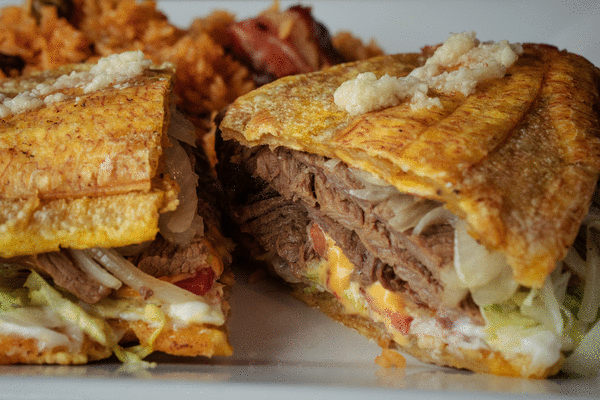
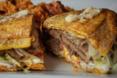
CHICAGO -- Chicago’s sandwich legacy runs deep. There is the Italian beef, doused in gravy, the Maxwell Street Polish stacked with green onions and the jibarito, a sandwich that swaps bread for twice-fried plantains.
Piled with steak, lettuce, tomato, garlic mayonnaise and cheese, the jibarito is undeniably Chicago. Created by Puerto Rican restaurateur Juan “Peter” Figueroa at Borinquen during the 1990s, its name comes from the Spanish word jíbaro, a term for a rural Puerto Rican farmer.
“We have the Italian beef. We have the deep-dish pizza,” said Jesus Arrieta, co-owner of Jibaritos y Más. “This is what the Latino community gave to Chicago as a staple sandwich.”
Over 30 years later, Puerto Rican and Latin restaurants across Chicago continue serving the recipe that made the jibarito famous, while some kitchens riff on the original with smashburgers and regional Latin American influences.
Borinquen
Long before the jibarito became a Chicago staple, it was an idea borrowed from a newspaper clipping.
At Borinquen in North Center, co-owner Gabriela Figueroa traces the jibarito’s origins back to her uncle, who first encountered the concept of a plantain sandwich while reading a Puerto Rican newspaper.
“He thought it was a great idea,” Figueroa said.
Figueroa said her family’s roots in Puerto Rico may have influenced the jibarito’s name and creation. Her family comes from the small mountain town of Añasco, Puerto Rico, which is bound by hilly grounds and rural landscapes.
When her uncle later opened his restaurant in Chicago in the late 1980s, he adapted the sandwich into what would become the city’s first jibarito.
“He kind of created his own version of it,” Figueroa said. “Almost like a burger, you know, lettuce, tomato, mayonnaise, cheese, and called it a jibarito.”
Today, Borinquen on Western Avenue is the family’s last remaining restaurant. The original location in Humboldt Park and the second location in Belmont Cragin have since closed.
“We’re the only Borinquen left, and we feel kind of like our history would be lost if we all walked away from it,” Figueroa said.
Borinquen’s history is reflected in a menu that has changed little over the years. The restaurant’s bestselling baked pork and steak jibaritos are offered alongside chicken and vegetarian options.
While other restaurants have experimented with toppings and sauces, Borinquen has stayed with the version introduced decades ago.
“We just kind of stick to the traditional way of how we created it from the very beginning,” Figueroa said.
Figueroa said people now drive across state lines and fly into Chicago to taste the original jibarito.
“We never claim to create a plantain sandwich,” Figueroa said. “We just created the jibarito, which is our version of the plantain sandwich.”
Borinquen, 3811 N. Western Ave., 773-442-8001, borinquen.website
Jibaritos y Más
The lunch rush at Jibaritos y Más moves quickly. Servers weave between tables carrying plates of mofongo, arroz gandules and roasted pork. The scent of fried plantains and seasoned meats fills the dining room. At many tables sits the restaurant’s staple jibaritos, and guests dig into versions filled with steak, chicken and pork.
Before Jibaritos y Más became a restaurant with multiple locations, it was a destination imagined during a daily commute.
Co-owner Jesus Arrieta remembers his mother, Yelitza Rivera, a Venezuelan immigrant, spending years working in Puerto Rican kitchens across Chicago after arriving in the United States. On her way to work, Rivera passed the corner of Fullerton and Kimball every day, aspiring to open her own restaurant.
Around 18 years later, that vision became a reality when the family opened its first Jibaritos y Más in April 2016 in Logan Square.
“We opened that location, and the growth was quick,” Arrieta said. “We quickly started outgrowing the space we had.”
The growth led to the opening of a location on Harlem Avenue in the Dunning neighborhood, where Arrieta found his place in the business. After coming from Venezuela, he helped convert the space into a restaurant at 21.
“There were only three of us,” he said. “We had to do everything. The cleaning, the prepping, the serving.”
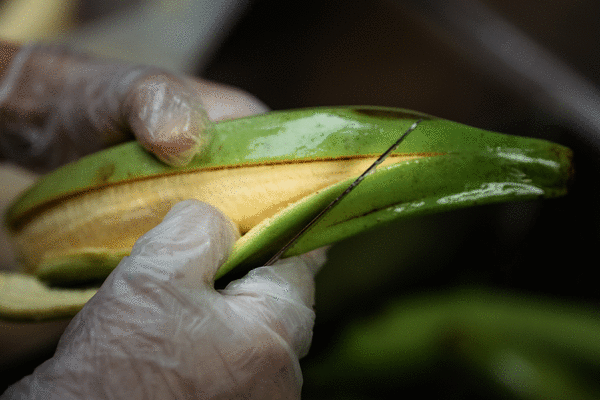
Those long hours laid the foundation for the restaurant’s approach to its jibarito. Green plantains are softened, sliced, fried, smashed and fried again before serving.
The restaurant’s bestselling steak and onion jibarito is finished with a house blend of sofrito, vinegar, herbs and spices on the grill. Fresh plantains, mayonnaise, cheese and a protein, Arrieta said, are the nonnegotiables of a proper jibarito.
Arrieta said the restaurant serves customers from a wide range of backgrounds, from Puerto Rican families to visitors trying the jibarito for the first time.
“Our customers are the engine of our business,” Arrieta said. “The most important part is having a loyal customer base that you treat with respect.”
Jibaritos y Más, 3400 W. Fullerton Ave., 773-799-8601; Jibaritos on Harlem, 3317 N. Harlem Ave., 773-647-1122; jibaritosymas.net
The Jibarito Stop
In downtown Chicago, pedestrians bustle past office buildings and vehicles weave through intersections. Between the rush of commuters, the Jibarito Stop on Wabash Street serves Puerto Rican dishes from its storefront, drawing customers throughout the day.
The Jibarito Stop has changed locations, survived a fire and introduced a new way to eat Chicago’s jibarito. Through all of it, co-owner Cely Rodriguez says the food has stayed the same.
Rodriguez and her partner, Moraima Fuentes, never planned on opening a restaurant. The two decided to take a chance on a food truck in 2012 after Rodriguez had been working as a paralegal at an immigration law firm and Fuentes at a nonprofit.
For three years, they served Puerto Rican food in the Loop before opening a brick-and-mortar restaurant in Pilsen in 2015.
“We didn’t know how it would go,” Rodriguez said. “Are they gonna hate us? Are they gonna love us?”
Instead, she said the community embraced the restaurant. “They’ve always been supportive.”
After nearly a decade in Pilsen, an apartment fire above the restaurant forced them to close last year. Though the flames never reached the kitchen, water from firefighters destroyed the storefront, leaving the restaurant closed for almost a year.
When they reopened in the Loop this year, they brought with them one of their popular menu items, the half jibarito. Rodriguez said the idea came from customers who had difficulty finishing the traditional version, made with a full plantain.
“We were the first to introduce full and half jibaritos,” she said.
The smaller version, once criticized as “not traditional,” became a customer favorite. Today, the half steak jibarito is the restaurant’s top seller.
Rodriguez says the recipes remain rooted in her family’s cooking. Her mother’s pollo guisado is her go-to meal back home. She described it as a “warm bowl of comfort” and a feeling she wanted to carry into The Jibarito Stop. Her father’s bistec encebollado, or steak and onions, is what she uses in the steak jibarito, the restaurant’s bestseller.
“We want it to taste the same way it tastes as when I was growing up,” Rodriguez said.
She recalled a family of seven who stopped in after a medical appointment and told her the food tasted like food from home.
“Having a restaurant is really hard,” Rodriguez said. “When you hear stuff like that, it gives you motivation to keep going.”
The Jibarito Stop, 174 N. Wabash Ave., 312-988-0585, thejibaritostop.com
Omarcito’s Latin Cafe
Tucked away on Fullerton Avenue, Omarcito’s Latin Cafe in Logan Square is a jibarito spot that requires searching. The restaurant’s hidden courtyard opens into an outdoor patio, scattered with colorful umbrellas and lively customers.
For owner Omar Cadena, the atmosphere is intentional. After years working in restaurants such as Calypso Cafe, Pasta Shoppe & Cafe, Irazú and Big & Little’s, Cadena built Omarcito’s around the idea that dining should feel personal.
“We don’t just take your order,” Cadena said. “We want to get to know you.”
That focus carries into Omarcito’s jibaritos, which Cadena uses to showcase a variety of Latin American flavors. Instead of replicating a traditional Chicago Puerto Rican sandwich, he adapted it through other Latin influences, including Venezuela’s patacón, a plantain-based sandwich that is known to be thicker and stuffed fuller than the jibarito.
The restaurant’s ropa vieja jibarito combines Cuban shredded beef with ingredients and techniques from other Latin American cuisines, including Salvadoran crema and Ecuadorian influences.
For Cadena, the jibarito is a way to celebrate the connections between Latin American cultures.
“I wanted to celebrate it through food,” Cadena said. “I thought it was built to be Latino and to have these components. Why are we not celebrating it by putting it together?”
Omarcito’s Latin Cafe, 3801 W. Fullerton Ave., 773-698-6955, omarcitos.com
Smash Jibarito
Josean Irizarry’s version of the jibarito starts with a smashburger.
After working at Roost Chicken & Biscuits, Irizarry began experimenting with pop-ups after the pandemic. In 2025, he opened a brick-and-mortar Smash Jibarito on Division Street in Humboldt Park, where the restaurant built a following for its burger-inspired take on the jibarito.
“I wanted to put my own Hispanic twist on the burger,” he said. While scrolling through social media, he saw fried plantains shaped like slider buns. “That’s when it kind of clicked for me.”
Today, the sandwich starts with ripe plantains fried, smashed into the shape of a bun and crisped to order. They cradle a smashed beef patty with American cheese, house-made caramelized onions, pickles and sweet aioli.
Before opening a storefront, the Smash Jibarito faced a test in 2023 at Chicago’s Puerto Rican Festival, where Irizarry introduced the dish to a crowd loyal to the traditional sandwich.
“All the old-school Puerto Ricans were die-hard jibarito fans,” he said. “‘Bro, how can you do that to a classic?’”
His answer was to “try it first.”
A video filmed at the festival went viral, drawing crowds to the stand and selling out the smashburger. Despite reimagining the jibarito, Irizarry said his goal is to celebrate, not replace, the original.
“I will never say I have a traditional jibarito,” he said. Instead, he points customers toward longtime restaurants like Borinquen. “I’m able to teach and preserve the culture that way.”
Smash Jibarito, 2534 W. Division St., 872-315-3177, instagram.com/smash_jibarito
©2026 Chicago Tribune. Visit at chicagotribune.com. Distributed by Tribune Content Agency, LLC.







Comments