Why Certain Fabrics Feel ‘Honest’ and Others Feel Performative
Published in Fashion Daily News
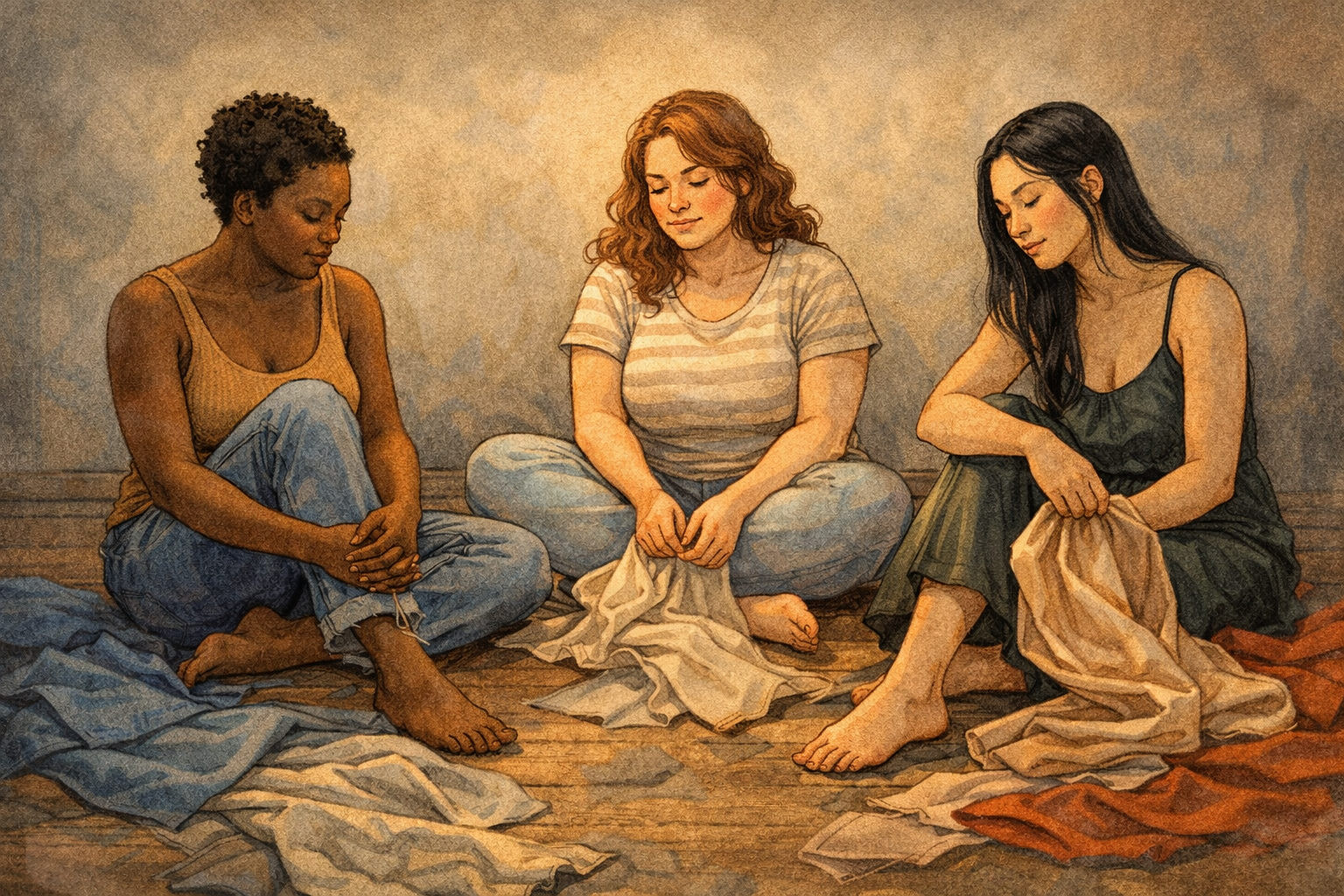
There are moments when clothing feels like a confession. A worn flannel pulled on without thought. A cotton T-shirt softened by years of washing. Denim faded not by design but by repetition. These garments project something difficult to articulate but easy to recognize: ease, credibility, a sense that the wearer is not asking to be believed.
Other fabrics provoke the opposite reaction. They gleam, cling, shimmer, resist creasing. They feel purposeful, sometimes impressive, sometimes suspect. They announce effort. They suggest presentation. In certain contexts, they feel performative—not false exactly, but curated, deliberate, and aware of being seen.
The distinction is not about cost, quality, or morality. It is about cultural meaning layered onto material over centuries. Fabrics carry stories, and people read those stories intuitively, often without realizing they are doing so.
Texture as a Form of Language
Before fashion was trend, it was material. What something was made of mattered because it determined warmth, durability, and labor. Over time, those practical associations hardened into symbolic ones. Texture became a kind of shorthand.
Rougher, heavier fabrics—wool, denim, canvas, linen—signal work, endurance, time. They show wear openly. They fade, crease, fray. Their imperfections are visible, and those imperfections accumulate history. This is why people often describe them as “honest.” They appear to tell the truth about use.
Smoother fabrics—silk, satin, synthetics, polished blends—conceal labor. They resist weathering. They maintain surface integrity longer, even as the body underneath changes. That resistance reads as control. Control, culturally, is associated with performance.
The distinction is not inherent. Silk can be ancient and utilitarian; denim was once revolutionary technology. But modern perception flattens nuance into feeling, and feeling drives interpretation.
Labor, Class, and the Memory of Work
Much of what we interpret as honesty in fabric is rooted in class memory. Durable textiles were historically associated with laboring bodies—people who worked outdoors, used their hands, repeated physical tasks. Their clothing bore marks of that work.
Even as most people no longer dress for manual labor, the symbolic residue remains. A chambray shirt evokes fields and factories, even if worn in an office. Wool suggests shepherds and winters, even when tailored into a city coat. Linen wrinkles, and those wrinkles imply movement, heat, exertion.
By contrast, fabrics that prioritize surface perfection have long been associated with court life, ceremony, and leisure. They were worn by those whose primary task was presence. To appear refined was itself a form of work, but one removed from dirt, weather, and wear.
Modern fashion inherits these associations. We still read certain materials as “earned” and others as “applied,” even when the economic reality has reversed.
The Problem With “Performative”
Calling a fabric performative is not an accusation. Performance is not deception; it is intention. Clothing has always been a tool for signaling role, status, mood, and belonging. What has changed is the context in which performance occurs.
In contemporary culture, authenticity is prized. Effortlessness is admired. To look like one is trying too hard is often framed as a social failure. Fabrics that appear too controlled, too sleek, too resistant to entropy can trigger suspicion—not because they are artificial, but because they refuse to reveal process.
This is why distressed clothing is so popular. Manufactured wear attempts to borrow the credibility of time. It is also why it often fails. People sense the shortcut. The story embedded in the fabric does not align with the story of use.
Performative fabrics are not dishonest. They are simply legible as choices. They say: this appearance was decided.
Synthetics and the Uneasy Present
Synthetic fabrics complicate the honesty-performance divide. They are technological triumphs—durable, versatile, often more accessible than natural fibers. Yet they carry a persistent cultural unease.
Part of this stems from environmental concern, but part is psychological. Synthetics often behave “too well.” They do not breathe the same way. They resist wear without recording it. They feel temporally ambiguous, as if untethered from seasons and aging.
This can read as artificiality, even when the fabric is functional. A polyester blouse may perform better than silk, but it does not accrue narrative in the same way. It remains present-tense.
In a culture obsessed with story, that lack of visible past becomes a liability.
Skin, Comfort, and Trust
People often describe certain fabrics as “trustworthy,” a curious but revealing term. What they usually mean is that the fabric behaves predictably against the body. It responds to heat, movement, and time in expected ways.
Natural fibers tend to warm, soften, and conform. They feel participatory. They acknowledge the body wearing them. This responsiveness creates intimacy, and intimacy fosters trust.
Fabrics that insulate the body from sensation—by trapping heat unnaturally or remaining unchanged—can feel distant. Distance is not bad, but it reads as barrier. Barrier reads as performance.
This is why comfort clothing has gained cultural legitimacy. The pandemic accelerated an existing shift: people choosing fabrics that cooperate rather than impress. Softness became a value, not a concession.
Gendered Expectations in Fabric Choice
Fabric symbolism is deeply gendered. Men’s clothing has historically emphasized durability and restraint, aligning honesty with toughness. Women’s clothing has been expected to signal refinement, delicacy, and control—qualities associated with performative fabrics.
When women choose coarse or visibly worn textiles, they are often praised for being “real” or “grounded.” When men choose silk or sheen, they are sometimes read as theatrical or flamboyant. These reactions reveal how fabric expectations enforce gender roles.
As gender norms loosen, fabric choices become more fluid, but the underlying associations persist. People still read material choices as statements about sincerity, confidence, and self-awareness.
Fashion Cycles and the Rebranding of Honesty
Every generation redefines which fabrics feel honest. What once read as labor can become costume; what once felt artificial can become familiar.
Denim itself underwent this transformation. Once a marker of poverty and work, it became casual uniform, then luxury object, then irony. Its “honesty” is now contextual.
The same is happening with technical fabrics, athleisure materials, and recycled synthetics. As they become ubiquitous, their performative edge dulls. Familiarity breeds trust.
Honesty in fabric is not fixed. It is negotiated.
What We’re Really Responding To
Ultimately, the feeling that a fabric is honest or performative is less about the material itself and more about alignment. Does the fabric match the context, the body, the moment? Does it cooperate with movement and environment, or does it insist on being noticed?
People are remarkably skilled at sensing mismatch. A fabric that feels “wrong” often feels wrong because it introduces friction between intention and appearance.
Clothing that feels honest disappears slightly. Clothing that feels performative stays present. Neither is inherently superior. They simply serve different purposes.
The discomfort arises when we pretend otherwise.
The Quiet Truth of Material Choice
Choosing fabric is not a moral act. It is a communicative one. Whether we reach for wool or silk, denim or satin, we are engaging in a conversation older than fashion itself—about labor, comfort, visibility, and control.
Honest fabrics feel honest because they align with stories we recognize. Performative fabrics feel performative because they remind us that appearance is constructed.
Both are true. Both are useful. The only real misstep is pretending one does not speak at all.
========
Maribel Huxley writes about clothing, culture, and the psychology of everyday choices. Her work explores how material objects quietly shape identity and perception. This article was written, in part, utilizing AI tools.






Comments