Court decision opens the door for more South Carolina churches to leave national denomination
Published in Religious News
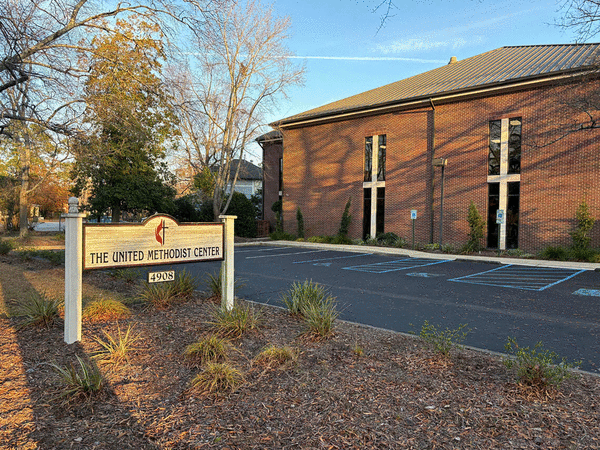
The United Methodist Church can’t use South Carolina’s court system to stop local churches from leaving the denomination, a judge has ruled.
Judge Brian Gibbons dismissed a lawsuit brought by the South Carolina conference of the national Methodist denomination against multiple churches that are trying to break away over differences in theology and church governance.
The decision potentially opens the door for more churches to leave the mainline Protestant denomination in a prolonged breakup that has already led more than a hundred South Carolina congregations to leave the church.
Gibbons was assigned by the South Carolina Supreme Court last year to oversee multiple cases in which the South Carolina United Methodist Conference was attempting to block more churches from leaving the denomination.
The conference’s argument hinged on the UMC’s Book of Discipline, the foundational rulebook that lays out the official doctrine and organization of the United Methodist Church. That book prohibits member churches from severing their connection with the denomination and still keep church property, including the buildings themselves, held “in trust” for the national church.
But in a Nov. 13 decision, Gibbons ruled that the Book of Discipline is essentially a religious document that can’t be enforced by a state court. The judge laid out his reasoning in dismissing its suit against Simpsonville Methodist Church, the lead congregation that had initially asked for the Supreme Court’s intervention.
“(T)he Conference’s Complaint asks this Court to interpret and apply its religious doctrine, as set forth in the UMC Book of Discipline, and to find that Simpsonville Methodist has violated the religious text,” Gibbons said. “The Complaint does not assert any state law claims, nor does it raise any controversy that could be resolved without examining religious questions outside the ambit of this Court’s authority.”
The judge noted that the Methodist Church had previously relied on the same legal doctrine — known to legal professionals as “ecclesiastical abstention” — to avoid lawsuits in South Carolina courts. It can’t now take the opposite position to try to bind the actions of other congregations, Gibbons ruled.
Instead, the court ruled that Simpsonville Methodist Church is, in the eyes of South Carolina law, a nonprofit corporation whose actions can only be managed, or challenged, by its directors or trustees, not an outside entity it may be affiliated with.
In terms of who ultimately controls the local church’s property, Gibbons said that the deeds for most of Simpsonville Methodist’s property lacked a trust clause, and those that do lack “any language of irrevocability.” The local church’s “generic” affirmations of its membership in the United Methodist Church “do not evince a present intent by the local church to create a trust,” the judge ruled.
In a statement, the United Methodist Conference said the decision would affect 70 different cases where churches are “illegally” seeking to leave the denomination.
“The Conference and its legal counsel are continuing to review the judge’s orders and intend to appeal these rulings, in accordance with South Carolina law,” the conference said. “Our hope remains to bring these matters before the appellate courts, potentially including the South Carolina Supreme Court, at the earliest appropriate opportunity.”
Those 70 departures would come on top of 113 South Carolina Methodist congregations that previously left the UMC, following a long, drawn-out process that led to the United Methodist Conference releasing several churches from their connections to the larger denomination in 2023.
Those churches represented 12% of United Methodist congregations in the state at the time. Around a quarter of UMC churches have left the church in recent years, according to a count by the Associated Press.
Under an agreement at the time, those churches were allowed to disassociate from the church while keeping their church property, taking a 10% tithe from the exiting churches in the process.
The breakup process was supposed to end years of acrimony between more liberal and conservative Methodists, primarily over the issue of how accepting the church should be toward LGBTQ+ people. The short-term policy was meant to give more conservative churches a way to go their own way, while making clear there was a deadline and any congregations looking to depart in the future would have to do so without their property.
But now the court’s ruling means more churches could leave the denomination without the United Methodists being able to do much to stop them.
“While this development is disappointing, we remain committed to faithfully stewarding the responsibilities entrusted to us — and we encourage South Carolina United Methodists to stay focused on our unchanging mission of making disciples of Jesus Christ for the transformation of the world,” the conference said in its statement.
The split within the UMC is similar to those in other major Protestant churches in recent years that have faced internal struggles over whether and how to welcome LGBTQ+ people into the church. As some churches have named openly LGBTQ+ clergy or blessed same-sex marriages, other believers have peeled away from established denominations they feel no longer share their values.
The state Supreme Court previously ruled in a similar dispute when South Carolina’s Charleston-based Episcopal bishop led most of the diocese out of the Episcopal Church in 2012. The departing congregations attempted to take their historic churches with them, and Gibbons noted the Supreme Court’s ruling then also turned on whether specific trust language had been adopted by the local churches for specific property.
The dispute within the Methodist church didn’t end with the 2023 conference decision. Following further changes to the church’s policies on LGBTQ+ members at the 2024 United Methodist conference, South Carolina’s conference opened another way for member churches to leave, using a procedure meant to close existing churches. But the national church later ruled that those procedures couldn’t be used as a cover for back-door departures — again citing the Book of Discipline — leaving some churches still trying to break away in the lurch.
The court’s decision may open the door for them to try again.
_____
©2026 The State. Visit thestate.com. Distributed by Tribune Content Agency, LLC.







Comments